Penn Central

Title page

Wondering about so-called “covid takings” such as business lockdowns, seizures, commandeerings, eviction moratoria, and whether these might be takings?

If so, check out our latest article, Evaluating Emergency Takings: Flattening the Economic Curve, just published in the latest issue of the William and Mary Bill of Rights Journal.

Here’s the Intro to the article:

Desperate times may breed desperate measures, but when do desperate measures undertaken as a response to an emergency trigger the Fifth Amendment’s requirement that the government provide just compensation when it takes private property for public use? The answer to that question has commonly been posed as a choice between the “police power”—a sovereign government’s power to regulate property’s use in order to further the public health, safety, and welfare —and the eminent domain power, the authority to seize private property for public use with the corresponding requirement to pay compensation. But that should not be the question. After all, emergencies do not increase government power, nor do they necessarily alter constitutional rights, and an invocation of police power by itself does not solve the compensation question, but is merely the predicate issue: all government actions must be for the public health, safety, or welfare, in the same way that an exercise of eminent domain power must be for a public use.

This Article provides a roadmap for analyzing these questions, hoping that it will result in a more consistent approach for resolving claims for compensation that arise out of claims of emergencies. This Article analyzes the potential takings claims stemming from emergency measures, mostly under current takings doctrine. Which types of claims are likely to succeed or fail? In “normal” times, it is very difficult to win a regulatory takings claim for compensation. In the midst of emergencies—real or perceived—the courts are even more reluctant to provide a remedy, even when they should, and emergencies are a good time to make bad law, especially in takings law. Can a better case be made analytically for compensation?

Part I summarizes the economic “flattening the curve” principle that motivates takings claims for compensation. Part II sets out the prevailing three-factor Penn Central standard for how courts evaluate claims that a health, safety, or welfare measure “goes too far” and requires compensation as a taking, examining the character of the government action, the impact of the action on the owner, and the extent of the owner’s property rights. Deep criticism of the Penn Central standard is beyond the scope of this Article, and here, I accept it as the default takings test. But I argue that the government’s motivation and reason for its actions—generally reviewed under the “rational basis” standard—should not be a major question in takings claims. Rather, as this Article argues in Part III, the government’s emergency justifications should be considered as part of a necessity defense, not subject to the low bar of rational basis, but a more fact and evidence driven standard of “actual necessity.” Part IV attempts to apply these standards and examines the various ways that emergency actions can take property for public use: commandeerings, occupations of property, and restrictions on use. I do not conclude that the approach will result in more (or less) successful claims for compensation, merely a more straightforward method of evaluating emergency takings claims than the current disjointed analytical methods.

In sum, this article argues there is no blanket immunity from the requirement to provide just compensation when property is taken simply because the government claims to be acting in response to an emergency, even though its actions and reasons may satisfy the rational basis test. Instead, claims that the taking is not compensable because of the exigency of an emergency should only win the day if the government successfully shows that the measure was actually needed to avoid imminent danger posed by the property owner’s use and that the restriction on use was narrowly tailored to further that end.

One final word: the editors at the Bill of Rights Journal have been fantastic to work with to get this piece publication ready. Offering helpful comments, gently suggesting that certain parts are not working (but never insisting, and giving the author a lot of discretion), and getting the citations squared away: I could not have asked for more helpful editing. Congratulations on the publication of your latest issue. 

Thomas, Evaluating Emergency Takings: Flattening the Economic Curve, 29 Wm. & Mary Bill of Rights J. 1145 (2021)

Continue Reading New Law Review Article (Ours) – “Evaluating Emergency Takings: Flattening the Economic Curve,” 29 Wm. & Mary Bill of Rights J. 1145 (2021)

Screenshot_2021-05-15 18th Annual Brigham-Kanner Prize Recipient

Mark your calendars for September 30 – October 1, 2021, and join us at the William and Mary Law School in Williamsburg, Virginia for the 18th Annual Brigham-Kanner Property Rights Conference. It’s planned to be in-person, so when we mean “join us” we really mean join us.

This year the Conference will recognize the lifetime

You listened live. Or you missed that, and listened to the recording. Or, you preferred to review what others thought of the arguments. Now you can read it yourself.

Here’s the transcript of Monday’s oral arguments in Cedar Point Nursery v. Hassid, No. 20-107, the case in which the Supreme Court

Here are links to the summaries and analysis of yesterday’s oral arguments in Cedar Point Nursery v. Hassid, No. 20-107, the case asking whether California’s forbidding of agricultural property owners from keeping out union organizers is a taking:

Neutral

PICT1199

Here’s the recorded arguments.

  1. California will try and push the Court to seeing this as an “anti-union” lawsuit: this is not that big of an intrusion, we’ve been doing it for 50 years under both Cal and federal law, and a ruling for the property owners will upset this apple cart and prevent unions

Read the allegations in the complaint that the Illinois Appellate Court recounted in Strauss v. City of Chicago, No. 1-19-1977 (Mar. 5, 2021), and they will make your hair curl in horror.

In short: a family rented the ground floor of its mixed residential-commercial building in Chicago to Double Door Liquors (a live music

6a00d83451707369e20240a51cc266200b-800wi

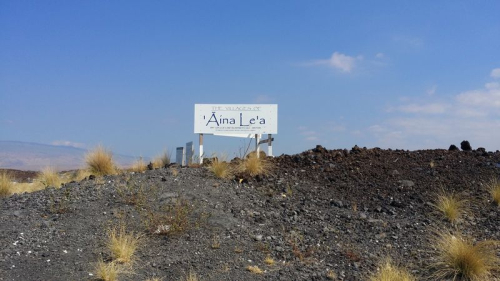
We were hoping for better news in a case we’ve been following in its various forms for what seems like forever. But today, the U.S. Supreme Court in this order declined to issue a writ of certiorari to review the Ninth Circuit’s decision in Bridge Aina Lea, LLC v. Hawaii Land Use Comm’n, No.

Regulatory takings challenges are no doubt tough. Especially Penn Central regulatory takings challenges. Facial Penn Central regulatory takings claims, moreso.

The U.S. Court of Appeals’ opinion in Clayland Farm Ents, LLC v. Talbot County, No. 19-2102 (Feb. 9, 2021) – the latest in this case we’ve been following – proves the point. The court

Goofus-gallant

Yes, it starts tomorrow, Thursday, January 28, 2021, but we’re “remote” this year, so it is not too late to register to join us for the 38th Annual ALI-CLE Eminent Domain & Land Valuation Litigation Conference. This is the “big one” where the nation’s best practitioners, scholars, jurists, and other industry professionals gather to talk