Need an excuse to be in Honolulu mid-winter?

If you are still looking for an excuse to head to the 808, here it is. The 2026 Future of Property Law Conference, February 13, 2026 at the University of Hawaii School of Law.

Chaired by Professor David Callies, the agenda features dirt law luminaries (and others, us included) speaking about topics like housing, the ALI Restatement, Coastal Protection/Public Trust, and IP/AI Property. (We are speaking on “Physical and Regulatory Takings” at 9:15am.)

Speakers include Thomas Mitchell, Jim Burling, John Infranca, Henry Smith, and Thomas Merrill.

See the complete agenda and speaker list (and registration) here.

Here’s the official program description:

This 1-day conference is a must attend for any attorney or professional whose practice involves land use and development. Distinguished land-use practitioners, scholars, planners, and regulators from Hawaii and the Mainland will discuss timely and relevant issues, including: Housing

Continue Reading 2026 Future of Property Law Conference, University of Hawaii Law School, Feb 13, 2026 (Live & Webcast)

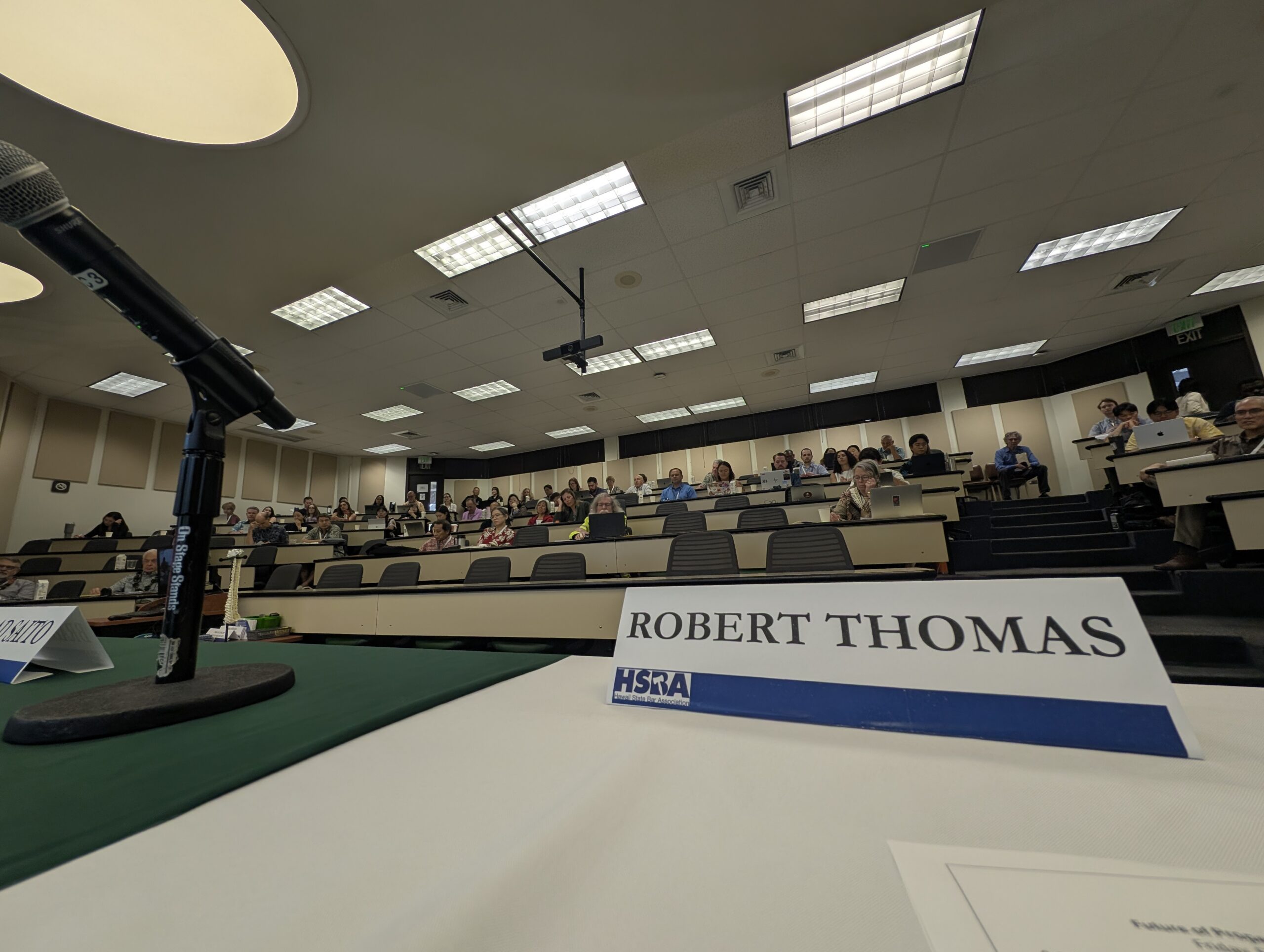
The view from the podium

That’s right. More than 300 of the nation’s best eminent domain lawyers, judges, appraisers, right-of-way agents, scholars, and other industry professionals are in Savannah for the next two and a half days for what is now known as the American Law Institute (“ALI” alone, no longer with the “-CLE” addition) Eminent Domain & Land Valuation Litigation Conference.

We’re now in our 43d edition and have a record attendance as the above photo, taken from the podium as we got underway, shows.

The view from the audience

If you are not here, you really should consider joining us. We’ll announce the location for the 2027 Conference tomorrow (hint: it will be in the west).

We’ll have more as the Conference progresses.

Continue Reading We’re Underway At The 43d American Law Institute Eminent Domain & Land Valuation Conference, Savannah

We’re deep in the throes of winter, and spring training won’t start for another month, but for those of you who are fans of the National Pastime — particularly if you are like us and a child of 1970’s baseball — then be sure to check out the U.S. Court of Appeals for the First Circuit’s recent opinion in Clemente Properties, Inc. v. Pierluisi-Urrutia, No. 23-1922 (Jan. 16, 2026).

The court had before it case where the owner of the trademark of the great Roberto Clemente (his family) sued officials of the Commonwealth of Puerto Rico, after the Commonwealth used a likeness of Clemente on commemorative license plates, among other things. The claims included not only Lanham Act, but also a claim for a taking without compensation. The district court tossed both claims.

Most of the opinion is dedicated to the trademark stuff. We’re just country takings

Continue Reading CA1: Government’s Use Of Roberto Clemente Trademark Isn’t A Categorical Physical Invasion Taking

A reminder: there’s still time to join us for the upcoming American Law Institute-CLE Eminent Domain & Land Valuation Litigation Conference in Savannah.

Now in its 43rd year, this flagship gathering remains the undisputed national hub for practitioners, academics, appraisers, and anyone else who lives and breathes property and eminent domain law. We will be at the JW Marriott Plant Riverside District in Savannah, where historic charm meets Southern hospitality, moss-draped oaks, riverfront vibes. If you can’t make it in person, live webcast option is available.

What makes this conference indispensable? It’s the place to reconnect and talk shop with the sharpest minds in eminent domain and property law. Whether you’re on the owner’s side, or serve as agency-side counsel, or an appraiser, the programming is customizable and multi-track: 30+ programs tackling everything from relocation benefits to regulatory takings, valuation, and courtroom techniques. With 40+ speakers from across the

Continue Reading There’s Still Time To Join Us In Savannah (Jan. 21 – 24, 2026) For ALI-CLE’s 43d Eminent Domain & Land Valuation Litigation Conference

This one is worth your time to review.

In HRT Enterprises v. City of Detroit, No. 23-1847 (Dec. 22, 2025), the U.S. Court of Appeals for the Sixth Circuit affirmed the district court’s entry of summary judgment in favor of the plaintiff/owner and a jury verdict on just compensation.

The case is notable not only for the fact it’s a property owner win, but that the usual procedural hurdles an owner is forced to jump through were successfully navigated. For example, the city’s assertion that the takings claim was both not ripe, and res judicata. Yes, in the city’s view, the claim was simultaneously too early and too late.

The first sentence of the opinion tells you that the focus of the analysis is going to be the res judicata question:

After losing in state court, HRT Enterprises sued the City of Detroit in federal court under a

Continue Reading CA6 Affirms Detroit Land Bank Taking: New Facts Defeat Res Judicata

Sometimes when you read a court opinion you imagine there’s a big gap between the objective, sterile words on the page and the reality of the situation.

The U.S. Court of Appeals for the Seventh Circuit’s opinion in O’Donnell v. City of Chicago, No. 24-2946 (Dec. 22, 2025) is one of those.

The words on the page reveal the court held that a Chicago ordinance which authorizes the city to seize vehicles for traffic violations — even other cars the violator owns — is not a taking because its “an exercise of the City’s police power to enforce its traffic code, and thus isn’t a taking.” Slip op. at 5. (We have problems with that conclusion, but more on that below.)

But reading the opinion gives a hint of the off-page reality on the ground.

Dig this. Get a traffic ticket in Chicago, and you can either challenge it

Continue Reading CA7: No Taking When City Forfeited Cars For Traffic Violations – Even Cars Not Involved In The Violation

In Gould v. Interface, Inc., No. 23-12883 (Oct. 2, 2025), the U.S. Court of Appeals for the Eleventh Circuit was dealing with a claim for wrongful termination of a tech CEO.

So what’s the case doing here? Skip forward to page 12 of the slip opinion, where the court deals with an oft-occurring argument: the appellant “waived” (forfeited, actually) a claim by failing to pursue it below. The general rule is that a litigant can waive a claim, but not an argument.

Okay, got it. But again, why is this opinion posted here? Well, the example the court uses to illustrate the difference between a “claim” and an “argument” is the (in)famous takings case, Yee v. City of Escondido, 503 U.S. 519 (1992). Takings mavens know that Yee is often cited in support of the argument that things like rent control do not force property owners to allow

Continue Reading A Reminder From CA11: There’s Only A Single Claim For A Regulatory Taking (Although There May Be Several Arguments)

Here’s the latest in a case we’ve been following (because it is a product of our shop: we represent the property owners/plaintiffs).

In this Order, the Florida Supreme Court declined to exercise jurisdiction to review the Third District Court of Appeals en banc opinion in Shands v. City of Marathon. So that decision stands.

This is the case in which the Shands Family, the owners of Shands Key — a small island in the City of Marathon (about 1/2 way down the Overseas Highway in the Florida Keys) — asserted that the City’s downzoning their property from a density that allowed residential development to a density that doesn’t (Shands Key is below the minimum lot size under the downzoning), is a Lucas taking.

The court of appeal rejected the City’s claim that beekeeping and overnight camping were possible uses of the property under the downzoning, thus exempting it

Continue Reading Fla SCT Declines Review: En Banc Court Of Appeal Decision That Downzoning Was A Lucas Taking (And Sale Of Property For Third-Party TDRs Is Not A “Use”), Stands

If you were creating a moot court problem, what topic would you pick? You’d want a question that is a hot topic. Unresolved by the Supreme Court. Controversial, interesting, and complex.

Well, we have just the issue for you: our favorite topic, takings.

That appears to be what the powers-that-be behind Harvard Law School’s moot court competition believed, because according to this report (Rachel Reed, “Harvard Law students battle for honors at the 2025 Ames Moot Court Competition,” Harvard Law Today (Nov. 19, 2025)), the student teams were confronted with a case where there was a clear taking (the commandeering and take-over of a hand sanitizer plant during Co-19), but the plant owner was denied a remedy because the defendant is the (fictional) State of Ames.

Ah yes, the question the Court dodged recently in DeVillier v. Texas, 601 U.S. 285 (2024): may an owner whose property

Continue Reading Harvard Law School’s Moot Court Problem This Year? Takings.

Check this out: a significant and important decision from the U.S. Court of Appeals for the Eleventh Circuit in an issue we’ve been following.

In Alford v. Walton County, No. 2021-13999 (Nov. 17, 2025), the unanimous panel concluded that the county’s Co-19 restrictions, which closed all beaches (public and private) in the county, worked a physical taking of Alford’s private property rights.

In response to the outbreak of Co-19, which the opinion notes was “a novel virus from Wuhan, China,” slip op. at 3, Florida declared a state of emergency, and followed up with an executive order that limited beach access statewide to “no more than 10 persons,” imposed a six-foot separation, among other things. Two days later, the county adopted an ordinance closing all public beaches in the county.

The following month, after the governor issued further executive orders, the county temporarily closed “[a]ll beaches” in the

Continue Reading CA11: “[T]here is no COVID exception to the Takings Clause”