There’s not a lot of new territory forged in the U.S. Court of Appeals for the Ninth Circuit’s opinion in Pena v. City of Los Angeles, No. 24-2422 (Nov. 4, 2025), holding that the city could not be liable for a taking after SWAT officers severely damaged a home in the course of apprehending a suspect who had taken refuge there.

After all, the other federal courts which have addressed the issue of whether a local government’s damaging or destroying a home in the course of apprehending a criminal suspect is a taking have all concluded no, although for a variety of reasons. Some say there’s no absolute right to exclude, with the issue turning on whether the police are acting pursuant to a valid warrant, incorporating by reference Fourth Amendment property law. Some say the owner has no expectations of exclusion of the government as a

Continue Reading CA9: No Claim For A SWAT Taking Because There’s A Public Safety Exception To The Fifth Amendment

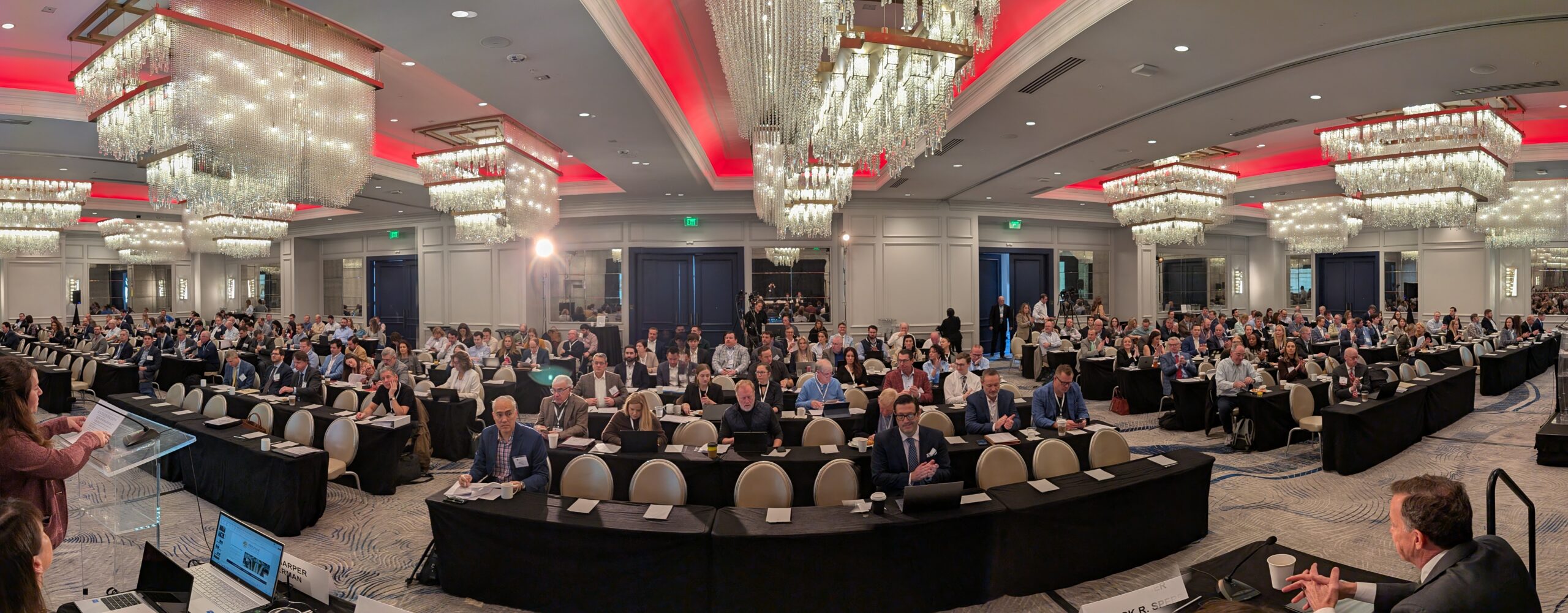
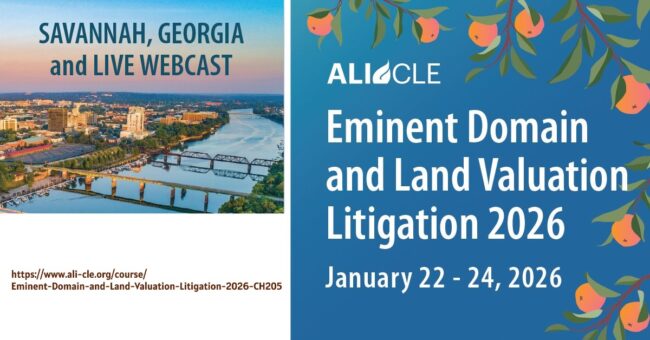
As we wrap up another year, it’s time to look ahead to the one event that always gets our eminent domain blood pumping: the annual ALI-CLE Eminent Domain and Land Valuation Litigation Conference. Details, including faculty list, a complete agenda, and registration information is posted here.

Now in its 43rd year, this flagship gathering remains the undisputed national hub for practitioners, academics, appraisers, and anyone else who lives and breathes property rights law. Mark your calendars for January 22-24, 2026, when we’ll convene at the JW Marriott Plant Riverside District in Savannah, Georgia. Think historic charm meets Southern hospitality, with moss-draped oaks, riverfront vibes, and enough ghost tours to inspire a dozen inverse condemnation hypotheticals. (For those of you who prefer pixels to palm trees, a live webcast option is available.)

What makes this conference indispensable? For starters, it’s the place to reconnect and talk shop with the

Continue Reading Savannah Bound: Don’t Miss The 43rd ALI-CLE Eminent Domain & Land Valuation Litigation Conference (Jan. 22-24, 2026)

The caption of the U.S. Court of Appeals for the Tenth Circuit’s opinion in Purgatory Recreation I, LLC v. United States, No. 24-1241 (Oct. 21, 2025), and the fact that the plaintiff raised a takings claim, should give you some idea where this is heading.

After all, when the defendant in a takings claim is the United States, your Tucker Act/Court of Federal Claims alarm bells should be going off.

That’s certainly accurate where the remedy sought is just compensation, and the amount of compensation sought is substantial. Those claims have been assigned to the CFC, not to district courts and the regional courts of appeals. But what if the plaintiff says it doesn’t want just compensation, but instead asks for a declaratory judgment that “to do X would result in a taking?”

In Purgatory, the plaintiff objected to the federal government’s denial of access across federal land

Continue Reading CA10: Can’t Use Declaratory Judgment Before Seeking Tucker Act Compensation

When an opinion starts off with “[t]his zoning/inverse condemnation case revolves around the availability of parking…” you kinda know, whatever the issues might be, that the court isn’t likely headed in a good direction for the claimant.

That’s exactly how the Supreme Court of South Carolina began The Gulfstream Cafe, Inc. v. Georgetown County, No. 28303 (Oct. 29, 2025).

The bottom line is what you might expect, given that opening. The court rejected the takings and due process claims by a restaurant located in a special development district that the County’s permitting another restaurant to set up nearby violated the first restaurant’s rights.

The essence of the takings claim is that Gulfstream Cafe (the first restaurant) has been there for quite a while, and has an easement to allow its diners to use certain parking spaces. For many years, things worked out: the adjacent building housed a marina business

Continue Reading South Carolina: Restaurant Was Not Taken When County Permitted Another Adjacent Restaurant

Is “personal” property (as contrasted with real estate), or property that is used in commercial dealings, not “private property” is protected from uncompensated takings by the Fifth Amendment?

That’s what the U.S. Court of Appeals for the Tenth Circuit appeared to conclude in Green Room LLC v. State of Wyoming, No. 24-853 (Oct. 27, 2025).

There, the court was faced with (inter alia) a takings claim which asserted that when the Wyoming legislature amended a statute, the effect of which was to make what had been a legal market in hemp products illegal. “In addition to the claims brought in their complaint, Plaintiffs’ brief in support of their motion argued that SEA 24 constituted an unconstitutional regulatory taking of their personal property.” Slip op. at 9.

We won’t go into detail about how the Tenth Circuit analyzed the federal preemption and dormant commerce clause claims, except to

Continue Reading No Taking When Legislature Revised Statute And Made Hemp That Was Legal … Illegal: No Property Right In Personal, Commercial Property

You’ve all heard the phrase “cut out the middleman” in advertising or crafty dealmaking. Deal directly and realize a savings, or somehow get a better bargain.

To our eyes, it looks like that’s what the New York legislature might have had in mind when it amended its Medicaid statutes to cut out “a vast network of private organizations, referred to as ‘fiscal intermediaries'” who had handles the administrative, financial and compliance responsibilities when beneficiaries who need help with daily living hire their own personal assistants at public expense. In 2024, the legislature altered this scheme, and “replac[ed] the existing network of fiscal intermediaries with a single, statewide fiscal intermediary.”

We don’t know why the legislature took this route, but it doesn’t so much look like the state eliminated all of the middlemen from a piece of the action, but selected a single beneficiary to get the entire vig.

Continue Reading CA2: No Taking When Legislature Consolidated NY Medicaid Middlemen

The U.S. Court of Appeals for the Seventh Circuit is the latest court to wade in (or more accurately, re-wade in) to what we call the SWAT Takings issue.

The logic is sound: under a governmental power (police power), the government (SWAT) has physically invaded (deprived the owner of an essential stick of private property, the right to exclude) a home (private property), for public use (police apprehending suspects is a good thing), triggering the obligation to spread the burden of this public good to the entire public (Armstrong).

 
Continue Reading CA7: No Taking For SWAT Destroying Property While Executing Valid Warrant

The latest cert petition from Michael Berger, this time involving procedural due process and takings.

Here are the Questions Presented:

The City of Dana Point “red tagged” Petitioner’s motel and then had a receiver appointed to oversee its rehabilitation without ever providing notice of the hearing. Thereafter, it set the property for a foreclosure sale. It did all of this by means of “ex parte” proceedings that provided no formal notice or hearing. That raises serious due process issues, both procedural and substantive, as well as a taking of property without just compensation.

Question 1: When government acts without notice in a way that seriously impacts the rights of citizens, does the lack of constitutionally required notice deprive the victim of property without due process of law?

Question 2: Is it finally time to rein in California’s practice of ignoring this Court’s line of regulatory takings decisions, based

Continue Reading New Cert Petition: You Can’t Go Your Own Way On Takings, California

A short one (unpublished) from the U.S. Court of Appeals for the Sixth Circuit in a Tyler taking case (an issue that seems like it is on a lot of courts’ minds right now).

In Wayside Church v. Van Buren County, No. 24-1598 (Oct. 6, 2025), the court affirmed the district court’s certification of class certification and the subsequent class settlement. This issue is only of mild interest to us, and it isn’t reason we’re posting this case.

What really grabs our attention is Judge Kethledge’s concurring opinion (scroll down to page 23 of the pdf). It is not only a good overview of the home equity theft takings issue, but also points out how the just compensation rules actually work to keep property owners from receiving full compensation for what they have lost, especially in a class action settlement situation compared to a non-class section 1983 claim:

To

Continue Reading “Local governments should serve their people, not prey upon them” – CA6 Approves Takings Class Action Settlement (But Not Enthusiastically)