As July gets underway, here’s what we’re reading.
Continue Reading Wednesday Round-Up


As July gets underway, here’s what we’re reading.
Continue Reading Wednesday Round-Up
Newly released: the Federalist Society’s “Courthouse Steps” series covers Pung v. Isabella County, where the U.S. Supreme Court held that “just compensation” for Tyler takings is usually measured by the surplus after a tax sale and not fair market value of the property, unless the tax sale process is unfair or skewed. Here’s
Here is what we’re reading today, comments and thoughts on yesterday’s U.S. Supreme Court decision in Pung v. Isabella County.
Continue Reading Pung Round-Up
This just in: the Supreme Court has decided Pung v. Isabella County, No. 25-95 (June 23, 2026). And the result — that “just compensation” for Tyler takings is usually measured by the surplus over the tax sale and not fair market value of the property, unless the tax sale process is unfair or skewed — isn’t the hoped-for outcome.
Continue Reading Pung Decided – “Just” Compensation May Not Always Mean Fair Market Value: “The Fifth Amendment protects the … right to surplus proceeds from the tax sale, not compensation for the property’s fair market value.”
Check out this recently-filed cert petition, which might be filed under government “keepings” as well as takings. In Greene v. Kansas Dep’t of Revenue, 576 P.3d 320 (Kan. Ct. App. 2025), the Kansas Court of Appeals held that the Department didn’t owe just compensation after it seized some of Greene’s property (the petition and the lower court’s opinion don’t really say what this property is, but we can presume it is some of the “potpourri substance named ‘Diablo’ that the Kansas Board of Pharmacy had deemed a controlled substance” that was at the heart of the tax dispute.
Continue Reading New Cert Petition: Temporarily Keeping Property Seized For Taxes After A Ruling The Taxes Were Not Owed Is A Taking

Programming note: On the weekend we’ve set aside to remember our nation’s war dead, we thought we’d repost this one, about how Arlington National Cemetery came to be. And yes, there’s a takings story there.
Continue Reading Memorial Day 2026: Arlington National Cemetery And Takings
Courtrooms are places for serious business. After all, people’s lives, businesses, property, and past and futures are at stake. It’s right that the court, the lawyers, and the public take what goes on there seriously. But judges and lawyers are also human, so it should surprise no one that moments of levity and humor can creep in.
Continue Reading Lighter Moments In Yesterday’s SCOTUS Takings Arguments
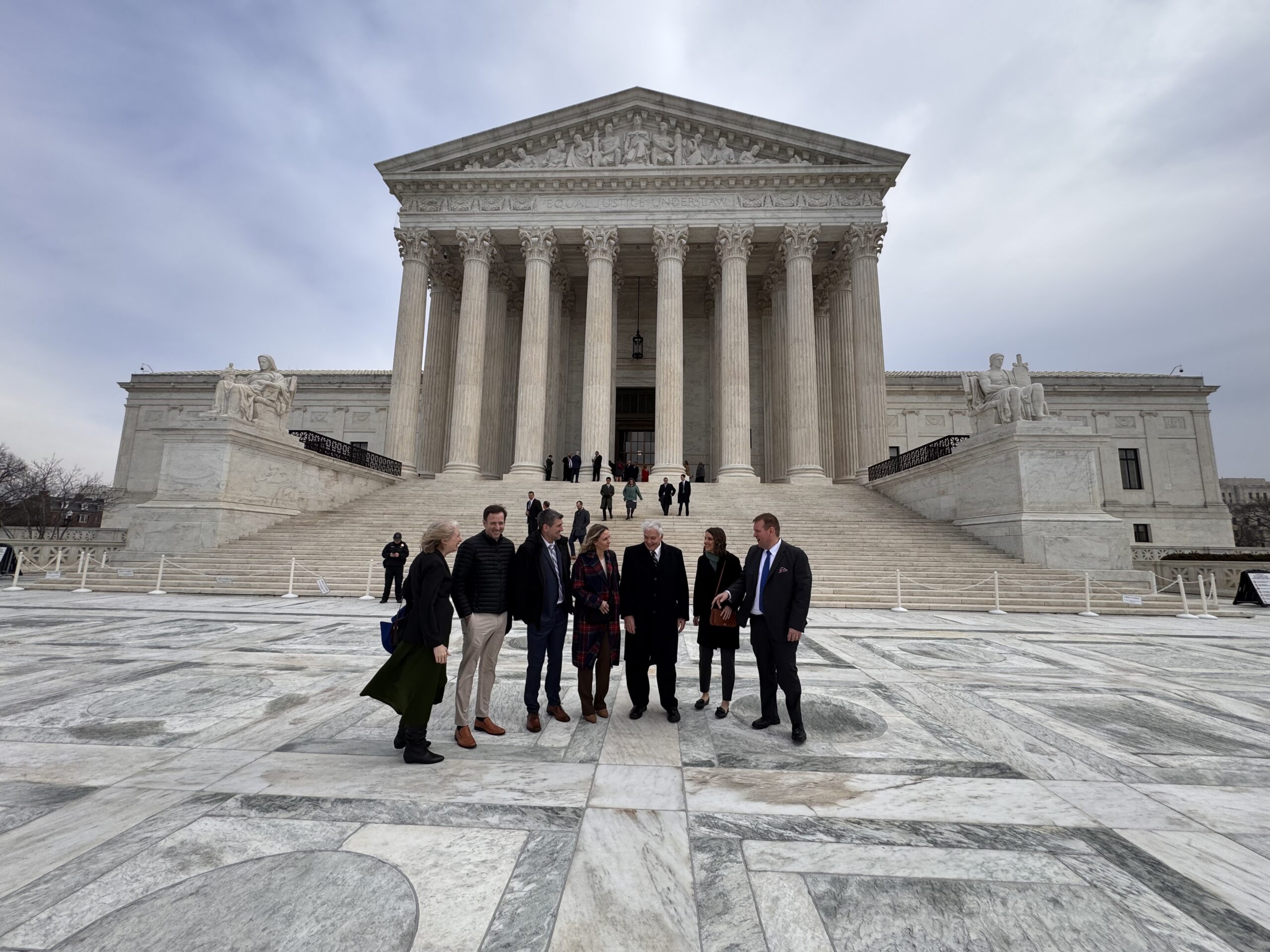
Here is the transcript of the oral arguments held earlier today in Pung v. Isabella County. [And before we get further, a disclosure: this case is one of ours as the above courthouse steps photo shows.]
Continue Reading Transcript And Audio From Today’s SCOTUS Takings And Excessive Fine Arguments (Pung v. Isabella County)
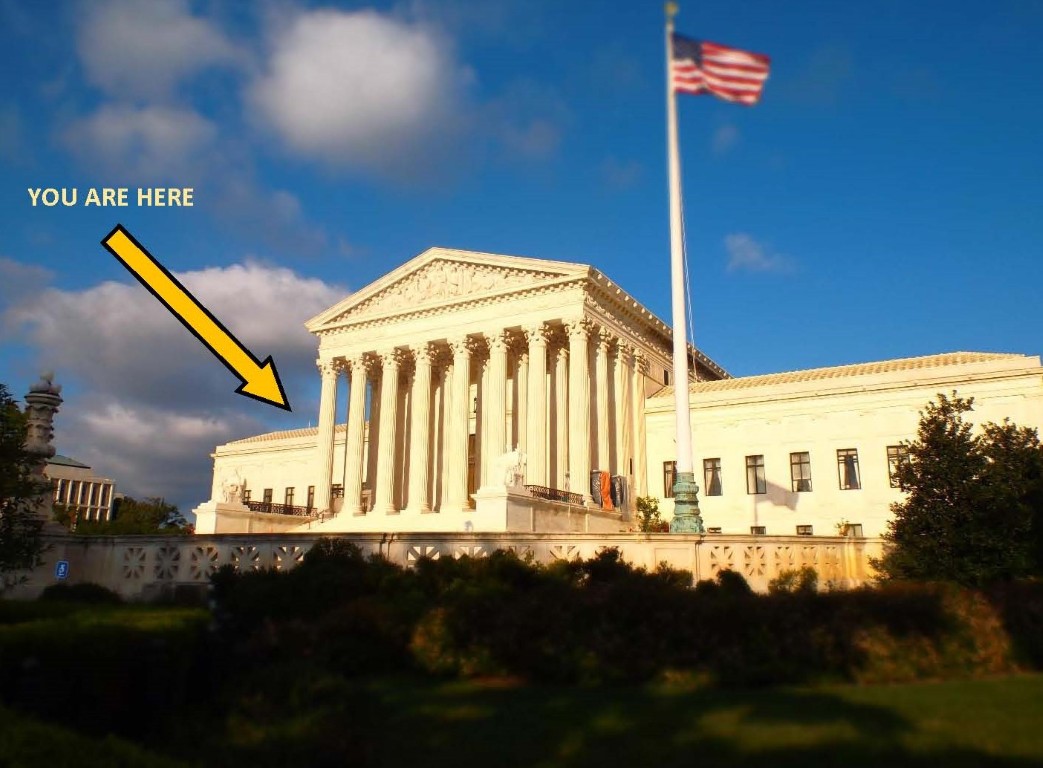
Check this out, a new cert petition filed yesterday.
As the title of this post notes, this is one of ours. So we won’t be making substantial commentary on it.
But we can say that a sharply-divided Arkansas Supreme Court held that BAS’s Tyler takings claim for the State Lands Commissioner’s failure to return

Sometimes when you read a court opinion you imagine there’s a big gap between the objective, sterile words on the page and the reality of the situation.
The U.S. Court of Appeals for the Seventh Circuit’s opinion in O’Donnell v. City of Chicago, No. 24-2946 (Dec. 22, 2025) is one of those.
The words