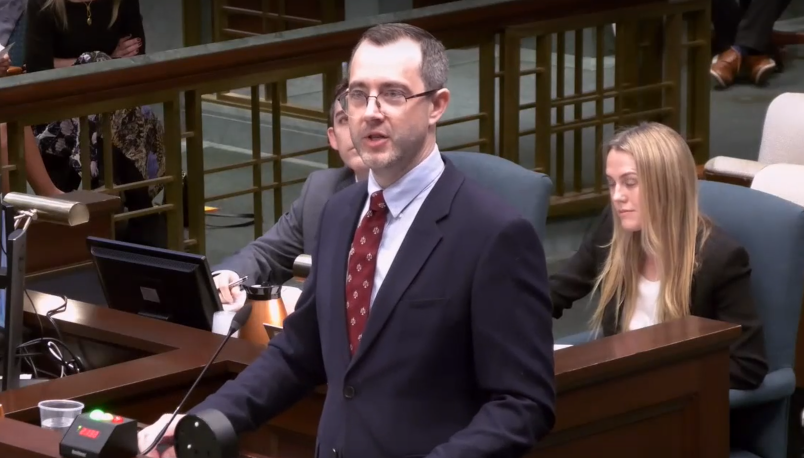
Photo of Robert H. Thomas

Robert H. Thomas

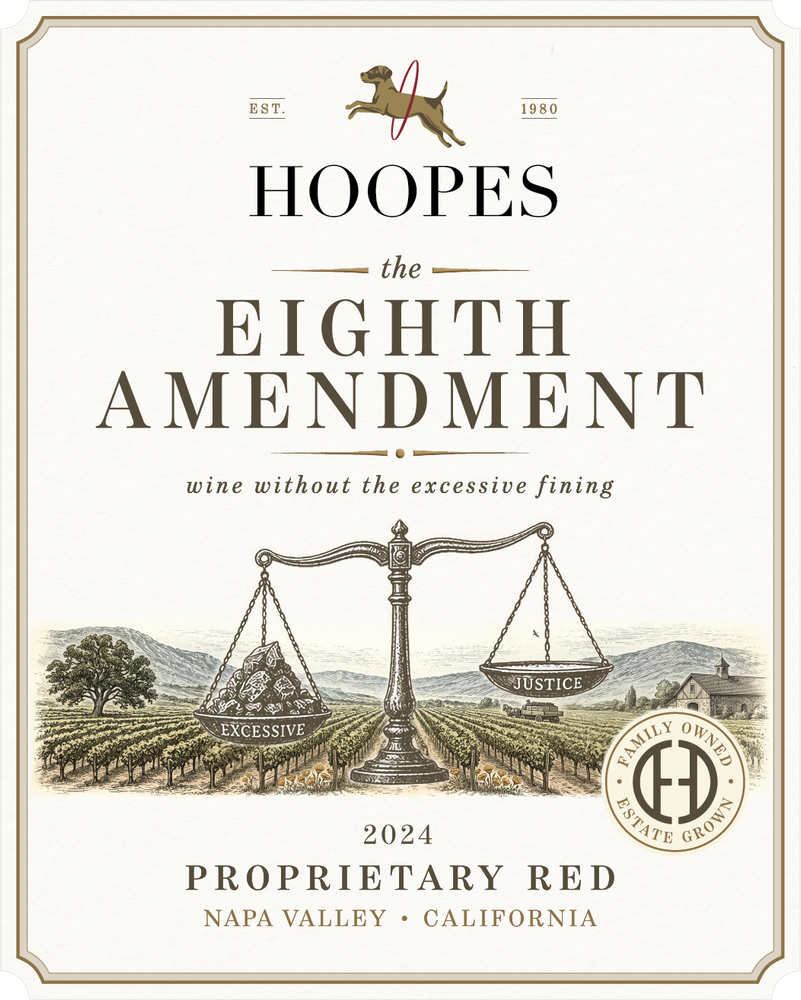
Worth checking out: in the vein of our old favorite Eminent Domaine, a Napa Valley winery is offering for preorder its “Eighth Amendment” wine.

What’s the deal with the name? We all know the U.S. Constitution’s Eighth Amendment, which prohibits the imposition of excessive fines.
Continue Reading Eighth Amendment Proprietary: Wine Without the Excessive Fining


Here’s a cert petition that asks whether a local government (here, the granola-swanky Marin County, California) as a condition of approving a building permit may require a property owner to restrict uses of the land to commercial agriculture, and bind all future owners of the property as well. Because this is one of ours, we won’t be going into great detail but will instead leave it to you, starting with the Questions Presented.
Continue Reading New Cert Petition: Can You Be Forced To Be A Farmer Under The Police Power?

If you are a plaintiff, you may rightly predict that if an opinion begins with the words, “[r]oughly two decades ago…” there’s a good chance you aren’t going to like the outcome. Courts tend to not like cases that are based on facts that occured 20+ years ago, after all. But that’s how the U.S. Court of Appeal for the Fourth Circuit’s opinion in Poppleton Now Community Ass’n LLC v. La Cite Development, LLC, No. 25-1770 (May 4, 2026) begins. Yet perhaps surprisingly, the court’s ruling against the plaintiffs is not based on the statute of limitations or some other defense keyed to the passage of time. Or any other procedural defense. Indeed, the court reversed district court’s judgment which had dismissed the complaint because the plaintiffs lacked standing.
Continue Reading CA4: Neighbors Can’t Challenge Failed Redevelopment That Resulted Only in “Vacant And Neglected” Property Next Door

Worth checking out. Although academics (and, presumably, those who pay for the privilege) have been able to access a limited catalog of historic records and briefs from the U.S. Supreme Court, thanks to the Wolf Library at William & Mary Law School, those same records are now generally available, for free.

Go here to

Here’s the latest in a case we’ve been following for quite a while. In Ohio ex rel. AWMS Water Solutions, LLC v. Mertz, No. 2026-Ohio-1487 (Apr. 29, 2026), the Ohio Supreme Court held that the operator of injection wells lacked an investment-backed expectation to operate such wells because it did business in a highly-regulated environment, and it understood at the time it purchased the property the risk it would be further regulated. Slip op. at 17-18.
Continue Reading Ohio: Temporarily Shutting Down Injection Wells After Earthquakes Is Not A Penn Central Taking

Here’s the story: Los Angeles issued a homeowner demolition and grading permits, okaying the tear down of a dilapidated house. The owners already owned the adjacent parcel, and purchased the dilapidated house with plans to tear it down and make a better use of the adjacent land. The next day, a city council member (cosplaying as Marilyn Monroe) began the city’s process of designating the property a historic-cultural monument because the house was once owned by Ms. Monroe for a few months (it’s where she o.d.’d in 1962).
Continue Reading Property Rights Are No Candle In The Wind: LA May Designate A Dilapidated House An Historic Monument, But Only If Owner Paid Compensation

Yesterday, in First Choice Women’s Resource Centers, Inc. v. Davenport, No. 24-781 (Apr. 29, 2026), the U.S. Supreme Court held that an organization which provides counseling and resources to pregnant women had standing to bring a First Amendment challenge to the New Jersey Attorney General’s subpoena which sought information about the organization’s donors. Interesting issue, for sure. But what’s the case doing here? Well, among other things, the Court held the case was ripe. Ah, now you get it.
Continue Reading SCOTUS Gives Takings Ripeness Hints In First Amendment Opinion

Hawaii has a unique status among American states. It is the only state that once was a separate sovereign nation, the Kingdom of Hawaii and then its short-lived successor, the Republic of Hawaii. Yes, we know that Texas may lay claim to the whole six-flags thing, so maybe the more accurate statement would be that Hawaii is the only state that was a sovereign kingdom, ruled by royalty.
Continue Reading If A King Must Comply With “Every Form And Particular” In Eminent Domain, Then Today’s Condemnors Also Surely Must

You land user types know that the concept of “vested rights” or “zoning estoppel” and related doctrines line nonconforming uses are very state-specific. From early vesting jurisdictions where merely filing an application for a permitted use locks in the then-existing restrictions on use, to places like California where you need to have driven the last nail before you can say you are vested. Then there are those jurisdictions somewhere in the middle which say there has to be some action by government that induces reasonable reliance in the form of expenditures.
Continue Reading Uno Reverse: Iowa Says That Until Government Regulates, Your Expectations To Use Your Property Can Never “Crystallize”

In an historic win for property owners in California, in Shear Dev. Co., LLC v. California Coastal Comm’n, No. S2284378 (Apr. 23, 2026), the unanimous California Supreme Court held that the Coastal Commission–which we can say without exaggeration is the most unaccountable and out-of-control agency in the nation–overstepped its authority when it purported to override a municipal government’s approval of a building permit. [Barista’s note: our firm represents the prevailing property owner in the case, and the head of our Coastal Property Rights group, Jeremy Talcott is lead counsel.]
Continue Reading California Supreme Court Reins In The Most Unaccountable Agency In The Nation, The California Coastal Commission