
In an historic win for property owners in California, in Shear Dev. Co., LLC v. California Coastal Comm’n, No. S2284378 (Apr. 23, 2026), the unanimous California Supreme Court held that the Coastal Commission—which we can say without exaggeration is the most unaccountable and out-of-control agency in the nation—exceeded its already-broad authority when it purported to override a municipal government’s approval of a building permit.
We say “historic” because the California courts are, generally speaking, pretty accommodating of the Commission’s assertions about the extent of its power and reach, even when those assertions really stretch the boundaries. We can’t think of the last time that a California appellate court slapped down the Commission so hard. Thus, for the Commission to fail to convince the entire California Supreme Court without a single dissenting or concurring opinion, is pretty stunning to us (even though we have always been confident we had a very good case). This case might be the most significant judicial push back to the Coastal Commission since the U.S. Supreme Court did so in Nollan (and that was an outsider court doing it, not the usually-accommodating California court).
[Barista’s note: if you haven’t figured it out by now, our firm represents the prevailing property owner in the case, and the head of our Coastal Property Rights group, Jeremy Talcott is lead counsel.]
Here’s the quick story. San Luis Obispo County has adopted a Local Coastal Program ordinance regulating development in the coastal zone in the County. Under the California Coastal Act, these LCP’s become effective after the Coastal Commission approves them (which it did here). Under the Coastal Act, when a municipal government adopts an approved LCP, that delegates to the municipality the authority to make land-use permitting decisions, with a very limited window for the Commission to inject itself. The point of the Coastal Act is to maintain a high degree of local control if a municipality has taken the effort to adopt an LCP to reflect its understanding of its obligation to protect public coastal resources when it is making land-use decisions.
In 2003, Shear began the process of building homes on its eight lots zoned by the County for residential development. In 2004, the County approved Shear building eight homes in two stages. In 2017, after Shear completed the first four homes, it sought the County’s approval to complete the balance.
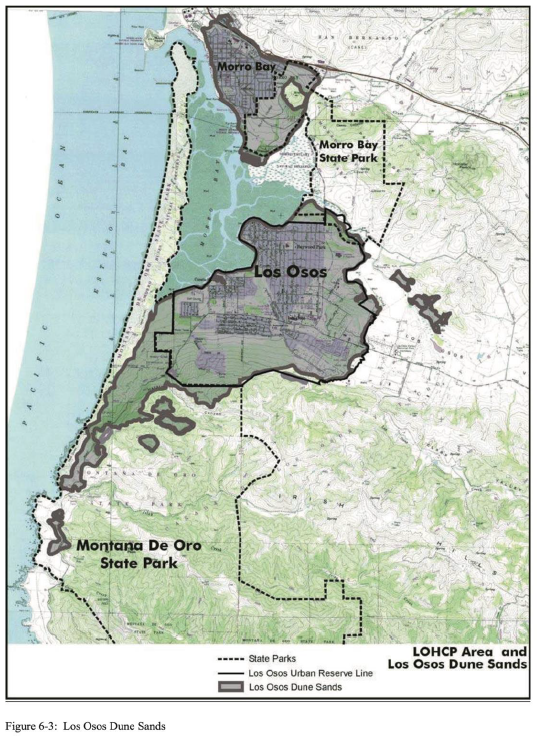
Here’s a map showing the location and the general vicinity.
After consideration of Shear’s plans under the LCP, the County granted a Coastal Development Permit. That should have been the end of it.
But after the County’s approval, the Commission appealed the County’s decision. And to whom did the Commission appeal? In one of the weirdest procedures we’ve ever heard of, California law allows two members of the Commission to institute an appeal … to the very Commission on which they serve. Yeah, you are reading that right. Despite the Coastal Act delegating exclusive land use decision-making to local governments which adopt LCPs, the Commission’s appeal claimed that, notwithstanding the County’s adoption of a Commission-approved LCP, the Commission retained the power to overrule all local permitting decisions. The coast is the Commission’s world and property owners and local governments just live in it.
The lower courts agreed with the Commission, but with the County’s support, Shear sought discretionary review. The California Supreme Court said yes. Back in December of last year, the court held oral arguments (video recording here).
Today, the court, in an opinion by the Chief Justice, held for the property owner on every argument made, and (dare we say) resoundingly rejected the Coastal Commission’s
Here’s the court’s summary:
We hold, first, that a court should exercise its independent judgment in determining the Commission’s appellate jurisdiction when that jurisdiction depends primarily on interpretation of an LCP rather than factual matters. An LCP is enacted law, and the independent judgment standard is well established as the standard of review for an agency’s interpretation of the law. Second, where two entities offer incompatible interpretations of a law that both administer, a court should apply the traditional Yamaha factors regarding agency deference to each entity’s interpretation. (See Yamaha Corp. of America v. State Bd. of Equalization (1998) 19 Cal.4th 1, 12–13 (Yamaha).) When the factors do not clearly favor either interpretation, as here, no deference is due to either. Third, the proposed development is not in an SCRA because the LCP does not designate it so. The Commission relies primarily on a single figure in the LCP, captioned “Figure 6-3” (see pt. II.E.1., post), but this figure does not support the Commission’s reading, and the LCP as a whole supports the opposite reading. The Commission does not have appellate jurisdiction on this basis. Fourth, and finally, the Commission does not have appellate jurisdiction solely because a site has multiple principal permitted uses. Rather, the Commission has appellate jurisdiction when the proposed development is not designated as the principal permitted use — or one of several principal permitted uses — of the site under the local government’s LCP. Since Shear’s proposed development is for one of several principal permitted uses, the Commission does not have appellate jurisdiction on this basis. Thus, we conclude that the Commission does not have appellate jurisdiction over Shear’s permit application and therefore reverse the judgment of the Court of Appeal.
Slip op. at 1-2.
Critical takeaways:
Courts are the law-interpreters: Courts don’t defer to what the government says its laws say. The courts are the law-interpreters with “independent judgment” about what an LCP requires, and do not have to defer to what the government or the agency claims the law says.
Two wolves and a lamb arguing over the Law of Wolves? Same: If there are two governments or agencies involved which have different views of what the law says? Same, no deference to either. Judges can read the law, even where the government offers its interpretation.
Coastal Commission doesn’t have authority just because it says it has authority: Applying these rules, the court held that a reading of the County’s LCP ordinance makes clear that this area isn’t designated as sensitive habitat, because, guess what, the LCP doesn’t designate it as sensitive habitat. Slip op. at 37 (“We conclude that the proposed development is not in an SCRA under the old LCP, and the parties agree that the proposed development is not in an SCRA under the new LCP.”). The court rejected the Commission’s claim that just because the Commission thinks it is in a sensitive habitat, it is, notwithstanding the LCP.
CCC hubris thwarted: The Supreme Court soundly rejected the Coastal Commission’s arguments which would have resulted in a massive expansion of its already-too-broad appellate jurisdiction. This case represents what happens when an unaccountable agency like the Coastal Commission lacks oversight: you get outrageous arguments that reflect the agency’s apparent belief that it is above the law. Not this time.
Writ granted, which means no further proceedings other than the Superior Court issuing a writ to compel the Coastal Commission to vacate its appeal and dismiss. See slip op. at 49-50 (“The writ shall direct the Commission to vacate its decision and dismiss the appeal for lack of jurisdiction.”).
More on the decision here from Courthouse News Service (“California Coastal Commission slapped down in fight over San Luis Obispo development“).
Shear Dev. Co., LLC v. California Coastal Comm’n, No. S284387 (Cal. Apr. 23, 2026)