Photo of Robert H. Thomas

Robert H. Thomas

6a00d83451707369e2022ad3b86fce200d-800wi

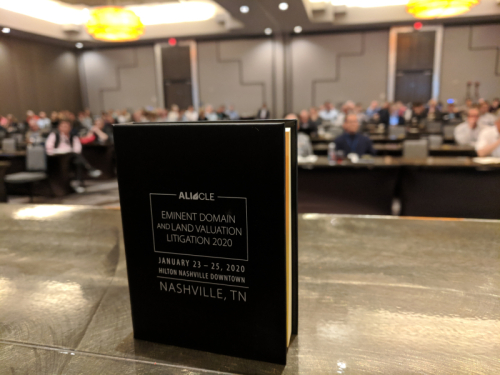
You overwhelmingly asked for Nashville, and we’re bringing it to you!

Get ready, and hold your place now: here’s the list of programs and speakers for the 36th Annual ALI-CLE Eminent Domain and Land Valuation Litigation Conference, to be held at the Downtown Nashville Hilton, January 23,- 25, 2020. Two-and-a-half days with top-notch national

Untitled Extract Pages

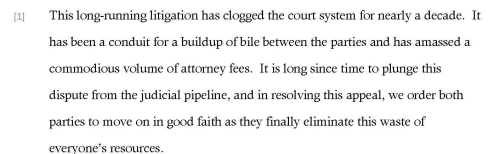
We’re posting the Indiana Court of Appeals’ recent opinion in Hoagland Family Ltd. P’ship v. Town of Clear Lake, No. 18A-PL-2088 (Aug. 28, 2019) not because it says much about eminent domain law, but more because (1) we commented on the case last time it was before the court, and (2) it’s kind

Here are the final briefs in the cert process in a case we’ve been following.

In In Guerin v. Fowler, 899 F.3d 1112 (9th Cir. 2018), a three-judge panel of the Ninth Circuit held that Washington state officials’ failure to return daily interest that was allegedly skimmed from the plaintiffs’ state-managed retirement accounts could

Every year at this time, it seems, we’re realizing again that as you get older, you forget birthdays. Thus, it only occurred to us only over this past weekend that that this blog’s “birthday” passed without notice.

It hardly seems like thirteen years ago that we posted here for the first time. In law

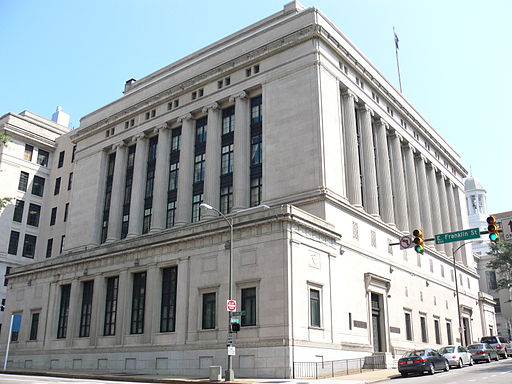
SupremeCourtofVirginiaBuilding

We sometimes assume that everyone gets that the point of an eminent domain valuation trial is to try to establish the price the real-world market of buyers and sellers would have arrived on for the property being taken had the transaction been voluntary. We know it is all hypothetical because this market didn’t actually exist

A very short (3 pages) opinion from the U.S. Court of Appeals for the Fifth Circuit in a takings case. In Bay Point Properties, Inc. v. Mississippi Trans. Comm’n, No. 18-60674 (Aug. 27, 2019), the court somewhat cryptically concluded that a property owner who asserted that it was not fully compensated in state court

For many years, a tenant had a month-to-month lease from Baltimore for a space in one of the city’s public markets. One day, the market sent the tenant an email informing it that it no longer “fit in the [redevelopment] plans,” and that it should “pursue other options.” The tenant took that as “get

Today, we’re featuring a post written by our Tennessee colleague, economist William Wade. He writes about the Massachusetts Court of Appeals’ recent decision in Smyth v. Conservation Comm’n of Falmouth, and the more recent cert petition in that case. Bill writes and comments frequently on takings cases. See, e.g., William W.

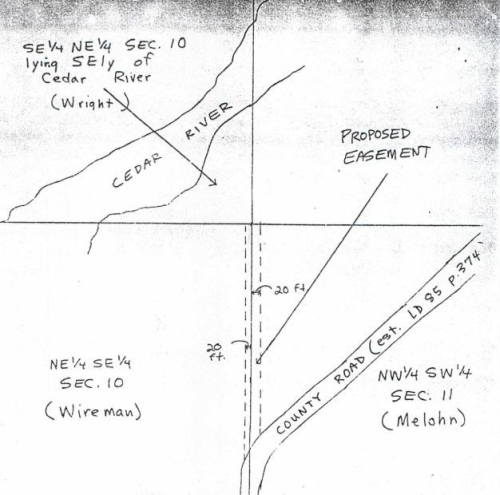
181437_RAGSDALE_v_WIREMAN_2151A2F856C99

Here’s an interesting twist on the process which, in some states, recognizes the ability of one private owner to condemn the property of a neighbor. Most often this arises when a landlocked parcel exercises eminent domain to take the property of a neighbor for access.

It always struck us a little odd that the sovereign