
In this very short (but apparently published) opinion, the U.S. Court of Appeals held that it was not right to dismiss a claim on the pleadings and that factual development is warranted, even where the complaint alleges that a municipal land use ordinance is arbitrary and capricious, and the city claims it has a
They’re Here, Ready For Shipment: Your Inversecondemnation.com Fleecy Swag Vests (Just In Time For Summer!)
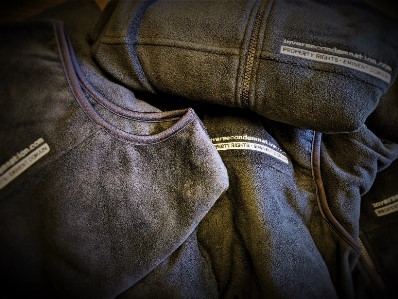
As we noted here (“Would You Like A Fleecy Inversecondemnation.com Swag Vest? If So, Here’s How To Get Yours“), we have produced the first post-prototype batch of swag attire.
After several delays (“supply chain” they said, but that’s probably what everyone hears nowadays), we have received the production order from the manufacturer and
Texas Supreme Court: We Want To Resolve Whether Short-Term Renting Property A Natural Right, Just Not In This Case
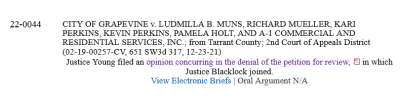
In this order, the Texas Supreme Court declined to review a case we’ve been following, in which the court of appeals held that Grapevine’s total ban on short-term renting of property — banning even owners who had been doing so for a while — might be a taking. The court held that even
New Takings Ripeness Cert Petition (Ours): Knowing The Permissible Uses “to a reasonable degree of certainty” Is All You Need For A Claim To Be Ripe
Here’s the cert petition, filed last week, in a case we’ve posted about. See here (Ninth Circuit arguments) and here (en banc petition).
The Ninth Circuit affirmed dismissal of a takings claim because (it held) the claim isn’t ripe. The government hasn’t made up its mind, and just might allow the owners to
CAFED: Temporary But Recurring Flooding Is A Categorical Taking, Not Penn-Central-Plus
Here’s the latest in a case we’ve been following.
In Ideker Farms, Inc. v. United States, No. 21-1949 (June 16, 2023), the U.S. Court of Appeals for the Federal Circuit held that temporary, but recurring government-caused flooding was correctly treated by the Court of Federal Claims as a categorical per se taking, and
Join Us August 9, 2023: ALI-CLE’s “How Did Property Rights Fare at the Supreme Court? What Happened in the 2022 Term and What’s Next”
On Wednesday, August 9, 2023 at 1:00 – 2:00 p.m. (Eastern Time), please join us for ALI-CLE’s web program, “How Did Property Rights Fare at the Supreme Court? What Happened in the 2022 Term and What’s Next.”
Here’s the course description:
This has been a blockbuster U.S. Supreme Court term for property law
Happy 808th (The) Magna Carta (Charta) Day!

808 years ago today* on a grassy plain down by the river, the barons convinced bad King John to affix his seal to Magna Carta. Or the Magna Carta. Or Magna Charta. However you want to grammarize it. (And no, he didn’t “sign” it, they didn’t do things like that back then.)
And
Tuesday Round-Up: Sackett, Tyler, Defending Zoning, Canada Property Rights … And More
Here’s what we’re reading this Tuesday:
- Tiffany Lashmet’s Ag Law in the Field podcast: “Episode #155: Jesse Richardson and Anthony Schutz (Sackett v. EPA)“
- Lawprof Ilya Somin, Brennan Center for Justice: “Supreme Court Strengthens Federal Protection for Property Rights“
- Also from Prof Somin, Volokh Conspiracy: “A Flawed Attempt
ICYMI: “Property Rights Hat-Trick: Breaking Down PLF’s Supreme Court Victories” (vid)
Missed our law firm colleagues Jeff McCoy, Damien Schiff, and Christina Martin when they were live, talking about their SCOTUS wins in Wilkins v. United States (is the statute of limitations in federal Quiet Title Act cases a jurisdictional bar?), Sackett v. E.P.A. (scope of Clean Water Act wetlands jurisdiction), and Tyler v. Hennepin County
California Supreme Court Reviewing The Murderer’s Creek Inverse Case
Check out this now-under-consideration Petition for Review, which asks the California Supreme Court to take up a case involving Murderers Creek, in Pleasant Hill, California. (Now there’s a jarring juxtaposition for you.)
The case started off as a “routine inverse condemnation case.” Pet. at 2. When Murderers Creek flooded, it damaged the plaintiffs’