Inverse condemnation

Bergerpage

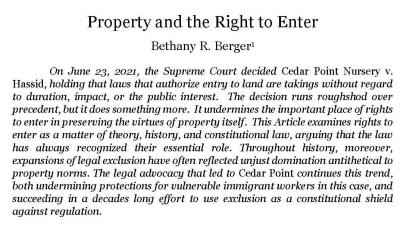
A new article by lawprof Bethany Berger, “Property and the Right to Enter,” criticizing the Supreme Court’s ruling in Cedar Point Nursery. The article builds on the amicus brief in the case, also authored by Prof Berger.

Here’s the Abstract:

On June 23, 2021, the Supreme Court decided Cedar Point Nursery v. Hassid, holding that laws that authorize entry to land are takings without regard to duration, impact, or the public interest. The decision runs roughshod over precedent, but it does something more. It undermines the important place of rights to enter in preserving the virtues of property itself. This Article examines rights to enter as a matter of theory, history, and constitutional law, arguing that the law has always recognized their essential role. Throughout history, moreover, expansions of legal exclusion have often reflected unjust domination antithetical to property norms. The legal advocacy that led to Cedar Point continues this trend, both undermining protections for vulnerable immigrant workers in this case, and succeeding in a decades long effort to use exclusion as a constitutional shield against regulation.

Definitely worth reading.
Continue Reading New Article (Bethany Berger): “Property and the Right to Enter”

FedCtsTakingsArticlepage1

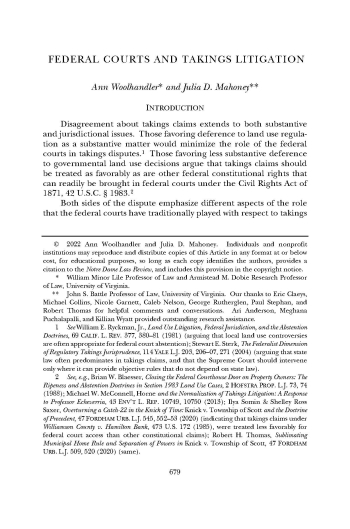
A new article on takings from U. Virginia Law School profs Ann Woolhandler and Julia Mahoney in the Notre Dame Law Review, “Federal Courts and Takings Litigation.” Get the pdf here.

Rather than try and summarize the piece, we’re just going to cut-and-paste the highlights from the article’s Introduction:

While Knick clearly expands

Another takings challenge to a Co-19 shutdown, another “no taking” result.

This time, it is from the Florida District Court of Appeal (Fifth District). In Orlando Bar Group, LLC v. Desantis, No.5D21-1248 (Apr. 8, 2022), the court affirmed dismissal of takings challenges to the governor’s emergency order that barred certain alcohol sales, and

Here’s the latest case challenging a pandemic-related eviction moratorium, this one from Minnesota and the U.S. Court of Appeals for the Eighth Circuit.

In Heights Apts, LLC v. Walz, No. 21-1278 (Apr. 5, 2022), the court reversed the district court’s dismissal of a property owner’s takings claims. The owner challenged the Minnesota governor’s residential

When you are building a sewer, grading is important. Otherwise, the stuff might not “flow” correctly, if you get our drift. Okay Public Works Authority built a sewer, and guess what? “The work performed by OPWA caused extensive damage” to private property, and the “lines installed by OPWA had not been properly graded.”

Not good.

Here’s a really short one from the U.S. Court of Appeals for the Fourth Circuit. Not published, so even shorter than you might expect.

In Virginia Hospital & Healthcare Ass’n v. Kimsey, No. 20-2176 (Mar. 1, 2022), the court rejected the Commonwealth’s argument that the sole remedy for a takings claim is just compensation.

CedarpointPRELcoverpage

Thank you to the editors over at The Practical Real Estate Lawyer for publishing my missive on Cedar Point Nursery v. Hassid, the U.S. Supreme Court’s recent blockbuster regulatory takings decision (and for letting me post a copy of the article here so it is available even if you are not a PREL subscriber).

IMG_20170323_142813

Sorry about the headline, but come on, man! We have to use clickbaity headlines every now and then to get your attention. Here’s the latest in a case we’ve been following.

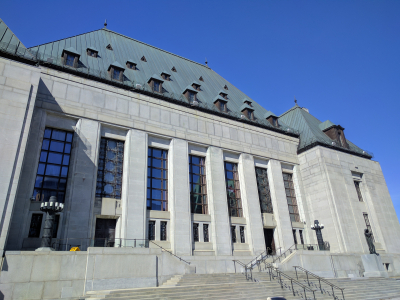
Yesterday, the Supreme Court of Canada heard oral arguments in Annapolis Group Inc v. Halifax Regional Municipality, a case involving “de facto

PXL_20220127_144224442

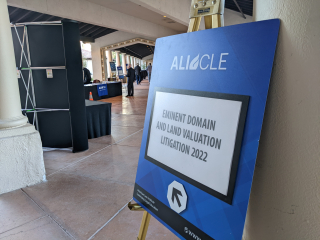
After a two-year absence in which we went remote, in the last week of last month (our usual spot on the calendar, between the playoffs and Super Bowl), we once again met in-person for the American Law Institute-CLE Eminent Domain and Land Valuation Litigation Conference.

Approximately 200 lawyers, judges, legal scholars, appraisers, law students