Attorneys Fees & Costs

When we previewed the 2017 ALI-CLE Eminent Domain & Land Valuation Litigation Conference while we were getting buried in the snow a couple of weeks ago, we promised there would be better weather in San Diego than much of the country was then experiencing. As you can see, we delivered.

We — and by
IMG_20170128_093740

Our final day was anchored, as usual, by Pacific Legal Foundation’s Jim Burling, and property rights guru and advocate Michael Berger. Jim was his usual riveting self, and Michael supplied the insight to cases which only he can.

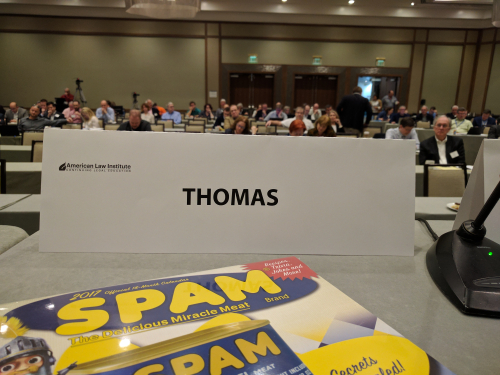
In case you are wondering, the above is the view from the dais, and no, I didn’t

IMG_20170126_133958

Here are the links and references to the cases we spoke about today at our opening session on the national trends in eminent domain law at the 2017 ALI-CLE Eminent Domain and Land Valuation Litigation Conference in San Diego. 

We again have a record attendance, and a good number of new attendees. If you aren’t

Here’s the amici brief we’re filing in a case which we told you about earlier, involving the way attorneys’ fees get calculated when a statute allows fee shifting. 

This is the afterglow of a rails-to-trails takings case, in which the property owners are entitled under the Uniform Relocation Act to attorneys’ fees. We like. 

ALI2017 - Copy
ALI2017

We’ve teased some of the details on the 2017 ALI-CLE Eminent Domain and Land Valuation Litigation and Condemnation 101 Conference, to be held at the Westin San Diego, January 26-28, 2017, but here are the details you’ve been waiting for.

This is the “big one,” our annual 3-day festival of all things eminent domain

 IMG_20160929_102807
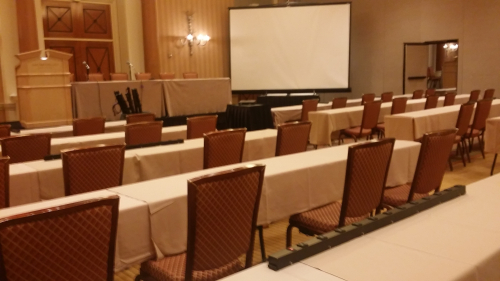
During. Good crowd.

20160929_074511
Before. Note the power strips on the tables.
Well played, Caesar’s, well played
.

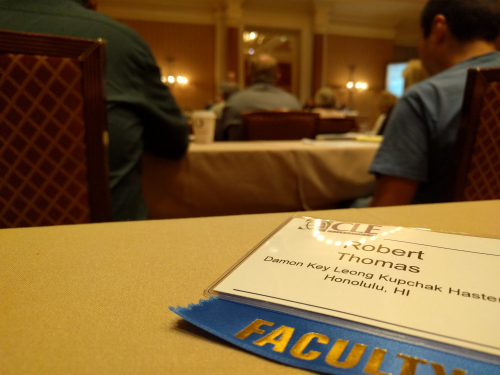
To supplement your written materials, here are the decisions and other materials which we spoke about this morning at the CLE International Eminent Domain seminar:

On one hand, we don’t care for attorneys’ fee fights. They are satellite litigation, almost always after the merits have been resolved. They can get tedious (does anyone like going over years of timesheets and billing records, and haggling over whether a motion should have reasonably taken 1 hour or 5 hours?), many judges don’t

2010-06-08 13.10.15

In today’s per curiam opinion in Wiesenberg v. University of Hawaii, No. SCWC-15-0000711 (June 30, 2016), the Hawaii Supreme Court clarified a point of appellate procedure that has been unnecessarily vague — and therefore dangerous — for a while: whether a trial court’s entry of an amended judgment, entered after the filing of a

Wilson-road

With apologies to Professor Kanner (who regularly features a “Lowball Watch” on his blog), we offer this report of Down v. Ministry of Transportation, No. LC140038 (May 12, 2016), a trial-level property owner victory by our Toronto colleague Shane Rayman (last seen in the pages of this blog winning a great case in the

The Pribeagus asserted the County’s failure to maintain a road caused their home to be flooded repeated. They sued in inverse condemnation, including in their suit a claim for damages both to their real property and their personal property. 

The trial court kept the Pribeagus from introducing evidence of the value of the personal property