In Grand v. City of University Heights, No. 24-3876 (Nov. 13, 2026), the U.S. Court of Appeals for the Sixth Circuit held that a complaint alleging a RLUIPA claim and others was not ripe because they are “land use” claims subject to Williamson County‘s final decision requirement.

A neighbor was “displeased” that Grand was using his home to hold a “shul,” which “in Hebrew refers to a synagogue or a house where prayers are held.” Slip op. at 2. The city told him to stop because his use as “a place of religious assembly” violated the zoning code (his home is zoned U-1, which doesn’t allow such uses).

Grand applied for a Special Use Permit, which would allow him to make the use as a “house of worship.” The Planning Commission had a hearing, but didn’t make a decision. It “tabled the discussion, requesting more details

Continue Reading CA6: RLUIPA Claim Subject To Williamson County Final Decision Ripeness Because It’s A “Land Use” Issue

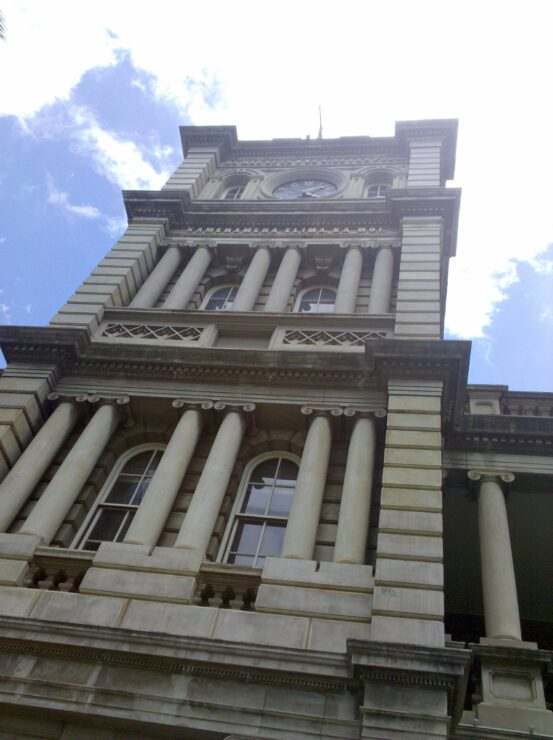
This image has an empty alt attribute; its file name is 2010-06-08-13.11.25-553x740.jpg

Here’s a case that isn’t about takings and our usual fare, but is nonetheless an example of how dirt law can be fascinating.

In Hilo Bay Marina, LLC v. State of Hawaii, No. SCAP-23-0000310 (Sep. 12, 2025), the Hawaii Supreme Court held that a restriction in a land patent issued by the State of Hawaii’s predecessor-in-interest (the Territory of Hawaii) in 1922, that limited the uses of the land to “Church purposes only” cannot be enforced under the state constitution’s establishment clause.

Continue Reading Restriction In Gov’t-Granted Deed Limiting Uses To “Church purposes” Can’t Be Enforced

The latest episode of the Is That Even Legal?” podcast features a familiar voice, that of former Eminent Domain Podcast host, Clint Schumacher who joins host Bob Sewell as a guest to discuss takings by eminent domain, and by overregulation. 

Clint joins the ITEL Podcast to discuss a situation that has been in the news lately, the possible taking of American-born Pope Leo XIV’s childhood home in Illinois to preserve it. What was just an old house yesterday is today history worth preserving, apparently!

Here’s a description of the episode:

What happens when the government decides it needs your land? Does the Constitution really allow officials to seize your family home, farm, or business property against your will? The answer might disturb you.

Attorney Clint Schumacher, a leading eminent domain expert, joins us to unravel the complex world where constitutional rights, property ownership, and government power collide. Schumacher

Continue Reading New “Is That Even Legal” Pocast Ep: “This Land Is Your Land…Till It’s Not” (Clint Schumacher)

2025RMLUI_750x550_FNL

Registration is open and underway for this year’s edition of the Rocky Mountain Land Use Institute in Denver, March 5-7, 2025. Location: University of Denver Sturm College of Law.

This conference is more what we’ll call “land usey” than ALI-CLE’s Eminent Domain & Land Valuation Litigation Conference (as the respective titles suggest), but there’s a lot at RMLUI for those whose practices lean more on the eminent domain side than the land usey. As we know, any attempt to draw a clean line between these practices is futile, and there’s tons of crossover. That’s why we’ll be there, downloading the latest.

As always, there’s a great a la carte menu of programs and tracks for attendees to choose from, including sessions on “Sheetz and Exactions,” “Brownfields Re-Re-Development,” “Managing Growth and Infrastructure in the Southwest,” “ADUs for Aging in Place,” and, thankfully, “Legal Ethics.” And some add-on workshops the day

Continue Reading 2025 Rocky Mountain Land Use Institute, Denver (March 5-7, Denver U. Law School)

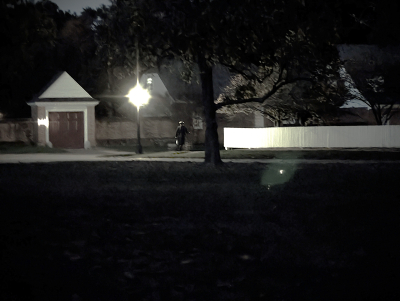
PXL_20241023_225039087.MP
Like most “paranormal caught on camera” shots,
this one is grainy.
But you can just make Mr. Jefferson out.

Colonial Williamsburg is adjacent to the William & Mary Law School, so from time-to-time, we’ll take a walk over just to soak up the atmosphere. The vibe picks up in the autumn season, when the leaves are turning and there’s a slight chill in the air. We try to time these visits for the evenings, because the atmo is particularly intense. 

And so it was yesterday afternoon and into the evening, as we were walking about CW that we happened to run into Thomas Jefferson, Esq., an up-and-coming Williamsburg lawyer, who was kind enough to spend a bit of time chatting. At the end of an educational and enjoyable conversation, we shook hands and went about our business.

A paranormal encounter with the spirit of Mr. Jefferson, author of

Continue Reading Last Night, I Shook Hands With Mr. Jefferson’s Ghost

This is one we’ve been meaning to post for a while, but something else always seemed to intervene.

In BMG Monroe I, LLC v. Village of Monroe, No. 22-1047 (Feb. 16, 2024), the U.S. Court of Appeals for the Second Circuit affirmed the dismissal of a statutory and constitutional challenge to the Village’s .

The court did so on the basis of the surviving part of the Williamson County ripeness requirement, that the government has taken a definitive position on whether it will allow some development of the plaintiff’s land under the challenged regulations.

BMG wanted to build 181 homes, so it developed plans for a mix of uses across several parcels, and development of related infrastructure like roads and a community center. This “did not conform to the zoning codes of the Village and Town.” Slip op. at 4. The Village and Town were ok with the proposal

Continue Reading CA2: If You Want To Be A Land Use Player, You Gotta Play (And That Means Keep On Trying – Without Hitching Rides)!

PXL_20240422_045016733.MP
There are some rewards for working late in the 808

Yesterday was the last day of instruction for the Spring 2024 semester at the University of Hawaii Law School. Did these last few months ever go by fast. 

A big thank you to Professor Mark M. Murakami, with whom I guest-lectured at the Old School (both of us earned our JD’s at the Law School) over the semester, on such topics as Euclid, vested rights and development agreements, and of course limitations on the police power such as takings.

Although our students have another couple of weeks to finish up with their final papers, we can say with certainty that the future of Hawaii land use law is in good hands. We had some very intriguing and educational discussions over the past few months. 

PXL_20230426_222214630

Law of the Splintered Paddle

PXL_20240423_050055849.MP       
Old School chalkboards remain in some of the classrooms.

Continue Reading Aloha To Another Semester Of U. Hawaii Land Use

Here are the cases that Michael Berger and I discussed in today’s presentation to the ABA State and Local Government Law Section’s Land Use group. It was good seeing everyone, even virtually:


Continue Reading Cases And Links From Today’s ABA State & Local Govt Law Land Use Presentation

You remember that longstanding trope: that matters of land use are “local” issues, and thus in civil rights claims involving a state or local government interfering with the right of property federal courts should avoid adjudication until the government has had every chance to do the right thing (even where it is patently obvious that it has no intention of doing so)? This trope most often shows up as a part of a ripeness dismissal, where the court says “too soon,” because, well, if given enough time and opportunity, the government might render adjudication unnecessary.

Well, in Ateres Bais Yaakov Academy of Rockland v. Town of Clarkstown, No. 22-1741 (Dec. 8, 2023), the U.S. Court of Appeals for the Second Circuit held a land use case ripe, and in the process blew up this overripe trope. Whoa!

But before you takings mavens get too excited, this is a RLUIPA

Continue Reading “Super-Zoning Board” No More – CA2 Busts The “Land Use Is Local” Trope: Town ZBA Doing Nothing On Variance Application Ripened Constitutional Claim

Before you get too excited by the U.S. Court of Appeals for the Sixth Circuit’s opinion in Catholic Healthcare Int’l, Inc. v. Genoa Twp., No. 22-2139 (Sep. 11, 2023), a spoiler up front: this may be a good ripeness decision, but this isn’t a takings case.

But you takings mavens may still want to take a quick look over the opinion for how the court deals with a ripeness argument in a case where the plaintiffs assert the Township violated their rights by denying (twice) its requests for a land use special permit.

The story is about a walking path created by Catholic Healthcare that contains fourteen “Stations of the Cross” “depicting the “story of Christ’s last day.” Slip op. at 1. The Township insisted that Catholic Healthcare obtain a special use permit, because the Township believed that the trail use is the equivalent of a church.

So

Continue Reading CA6: “The distric court’s ripeness determination, in turn, was plainly mistaken”