42 U.S.C. § 1983 | Civil Rights

What do takings mavens think about when they hear “New York City” and “takings?” Probably the granddaddy case of them all, Penn Central. Or maybe Courtesy Sandwich Shop, or Loretto. All good ones, landmarks. 

But this post isn’t about a visit to the sites of those cases (not to worry, we’ll get

The Connecticut Appeals Court’s opinion in Stones Trail, LLC v. Town of Weston, No. AC 38078 (July 18, 2017), does not offer a lot in terms of substance — it holds that a property owner’s regulatory takings claim based on the Town’s approval of what the owner thought was a subdivision was not ripe

The Township of Scott, Pennsylvania, apparently has a problem of unregulated cemeteries. Who knew?

So it did what local government do when they think they have a problem, it passed a law. That law, Ordinance 12-12-20-001, required owners of all cemeteries, public or private, to maintain them. The ordinance also contained two troublesome provisions.

You heard that right. After the Michigan Court of Appeals’ recent ruling in Lanzi v. Township of St. Clair, No. 329795 (May 23, 2017), you should consider skipping the usual Williamson County step of filing your federal takings claims in state court.

In that case, property owners sued the township after the township’s sewage

We don’t usually post unpublished opinions, but the Fourth Circuit’s recent decision in Clayland Farm Enterprises, LLC v. Talbot County, No. 15-1755 (Dec. 2, 2016), raised some issues worth your time. 

The property owner brought its claim in Maryland state court claiming, among other things, that the County’s two indefinite moratoria on development and

ALI2017 - Copy
ALI2017

We’ve teased some of the details on the 2017 ALI-CLE Eminent Domain and Land Valuation Litigation and Condemnation 101 Conference, to be held at the Westin San Diego, January 26-28, 2017, but here are the details you’ve been waiting for.

This is the “big one,” our annual 3-day festival of all things eminent domain

 IMG_20160929_102807
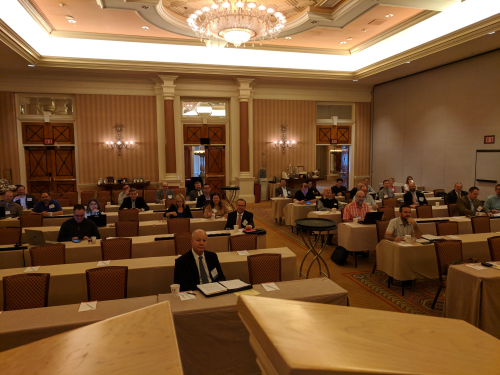
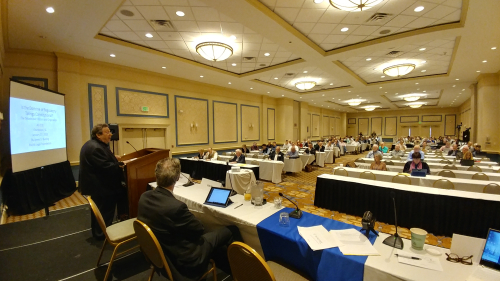
During. Good crowd.

20160929_074511
Before. Note the power strips on the tables.
Well played, Caesar’s, well played
.

To supplement your written materials, here are the decisions and other materials which we spoke about this morning at the CLE International Eminent Domain seminar:

The issue resolved by the Minnesota Supreme Court in Zweber v. Credit River Township, No. A14-0893 (July 27, 2016) was one that land use lawyers deal with constantly: when an administrative agency is alleged to have violated someone’s constitutional rights, what procedural route must the legal challenge take — is the plaintiff required to

A new(er) law review article, worth reading, from Dean Shelly Saxer, “When Local Government Misbehaves,” 2016 Utah L. Rev. 105 (2016). Here’s the abstract:

In this article, Dean Saxer examines the Supreme Court’s decision in Koontz v. St. Johns River Water Management District. In that land use case, the Court held that proposed