Property rights

1o 11 ALI-CLE

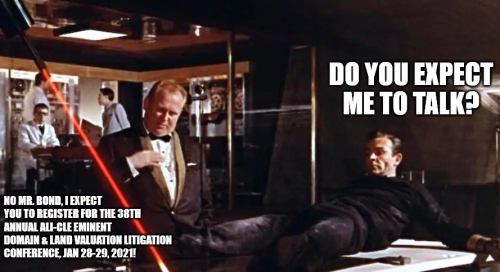
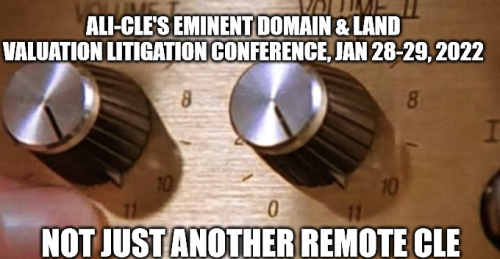
Are you a law student interested in takings, eminent domain, land use, environmental, and other dirt-lawyering related topics? If so, good news: thanks to the generosity of ALI-CLE, you can register gratis (free!) for the upcoming 38th Annual Eminent Domain & Land Valuation Litigation Conference, to be held remotely on Thursday and Friday,
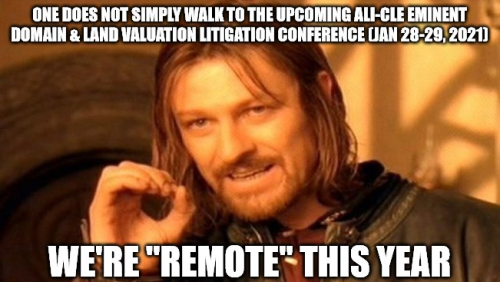
Our thanks to Clint Schumacher for having us on his program to talk about the upcoming Conference. We’re “remote” this year, but that means a different approach to our presentations (and a very modest tuition!).

We’re having programs with intriguing subjects such as “Planning to Win: Practical Strategies for a Successful Inverse Condemnation Case,”

Photo

Here’s a big development in a case we’ve been following for a while (and in which we filed an amicus brief in support of the prevailing property owner).

In DW Aina Lea Dev., LLC v. State of Hawaii Land Use Comm’n, No. SCCQ-19-156 (Dec. 17, 2020), the unanimous Hawaii Supreme Court held that the

Charlie Brown got a bag of rocks for Halloween.

But you aren’t so cruel, and want to give better gifts this holiday season to the dirt lawyer in your life, no? Here are our 2020 suggestions for stocking stuffers that will make property mavens celebrate the season. 

Start with this one, Professor Bart Wilson’s

Before it condemned a parcel of land in Bastrop County, the State of Texas made a bona fide offer to purchase to the owners of the fee as mandated by Texas law, which requires that a condemnor make an offer to the “property owner,” and provide a statement “to the landowner[.]”

But in In re

Often, the dispositive question in many takings cases tuns on whether the plaintiff owns “property,” and if so, what rights does that recognize. If you define the property in such a way that ipse dixit excludes the “stick” the owner claims was taken, then the answer is always going to be no property, no taking.

You know what SCOTUS nerds want for Christmas? These words, in a federal court of appeals opinion:

We are aware that our decision conflicts with the Ninth Circuit’s recent holding in Sierra Club v. Trump. That case involved a parallel challenge to the Government’s use of § 2808 funds to build the border wall.