Land use law

Nothing to do with the case, beyond the owner’s name.
But c’mon, its ABBA.

Ms. Money and her spouse own a home in San Marcos, Texas. That home is in a historic district.

But it turns out that some of that history isn’t pretty: one of the previous owners was “notoriously associated with the

1992 Aerial Photo Island2
Shands Key, with the City of Marathon in the background

This just in: in Shands v. City of Marathon, No. 3D21-1987 (Fed. 5, 2025), Florida’s Third District Court of Appeals sitting en banc held that the city’s downzoning of property (Shands Key, shown above in an exhibit from the Key West trial we participated

What to say about the Colorado Supreme Court’s recent decision in Nonhuman Rights Project v. Cheyenne Mountain Zoo, No. 24SA21 (Jan. 21, 2025), wherein the court resolved the momentous and highly controversial question of whether an elephant is a person?

Our first temptation is to see this through the takings lens (surprise), and snark

Here’s what we’re reading this day:

20180720_150853_HDR
The only courthouse we know where the Supreme Court
is
below the Court of Appeals (SJC on the second floor,
appellate court on the third)

A brief one from the Supreme Judicial Court of Massachusetts.

In Attorney General v. Town of Milton, No. SJC-13580 (Jan. 8, 2025), the court rejected a challenge to

Here’s a recently-filed cert petition to watch. We won’t go into the background, because the Questions Presented pretty much lay the foundation:

Respondent County of San Diego, et al. (County), a California land use agency, denied the land use permits for Village Communities et al. (Village) to develop a much-needed residential and mixed-use community

At first glance, it might seem like there’s a lot there in the U.S. Court of Appeals’ opinion in Becker v. City of Hillsboro, No. 23-3367 (Jan. 7, 2025).

After all, the city’s prohibition on new private wells and another requirement that newly built homes connect to the city’s water system seems a bit

With our tongues firmly planted in cheeks, the Planning Chairs for the upcoming 42d edition of this popular and venerable Conference bring you this “breaking news” report from San Diego!

As you know, in addition to being the best nationally-focused conference on the subjects that we love and a venue that is nearly certain to have some of the warmest winter weather in the continental United States, and we went on-location from some of the local highlights: the beaches, Torrey Pines, the Zoo, Balboa Park, the Gaslamp Quarter, and Coronado to name but a few.

More about the Conference here, including registration information.

Here are some of the highlights:

  • Property Rights at the Supreme Court: DeVillier and Sheetz and What’s Next
  • Slow Take: Possession, Rent, Relocation, and Offset
  • The Jury’s View: How Jurors See Your Case
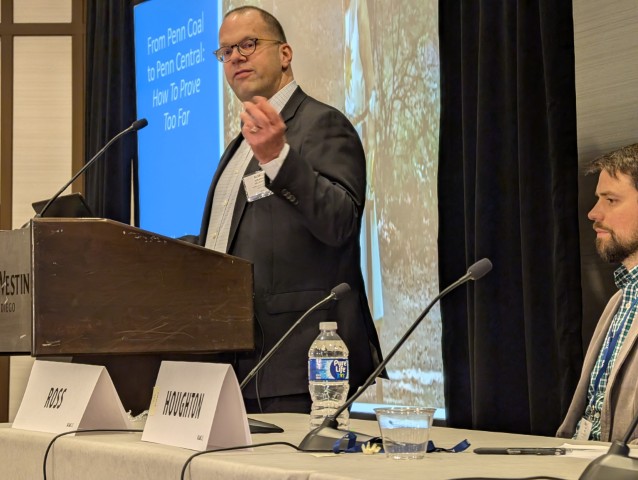
  • From Penn Coal to Penn Central: How to Prove “Too Far”
  • Leveraging Expertise in Eminent Domain Litigation: Working with Land Planners, Engineers, and Other Predicate Experts
  • Kelo at Twenty: What Changed, What Didn’t, and What’s on the Horizon
  • Viva Las Vegas: How the Nevada Judiciary Upheld Property Rights in 180 Land’s Inverse Condemnation Taking
  • Ethics: Guiding the Trolley: Perspectives on Professional Ethics in Eminent Domain for Lawyers, Appraisers, and Right of Way Agents
  • “I Think I Shall Never See” Just Compensation For a Tree: Strategies to Securing Recovery for Trees, Crops, and Fixtures

And more. Check out the complete agenda here. Registration information here

We especially welcome first-time participants, or those returning after an absence. Connect (or reconnect) with your colleagues from across the nation.

The 41st Conference was in New Orleans. Here’s a report of that event, and here are our reports from prior conferences in Austin and Scottsdale.

Don’t miss out on San Diego: we have had record attendance in recent years, so hold your space now. #EminentDomain2025

Continue Reading Breaking News: Come Join Us For The 42d ALI-CLE Eminent Domain & Land Valuation Litigation Conference, San Diego, Jan 30-Feb 1

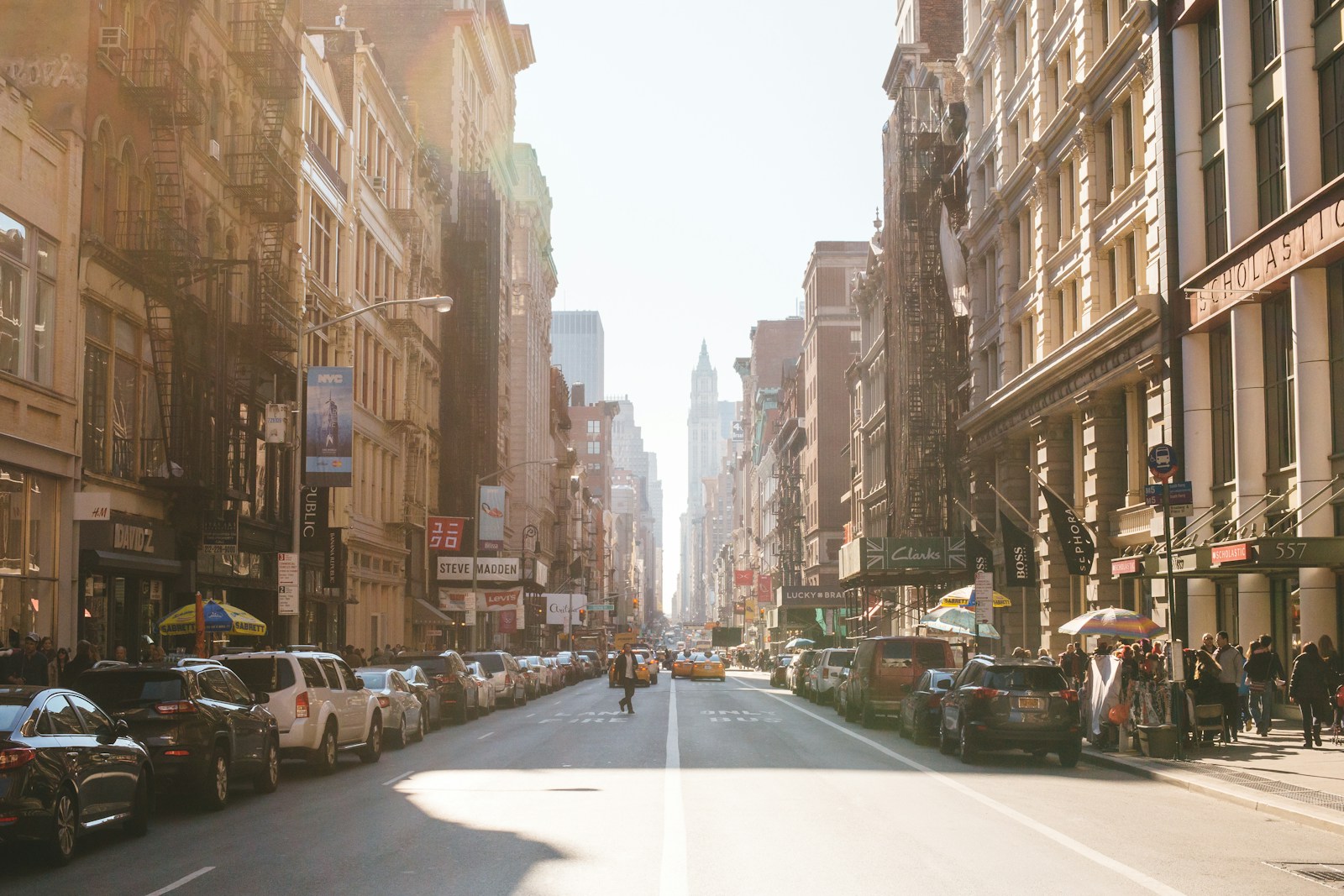
In what might be the most cliched “New York City” land use situation, check out the Appellate Division’s opinion in Coalition For Fairness v. City of New York, No. 2023-05338 (Dec. 5, 2024).

Want to convert your SoHo-NoHo artist live/work space to unlimited residential use? Be prepared to pony up and pay to the City’s Arts Fund a non-refundable fee of $100 per square foot as a precondition of even filing a building permit. 

When owners challenged this fee as unconstitutional under Nollan/Dolan/Koontz/Sheetz, the trial division said no. But the Appellate Division held otherwise, concluding that the imposition of the fee lacked an essential nexus and was not roughly proportional to whatever impacts “certified artists” (who knew the government was in the business of “certifying” artists?) suffer when an owner converts.

The opinion, in true Appellate Division style is short (3 pages), so you can just read it. But here’s how the court laid out the analysis:

The ZR’s prohibition on new JLWQA units, coupled with this stated goal of broadening uses and the ZR text providing for conversions away from JLWQA use, further indicates that the City’s long-term land use goal is to phase out JLWQA units (see ZR § 143-13). By contrast, the City’s asserted goal in its arguments on appeal, of supporting art and local artists, is not related to any land use interest (see Nollan, 483 US at 837). Nor does payment into the Arts Fund promote the asserted legitimate end of preserving JLWQA stock for certified artists, as the Arts Fund does not pay for joint living-work units or other housing for artists, much less offer benefits specifically to certified artists. Instead, money from the Arts Fund “shall be allocated . . . to support arts programming, projects, organizations, and facilities that promote the public presence of the arts within the [SNX] District and surrounding neighborhoods,” with priority given to “under-resourced organizations and under-served areas” (ZR § 143-02).

Slip op. at 3.

And no proportionality either, because “there is no evidence of negative impacts on certified artists arising from the changes in zoning. Instead, [the City] represented during the approval process that there was a ‘scarcity of certified artists able to purchase’ JLWQA units, due to an ever-decreasing number of annual artist certifications the previous decade.” Id.

Declaratory judgment and injunction issued.

Check it out.

Coalition for Fairness v. City of New York, No. 2023-05338 (N.Y. App. Div. Dec. 5, 2024)

Continue Reading NY App Div: Requiring Art Fee “Donation” To Get Building Permit Lacks Nexus, Proportionality

‘Tis the season for TV holiday movies. Here’s one to add to your list, as it is on-brand for us dirt lawyers. “Christmas at the Drive In” is described thusly:

“A property lawyer works to prove that her town’s Drive In Theater, a local institution, is not closed down at the holidays, finding