Penn Central

IMG_20170128_093740

Our final day was anchored, as usual, by Pacific Legal Foundation’s Jim Burling, and property rights guru and advocate Michael Berger. Jim was his usual riveting self, and Michael supplied the insight to cases which only he can.

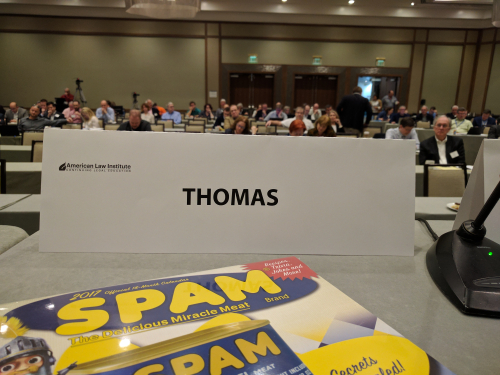
In case you are wondering, the above is the view from the dais, and no, I didn’t

IMG_20170126_133958

Here are the links and references to the cases we spoke about today at our opening session on the national trends in eminent domain law at the 2017 ALI-CLE Eminent Domain and Land Valuation Litigation Conference in San Diego. 

We again have a record attendance, and a good number of new attendees. If you aren’t

There have been a lot of takings and takings-related decisions coming out of the Court of Federal Claims lately, and we’ve held off on posting them individually. So to start off your New Year, here is a pop quiz.

Your task: guess whether the CFC held there was a taking, or no taking (answers below):

We’ve had bridges on our minds lately. Plus, we’ve been meaning to post the Nebraska Supreme Court’s opinion in Strode v. City of Ashland, No. S-15-956 (Oct. 28, 2016) for a while, and it is coincidentally about a bridge. So the title to this post came to us quickly, and naturally. But writing

ALI2017 - Copy
ALI2017

We’ve teased some of the details on the 2017 ALI-CLE Eminent Domain and Land Valuation Litigation and Condemnation 101 Conference, to be held at the Westin San Diego, January 26-28, 2017, but here are the details you’ve been waiting for.

This is the “big one,” our annual 3-day festival of all things eminent domain

Denials of rehearing and motions for en banc review from a state intermediate appellate court generally do not catch our attention. But Ganson v. City of Marathon, No. 3D12-777 (Sep. 14, 2016) is the exception to that rule.

This is a long-running regulatory takings dispute between property owners in the Florida Keys — who

Entry statutes are in the news lately. As we reported here for example, the California Supreme Court recently saved California’s entry statute from unconstitutionality by implying a requirement for a jury trial (and other eminent domain protections) when the entries which the condemnor seeks to undertake constitute takings.

In that case, the party seeking entry