Municipal & Local Govt law

To “slow the spread” in the early days of the Co-19 thing, the City ordered businesses to shut down. But not Wal-Mart, liquor stores, or churches. Golden Glow, a tanning salon objected, and told anyone who would listen that it could operate without person-to-person contact. Sorry, no exceptions.

Federal lawsuit followed, alleging the claims you

Florida law makes it really difficult for municipalities to adopt rent controls. State statutes and the Florida Constitution erect all sorts of substantive and procedural hurdles that must be crossed. For example, a statute requires findings that any such measures are responding to an emergency, a “grave … menace to the general public,” and places

The County of El Dorado requires everyone seeking a building permit for new development to pay a fee to mitigate the additional traffic that the proposed development is predicted to cause. But the County doesn’t calculate the fee by actually looking at a proposed development and predicting what traffic impacts in may be responsible for.

Earlier this month, the U.S. District Court invalidated Honolulu’s stretching of the minimum term for a residential rental from 30 days to three months, concluding that the ordinance likely violates the state Zoning Enabling Act, and also would be a taking if implemented. The court issued a preliminary injunction.

The lawyers repping the plaintiffs in

October 20, 2022 was what one advocate noted was “land use day at the Ninth Circuit,” because three out of the four cases being argued in Courtroom 3 of the San Francisco courthouse were indeed land use — or perhaps more accurately, regulatory takings — cases.

Ours was one of those cases, Ralston v. San

IMG_20170323_142842

Here’s one we’ve been waiting to drop, in a case we’ve been following.

Today, in Annapolis Group Inc. v. Halifax Regional Municipality, No. 39594 (Oct. 21, 2022), the Supreme Court of Canada held (and we’re translating into United States here), that to state a claim for a regulatory taking based on the government’s

We won’t be providing our detailed thoughts on last week’s U.S. Court of Appeals for the Sixth Circuit’s opinion in Hall v. Meisner, No. 21-1700 (Oct. 13, 2022), because we’re obviously biased: our law firm colleagues Christina Martin and Kady Valois represent the prevailing property owners, so we naturally agree with the court. Thus

Many Honolulu residents don’t like short-term (less than 30 day) rentals. Whether fueled by NIMBY-ism, a genuine belief that tourists should stay out of residents’ neighborhoods and be limited to accommodations built for transients, or the belief that long-term rentals to locals somehow promote more affordable housing, the anti-transient renter vibe is most definitely

We already know that in Rafaeli, LLC v. Oakland County, 952 N.W.2d 434 (2020), the Michigan Supreme Court held that a homeowner has a property interest in the equity in her home, and that if she fails to pay the full amount of her property taxes and the government forecloses, the government can’t keep

PXL_20220927_164202969

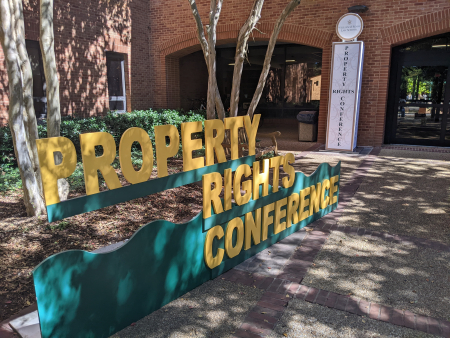
We spoke on the second panel of the day at the 2022 Brigham-Kanner Property Rights Conference at the William and Mary Law School. The subject of our panel — which included Professors David Callies, Tim Mulvaney, and Dave Owen — was “Reshaping the Framework Protecting Property Under the Roberts Court.

Here’s a rough