Land use law

Screenshot_2021-05-15 18th Annual Brigham-Kanner Prize Recipient

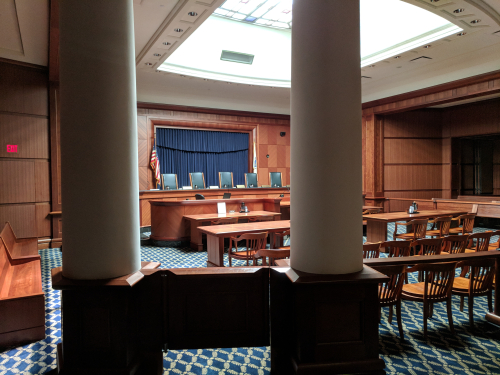
Mark your calendars for September 30 – October 1, 2021, and join us at the William and Mary Law School in Williamsburg, Virginia for the 18th Annual Brigham-Kanner Property Rights Conference. It’s planned to be in-person, so when we mean “join us” we really mean join us.

This year the Conference will recognize the lifetime
R.S. Radford’s most-recent article, Knick and the Elephant in the Courtroom: Who Cares Least About Property Rights? in the latest issue of the Texas A&M Journal of Property Law, should be next on your to-read list. 

Here’s the summary of the article:

Throughout the thirty-four-year history of Williamson County, one fact was taken for

IMG_20180720_152126_1

Under a Massachusetts statute, local redevelopment agencies have the power to respond to “decadent, substandard, and blighted open areas” either by creating an urban renewal project (redeveloping an area pursuant to a “detailed” and “comprehensive” plan; the statute expressly includes the power of eminent domain for urban renewal projects), or by a “demonstration” development (a

In which we join the Pendulum Land Podcast (again, thank you hosts!) to talk about the Virginia Supreme Court’s recent opinion in Johnson v. City of Suffolk, the case we label the “oyster takings” case in which Hampton Roads oystermen claimed that their property was taken when the City of Suffolk and the Sanitation

Dig this: property owners assert that the County’s right of way dedication ordinance is an unlawful exaction. You know the drill – logical nexus, rough proportionality, etc. Nollan, Dolan, Koontz. Here’s the short story: the owners sought subdivision plat approval without the dedication for public roads required by the ordinance. No deal. The County’s process

Read the allegations in the complaint that the Illinois Appellate Court recounted in Strauss v. City of Chicago, No. 1-19-1977 (Mar. 5, 2021), and they will make your hair curl in horror.

In short: a family rented the ground floor of its mixed residential-commercial building in Chicago to Double Door Liquors (a live music

For you original MTV folks

Here’s the latest in a case we’ve been following for a while (even since before the last time it went up to the Court). See this post (“The Chicago Way: City Taking Non-Blighted Property For Economic Development Was Not Pretextual Because…Studies“) and this one (“Illinois App: We

It’s Monday, so we’re just going to ease into the week by (inter alia) reading a couple of law review articles:

  • Federal Courts and Takings Litigation, by Prof. Ann Woolhandler & Prof. Julia D. Mahoney: “While Knick clearly expands the lower federal court role in takings claims, many questions remain, for it

6a00d83451707369e20240a51cc266200b-800wi

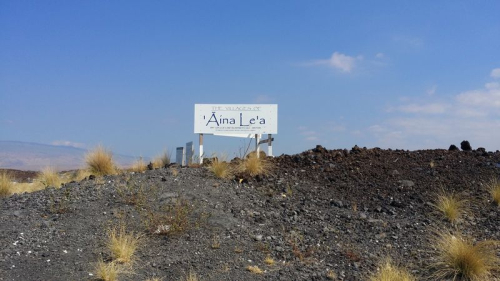
We were hoping for better news in a case we’ve been following in its various forms for what seems like forever. But today, the U.S. Supreme Court in this order declined to issue a writ of certiorari to review the Ninth Circuit’s decision in Bridge Aina Lea, LLC v. Hawaii Land Use Comm’n, No.

Regulatory takings challenges are no doubt tough. Especially Penn Central regulatory takings challenges. Facial Penn Central regulatory takings claims, moreso.

The U.S. Court of Appeals’ opinion in Clayland Farm Ents, LLC v. Talbot County, No. 19-2102 (Feb. 9, 2021) – the latest in this case we’ve been following – proves the point. The court