July 2022

Check this out: our friend and colleague, eminent domain lawyer Stephen J. Clarke is the new Jeopardy! champion.

And it wasn’t just a plain-old win for Steve. It was an exciting, come-from-behind triumph, based (no doubt) on his careful, strategic thinking and thoughtful play (this is chess, not checkers!). Just like his eminent

In Witman v. City of Billings, No. DA 20-0609 (July 5, 2022), the Montana Supreme Court rejected an inverse condemnation damaging claim after a grease clog in city sewers resulted in 1000 gallons of raw sewage flooding the Witman home. Ugh.

Despite rules that limit what is supposed to go into sewage systems, people

Here’s the latest in a case we’ve been following from when the takings case was rejected by the Court of Federal Claims, and the dismissal affirmed by the Federal Circuit.

Yes, this is the “bump stock” takings case, and the Federal Circuit decision has now triggered a cert petition.

You remember that

Screenshot 2022-07-07 at 13-44-38 The Brigham-Kanner Property Rights Conference

By now, you know that the 19th Brigham-Kanner Property Rights Conference is set for September 29-30, 2022, at the William and Mary Law School in Williamsburg, Virginia (register here – space is limited – fee ranges from free to $195 – a bargain!). And you know that our colleague Jim Burling is this

IMG_2405
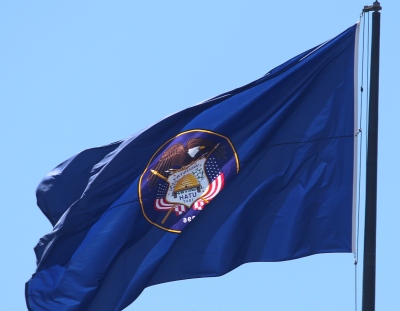
No smoking in Hatu

A short one from the U.S. District Court in Utah, but worth reading because it highlights one of those unresolved issues: the remedy for a “takings” claim.

Now, you’ve heard the Supreme Court describe just compensation as the “default” remedy for regulatory takings and inverse claims. But it isn’t the only

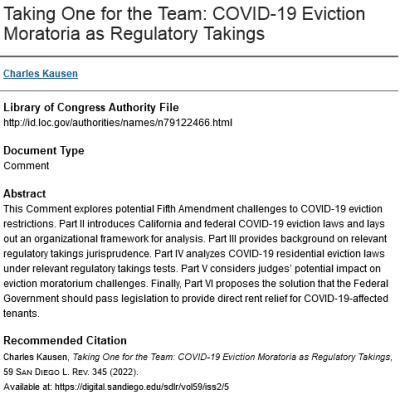
Screenshot 2022-07-02 at 09-16-05 Taking One for the Team COVID-19 Eviction Moratoria as Regulatory Takings

Check it out: a new article from the San Diego Law Review that’s worth reading. Here’s the Abstract:

This Comment explores potential Fifth Amendment challenges to COVID-19 eviction restrictions. Part II introduces California and federal COVID-19 eviction laws and lays out an organizational framework for analysis. Part III provides background on relevant regulatory takings jurisprudence.