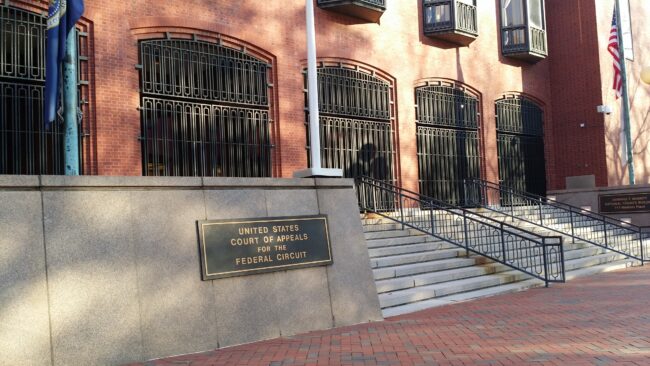
Oral arguments in Cienega Gardens v. United States (Fed. Cir. No. 06-5051, Apr. 2, 2007), a case involving the application of the Penn Central ad-hoc test for regulatory takings, have been posted in two parts on the Federal Circuit’s web site: part 1 (68mb mp3), and part 2 (7mb mp3).

Also posted is the oral argument in the related case, Chancellor Manor v. United States (Fed. Cir. No. 06-5052, Apr. 2, 2007) here (39mb mp3).Continue Reading ▪ Federal Circuit Arguments on the Penn Central Factors (mp3)

In United States v. 191.07 Acres of Land (Martinek)(No. 04-35131, Apr. 4, 2007), the Ninth Circuit set out a good definition of “inverse condemnation” in the context of when a property owner has a right to a jury trial for federal takings. 

    Where the [condemnor] does not acquire privately owned land statutorily but instead physically enters into possession or institutes regulations that restrict the land’s use, the owner has a right to bring an “inverse condemnation” action to recover the value of the land.  Kirby Forest [Inds., Inc. v. United States, 467 U.S. 1, 4-5 (1984)].  “Such as suit is ‘inverse’ because it is brought by the affected owner, not by the condemnor.  The owner’s right to bring such a suit derives from the self-executing character of the constitutional provision with respect to condemnation.”  Id. at 5 n.6

(slip op. at 3865).  In Martinek

Continue Reading ▪ What is “Inverse Condemnation?”

An interesting decision from the Kansas federal district court, Mount St. Scholastica, Inc. v. City of Atchison, No. 06-2208-CM (Mar. 12, 2007), contains a land use trifecta: historic preservation, religious objections to a denial of a permit, and regulatory takings.  (No link yet to opinion, which currently is only available via Westlaw; email me if you want a copy.  Update: Becket Fund for Religious Liberty has posted a copy of the opinion on its web site.)

Mount St. Scholastica, a “monastic community,” owns property that includes a building constructed in 1924 that has in the interim been used for classrooms, administration, and a community center.  By 1989, however, it had apparently outlived its usefulness to Mount St. Scholastica, which in 2005 sought a demolition permit from the city. 

The building itself apparently is not landmarked, but is near to historic properties, so under Kansas law, the owner needed a

Continue Reading ▪ Land Use Trifecta: Historic Preservation, Religious Uses, and Regulatory Takings

Steven Greenhut’s opinion piece at the Orange County Register, “The powerless have always been targets of eminent domain,” makes some good points about eminent domain abuse, and the recently-argued Wilkie case (regarding the right to be free from government retailition for defending a Fifth Amendment right), and is worth reading:

“Cities use code words,” explained Supervisor Chris Norby, a longtime foe of eminent domain abuse. “In the 1950s and 1960s, governments used the term ‘urban renewal,’ but critics knew that it was widely called ‘Negro removal.’ These days, we’re looking at forced gentrification,” as cities try to redevelop poorer areas into wealthy areas.

. . . .

Today’s code words and attitudes may be different than they were in the 1920s, but by giving government so much power to drive people off their land, we all are subject to the whims and rationales of officials. In the 1920s

Continue Reading ▪ Eminent Domain Abuse and Retaliation