
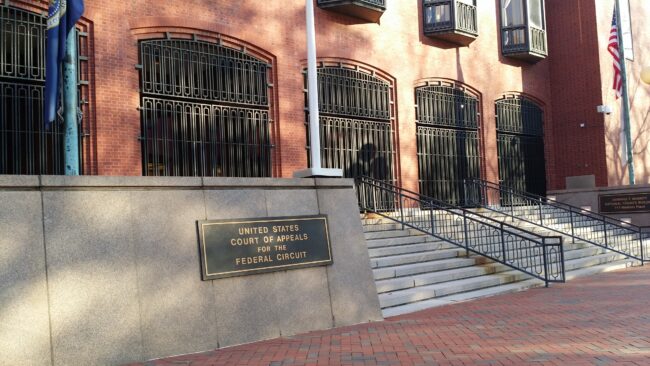
In an earlier post (“CAFED: Like We Said Before, “Inevitably Recurring” Flooding Is A Taking“), we covered the U.S. Court of Appeals for the Federal Circuit’s recent opinion in Alban v. United States, No. 23-1363 (Dec. 22, 2025), which held that the failure of the Corps of Engineers to properly operate two dams which resulted in upstream flooding when Hurricane Harvey struck was a “permanent” taking.
In this post, we’ll cover the latter part of the opinion, which dealt with the just compensation aspects of the case (each party appealed a portion of the Court of Federal Claims’s damage award).
The first claim was that the CFC’s award of compensation for damage to structures and personal property was not compensable. The Federal Circuit clarified that had the government merely taken a flowage easement, its claim to not be liable for such damage might have had some merit. But here, the government predicted there would be future flooding, but did not exercise eminent domain. In those situations, the government “bears the risk” that this will result in a greater taking, and thus greater compensation:
We have explained that “the flowage easement awarded by the trial court compensates Plaintiffs for the taking caused by future flooding,” and that past damages can be compensable if derived from a separate property interest. Ideker Farms, 71 F.4th at 986–87. This rule reflects the difference between condemnations and inverse condemnations: “when the government chooses not to condemn land but to bring about a taking by a continuing process of physical events,” the government bears the risk. Dickinson, 331 U.S. at 749. The Court of Federal Claims applied our precedent by awarding damages both for the value of the flowage easement and the value of destroyed structures and personal property.
Slip op. at 22-23.
But the Federal Circuit accepted the government’s argument that the CFC should not have awarded compensation for “lost income, utility payments, and rent,” because these are “consequential damages” not covered by just compensation. Slip op. at 23-24.
In Ideker Farms we held that the plaintiffs could receive compensation for destroyed personal property and crops to the extent “it was a separate and independent loss” not tied to the “value generated from the owner’s use of property.” Ideker Farms, 71 F.4th at 987. Thus, the plaintiffs in Ideker Farms could receive compensation for their land based on a flowage easement and separately for their destroyed crops but could not receive compensation for “revenues [p]laintiffs expected from unplanted seeds that were not destroyed by the flooding.” Id. at 987–88. Likewise, Mr. Sidhu received compensation for his real property interest in the form of compensation for a flowage easement, Damages Decision at 525–26, but should not also receive the lost profits tied to his business use of that real property. Gen. Motors, 323 U.S. at 379. Accordingly, we hold that the Court of Federal Claims erred by awarding Mr. Sidhu compensation for lost rent and for utility
payments.
Slip op. at 24.
Same for the CFC’s award for “the amounts they spent renting alternative housing while their properties were inaccessible.” Id. Because the flowage easement was a permanent taking which allowed the government “to temporarily occupy Plaintiffs’ property with water,” the owners “have already received ‘the market rental value of such a [property interest] by the long-term tenant to the temporary occupier,’ and no further compensation for the temporary occupation is proper.” Id.
The Federal Circuit next held that the CFC properly offset just compensation by the amounts the owners had received from FEMA. The court rejected the argument that these were general benefits. “The Court of Federal Claims did not clearly err in finding that double recovery would ensue if FEMA awards for damaged personal property were not offset.” Slip op. at 26.
So there you have it. A strong opinion on takings liability, and a hit-or-miss on just compensation.
Alban v. United States, No. 23-1363 (Fed. Cir. Dec. 22, 2025)