
The Sixth Circuit’s majority opinion in Wayside Church v. Van Buren County, No. 15-2463 (Feb. 10, 2017) isn’t all that exciting — after all, it was a takings case brought in federal court, and you know what that means: Williamson County — but do give it a read. The facts are somewhat unusual, even
Wyoming: Property Owner Claiming Inverse Condemnation For Spraying/Killing His Trees Must Exhaust Admin Remedy First
Bush’s trees had leafy spurge. “Hey,” said the Weed and Pest Control District, “we’ve got this herbicide stuff. How about we spray your trees free of charge? That will get rid of the leafy spurge.”
“Sure,” responded Bush.
Problem was the herbicide not only killed the leafy spurge. It (allegedly) killed some of the
2017 ALI-CLE Eminent Domain Conference Wrap, 2018 Venue Announcement
When we previewed the 2017 ALI-CLE Eminent Domain & Land Valuation Litigation Conference while we were getting buried in the snow a couple of weeks ago, we promised there would be better weather in San Diego than much of the country was then experiencing. As you can see, we delivered.
We — and by
Links & Materials From Day 3 Of ALI-CLE Eminent Domain And Land Valuation Litigation Conference, San Diego
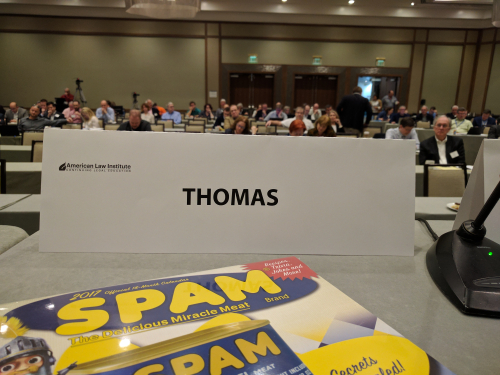
Our final day was anchored, as usual, by Pacific Legal Foundation’s Jim Burling, and property rights guru and advocate Michael Berger. Jim was his usual riveting self, and Michael supplied the insight to cases which only he can.
In case you are wondering, the above is the view from the dais, and no, I didn’t
Day 1, 2017 ALI-CLE Eminent Domain And Land Valuation Litigation Conference, San Diego

Here are the links and references to the cases we spoke about today at our opening session on the national trends in eminent domain law at the 2017 ALI-CLE Eminent Domain and Land Valuation Litigation Conference in San Diego.
We again have a record attendance, and a good number of new attendees. If you aren’t
Notes And Links From Today’s Hawaii Land Use Conference Session On Reg Takings

To supplement your written materials for the 2017 Hawaii Land Use Conference, here are the decisions and other materials which we spoke about this morning at the 2017 Hawaii Land Use Conference:
- Leone: Hawaii Supreme Court oral arguments in “economically beneficial use” case.
- CNMI: Compensation Delayed, Is Justice Denied
- Our colleagues’ recent
6th Circuit: City’s “War Of Attrition” Meant Regulatory Takings Claim Ripe For Federal Review
The Sixth Circuit’s opinion in Lilly Investments v. City of Rochester, No. 15-2289 (Jan. 5, 2017) is not slated for publication, but its worth a read anyhow because it involves Williamson County ripeness, and the “final decision” rule. Here’s how the court summarized the case:
This case concerns Louis Leonor’s efforts to open a
Hawaii Supreme Court Oral Arguments In Lucas “Economically Beneficial Use” Taking Case
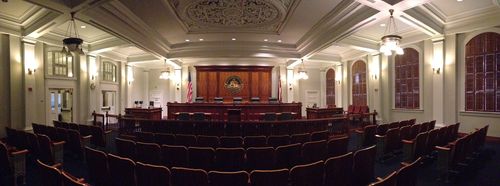
After the Hawaii Supreme Court decided GATRI v. Blane, 962 P.2d 367 (Haw. 1998) one big question remained.
In GATRI, the court held that in the coastal zone, a county Community Plan (also known as a “General Plan” in some counties) is a binding land use regulation, and thus has the force and effect
(Video) There’s Still Room At The Upcoming ALI-CLE Eminent Domain & Land Valuation Litigation Conference, San Diego, Jan. 26-28, 2017
Complete information, including registration, faculty, and agenda, here.
HAWSCT Considering Wipeout Regulatory Takings: What Is An Economically Beneficial Use?
Heads up for a case to watch being argued next week in the Hawaii Supreme Court.
This is a regulatory takings case that’s been up to the Hawaii appellate courts before (see here). In that opinion, the court of appeals correctly held that a property owner raising a regulatory takings case has no