
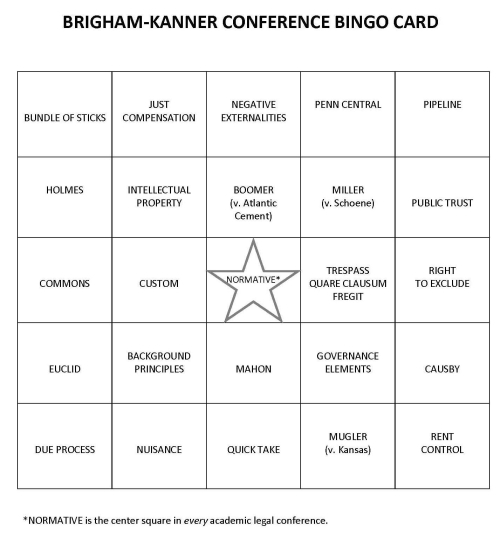
There’s Still Room: Join Us For The 17th Annual Brigham-Kanner Property Rights Conference (Online, Free!)

Although it is set to launch this Friday, October 2, 2020, there’s still more than enough time to register (and room at the inn) for you to join us for the 17th Annual Brigham-Kanner Property Rights Conference at the William and Mary Law School.
Like everything else this season, the Conference is online (
Breaking: News About The 2021 ALI-CLE Eminent Domain & Land Valuation Litigation Conference (Jan. 28-29, 2021)
News just in: we’ve just received confirmation that the Conference will not be in-person in Scottsdale in January 2021, and we’re going online.
Not a big surprise, but still a bit disappointing, and it’s a shame that the circumstances won’t allow us to meet in-person to talk shop and to renew our friendships like we
No Shortage Of Amicus Support For Takings Cert Petition (Lucas and Penn Central!)
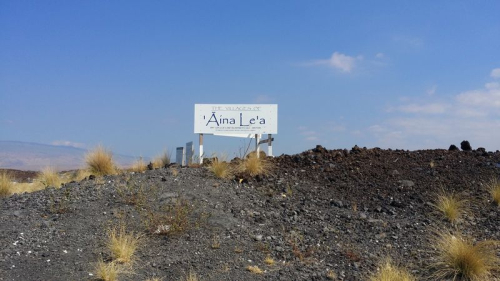
A short while ago, we featured the cert petition in a case from the Big Island that we’ve been following as various pieces of it went up and down through both the state and federal court systems. See “New (Mike Berger) Cert Petition: ‘This case is the proverbial ‘Exhibit A’ of much that is
Utah: As Long As A Taking Is For The Birds, Not The Enviro Plaintiffs, It’s A Public Use
In Utah Dep’t of Transportation v. Coalt, Inc., No. 20161063 (Aug. 17, 2020), the Utah Supreme Court dealt with a public use and a just comp issue.
The first is perhaps the more interesting. After a federal court upheld environmentalists’ challenge to the Environmental Impact Statement prepared by UDOT for its Legacy Parkway Project
Louisiana Court Slaps Down Pipeline for Just Going Ahead And Building Before Actually Taking Property
A pipeline needed private property. Did it wait until it had actually taken the property before it started to build the pipeline? No.
In Bayou Bridge Pipeline, LLC v. 38.00 Acres, No. CA 19-0565 (July 2020), the Louisiana Court of Appeal addressed a host of challenges:
- A broad facial challenge to Louisiana’s expropriation system.
Condemnor Protip From Florida: Choose Wisely (Make Clear What You Want To Take)
In Altman v. Brevard County, No. 5D19-1839 (July 10, 2020), the Florida District Court of Appeal considered a host of owner objections to a taking of easements over five beachfront lots:
(1) the County was required to obtain separate resolutions for each taking; (2) the County’s petition in eminent domain did not strictly comply
NY Takes Eminent Domain Law From Worse To Worse* – Conditional FERC Certificate Only Prohibits Construction, Not Eminent Domain
A private pipeline company obtained a certificate of public convenience from FERC. Under the Natural Gas Act, FERC may issue such certificates conditioned on the applicant meeting the Clean Water Act’s requirement of obtaining state environmental check off on the project. The pipeline needed an easement across Schuecker’s land, and began the condemnation process under
OK: Private Pipeline Company Is Like A Government: It Cannot Contract Away Its Right Of Eminent Domain
In Natural Gas Pipeline Co. of America LLC v. Foster OK Resources LP, No. 118,185 (May 5, 2020), the Oklahoma Supreme Court upheld the necessity of a taking of an easement across private property by a private pipeline company that possessed a FERC certificate of public convenience. Nothing too surprising there. The bar for
Things I’ve Learned (Am Learning) About #CoronavirusLaw
Our shut-in time has got us to thinking.
We’re all environmentalists now. This is the precautionary principle writ large. In a way, this is only part of a greater problem.
Welcome to the Twitterverse. We now have access to a vast amount of data — very often on a granular level — and this moves