Photo of Robert H. Thomas

Robert H. Thomas

IMG_20170323_142808

Here’s one we’re now following, thanks to a heads-up from a northern colleague.

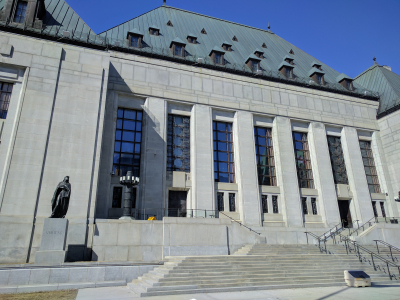
The Supreme Court of Canada has granted leave to appeal in a case involving what Canadian law calls “de facto expropriation” (what we’d call “regulatory takings”).

Before you review the Application for Leave to Appeal by the property owner, and the
The State of New York needed a strip of the owner’s property for a “greenway” for walkers and bikers. The State and the owner agreed that if the owner believed that the advance payment of $300k was not enough, it could ask the Court of Claims for more. But they also agreed that if that

We’re not going to pretend that we can actually read what the Supreme Court of Puerto Rico’s opinion in Administración de Terrenos de Puerto Rico v. Ponce Bayland Enterprises, Inc., No. CC-2019-212 (June 29, 2021) says. It’s in Spanish and we don’t know Spanish. Wish we did, truly.

But hey, that’s what Google Translate

What do you think about these facts in RLR Investments, LLC v. City of Pigeon Forge, No. 20-6375 (July 13, 2021), a decision by the U.S. Court of Appeals for the Sixth Circuit on what we might charitably call an obscure legal doctrine (RookerFeldman)?

City wanted some of RLR’s

20151205_145902

Today’s case: a short per curiam opinion from the Federal Circuit, Straw v. United States, No. 21-1596 (July 14, 2021).

The court affirmed the Court of Federal Claims’ dismissal of a takings claim that alleged that the plaintiff’s property was taken when the Eleventh Circuit affirmed a district court’s dismissal of the plaintiff’s Federal

Floodsfiresarticle

Here’s what we’re reading today (inter alia): Walter W. Heiser, Floods, Fires, and Inverse Condemnation, 29 N.Y.U. Envtl. L. J. 1 (2021).

From the Introduction:

This Article examines the proper application of the doctrine of inverse condemnation in two important areas: flood damage to private property caused by a public improvement (e.g., a

Permanentortemporary

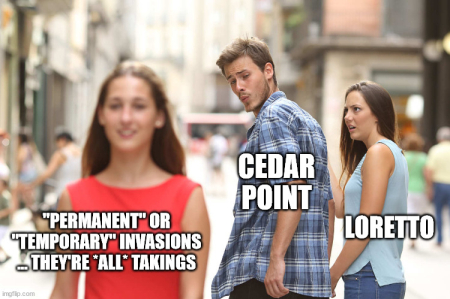
In this post — the fourth in a series of deeper dives that we’re posting about June’s U.S. Supreme Court opinion in Cedar Point Nursery v. Hassid, No. 20-107 (June 23, 2021) — we’ll be discussing the two separate opinions, Justice Kavanaugh’s concurrence, and the Justice Breyer-authored dissent.

Here are all of the posts

Our thanks to our friends and colleagues at the ABA Section of Real Property, Probate & Trust Section’s Land Use and Environmental Group for inviting us to a discussion of the latest and greatest decisions of interest.

We only had an hour together, so naturally could not cover everything of interest (indeed, we reserved a

It can be somewhat of a challenge to blog about many of the opinions from New York’s appellate courts (dun-dun) because they are typically short. What more (or less!) can you say about an opinion that is very short? We mean really short. Like 3 pages short.

Such it is with the Appellate