
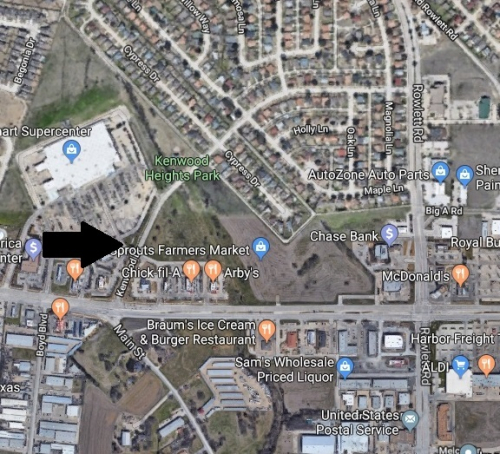
Here’s one we’ve been waiting to drop. In KMS Retail Rowlett, LP v. City of Rowlett, No. 17-0850 (May 17, 2019), a deeply divided Texas Supreme Court held that a statute — adopted in response to Kelo — which seems to limit eminent domain power, also contains a massive hole: according to the court
Friday Reading: Pipeline Injunctions, Justifying Kelo, And Maui Groundwater Case
Here’s what we’re reading today, in between real work:
- “Rural families’ eminent domain fight arrives at high court” from Pamela King at E&E News, about this case we’ve been following. Injunctions and “take first, pay later.”
- “John Paul Stevens Is Still Trying To Defend the Kelo Debacle” from Damon
New Cert Petition: Fifth Amendment Requires California To Spread The Cost Of Wildfire Inverse Condemnations To Ratepayers
Remember that Christopher Nolan movie from a few years ago, “Inception,” with its dream-within-a-dream storyline?
Well, that’s what a recently-filed cert petition which asks the U.S. Supreme Court to jump into California’s inverse-condemnation-liability-for-wildfires issue reminds us of with its taking-within-a-taking argument, as detailed in the Question Presented:
Whether it is an uncompensated
New Article: Imperfect Takings
A law journal article worth reading (short, not too many distracting footnotes) on takings theory.
In Imperfect Takings, 46 Fordham Urban Law Journal 130 (2019), Professor Shai Stern writes about what he calls the “three safeguards” in eminent domain (due process, public use, and mandatory compensation), and how to evaluate the legality of takings
Arizona: Eminent Domain Isn’t Voluntary (Even A “Friendly” Condemnation)
The Arizona Corporations Commission has authority to regulate the sale, lease, assigning, mortgage of a public utility’s assets, including when those assets are “otherwise dispose[d] of.” These transactions need the Commission’s approval.
The city intended to exercise eminent domain to take the assets of a water utility. This sure looked like a “friendly” condemnation: the
Materials And Links From Today’s Austin Eminent Domain CLE
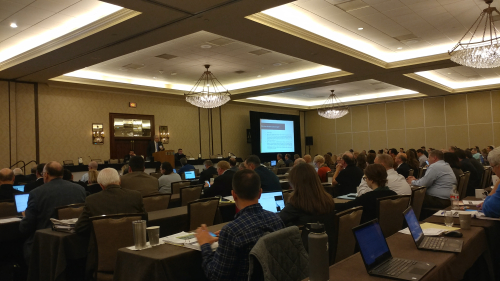
Great crowd today in Austin for CLE International’s Eminent Domain seminar, co-chaired by our colleagues Chris Clough, Sejin Brooks, and Christopher Oddo. We spoke about “National Trends and Developing Issues in Eminent Domain.”
Here are the cases I referred to which are not included in your written materials:
All Your Race Are Belong To Us: Baltimore Is Condemning The Preakness Stakes (We’re Serious)

Pop quiz: Quick! Name the races in the Triple Crown of horse racing… There’s the Kentucky Derby (check) … the Belmont Stakes (check) … and … oh yeah, the Preakness Stakes. We always almost forget that last one.
But the City of Baltimore sure hasn’t. Because the home city of Pimlico racetrack and the aforementioned
Audio: Readings From “The Habit of Turning The World Upside Down”

Last week, author Howard Mansfield joined us at the William and Mary Law School for two sessions about his recently-published book, “The Habit of Turning the World Upside Down – Our Belief in Property and the Cost of That Belief.” His book is about property, property rights, and what he has discovered about
Dwight Merriam Interviewed On Border Wall Legal Issues
Our colleague Dwight Merriam was recently interviewed on the radio about issues surrounding the existing and proposed wall and fence along portions of the southern border.
If you want to get educated on this issue, here’s the quick way to do it.
Dwight discusses funding, emergency powers, the Declaration of Taking Act, and other topics.
SC App: County-Owned Property Isn’t “Private Property,” So No Inverse Claim Against State DOT
The South Carolina Constitution, like the Fifth Amendment and just about every other state constitution, prohibits takings of “private property” without just compensation. See S.C. Const. art. I, § 13(A).
But does that govern the situation where the owner of the property allegedly taken by a city and the State DOT by creating sinkholes