2019

00100lPORTRAIT_00100_BURST20191023131755040_COVER

These days, parts of California often looks more like a developing country than the world’s fifth most powerful economy. Urban encampments — complete with medieval diseases — have become legendary. The streets of its glittering cities of tech are paved not with gold, but with human waste (but there’s an app for that!).

We read the Nebraska Court of Appeals’ opinion in Russell v. Franklin County, No. A-18-827 (Oct. 15, 2019), twice, just to be sure we were understanding the holding and rationale correctly. Apparently we were: the court held that when the State (inadvertently) takes property — here, the County highway maintenance department entered the plaintiffs’

Update 10/25/2019: an astute and seasoned correspondent writes that the issue of whether a property owner must raise constitutional issues in the administrative proceedings was settled in a published opinion that involved the same agency, the California Coastal Commission. See Healing v. Cal. Coastal Comm’n (1994) 22 Cal. App. 4th 1158 (we put in in

Emoji_u1f4a9.svg

There’s nothing terribly novel in the Texas Court of Appeals’ opinion in City of Houston v. The Commons at Lake Houston, Ltd., No. 14-18-00664-CV (Oct. 15, 2019), but we highlight it here for a couple of reasons. 

First, the court’s holding that a regulatory takings claim was not ripe because the property owner

MonthlyArgumentCalNovember2019

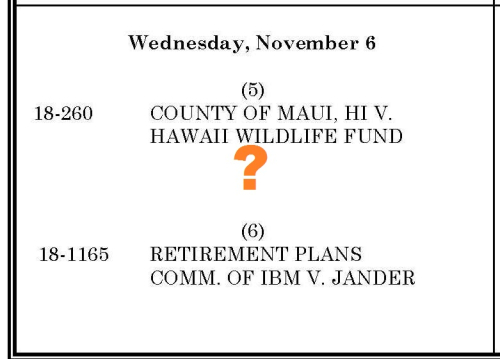
We’ve been following the ongoing efforts to settle the Clean Water Act case involving the County of Maui with some amusement. 

Why, you ask? Part of it is that we like municipal law. (Perhaps sad, but true.) But we’re amused mostly because the case’s current posture illustrates the dual principles of “be careful what you