property rights

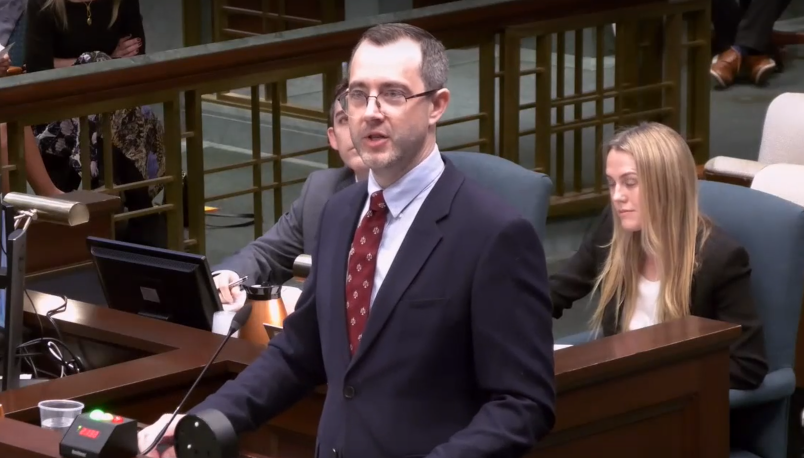
Here’s a just-filed cert petition, which poses a question that has been around since at least 1980: when third parties enter private property under color of state law against the wishes of the owner, is this a taking? That’s right, the issue decided by the U.S. Supreme Court in PruneYard Shopping Center v. Robins, 447 U.S. 74 (1980). (And yes, the above photo is from a visit to The Pruneyard shopping center in Campbell, California a while back.)
Continue Reading New Cert Petition: Time For PruneYard To Go

Yes, the U.S. Court of Appeals for the Sixth Circuit’s opinion in Banks v. Charter Twp. of Bloomfield, No. 25-1833 (Apr. 28, 2026) is unpublished, and we usually don’t cover unpublished opinions. But we put aside our usual reluctance to discuss unpublished work because the decision raises an important point: are the rules in “regulatory” takings only applicable when the government has adopted a regulation?
Continue Reading CA6: To Be A Regulatory Taking, There Must Be A Regulation

Here’s the latest in a case we’ve been following (because it is one of ours). Our cert petition asks this Question Presented: “Does the protection the Takings Clause provides to land-use permit applicants encompass monetary demands beyond those imposed in lieu of a dedication of real property?” Five amici briefs have been filed, urging the Court to review the case.
Continue Reading Amici Briefs In Latest SCOTUS Exactions Petition: Nollan/Dolan Governs Exactions Of Money

Be sure to check out this student note which criticizes the Second Circuit’s approach to pretextual takings in Brinkmann v. Town of Southold, 96 F.4th 209 (2d Cir. 2024), and offers a different way to analyze cases in which the government’s stated public use doesn’t appear to be its actual use or purpose for exercising eminent domain.
Continue Reading New Must-Read Article: Anna Fein, Pants on Fire: How the Brinkmann Majority Forgot About the Takings Clause in a Takings Clause Case, 99 S. Cal. L. Rev. 405 (2025)

It was on this day in 1928 when the U.S. Supreme Court issued its second most famous decision about zoning, Nectow v. City of Cambridge, 277 U.S. 183 (1928). We say “second” because everyone knows that the first is the Court’s decision issued just two years earlier which generally upheld comprehensive use, height, and density regulations as a valid exercise of the government’s police power to regulate property uses to further the public health, safety, welfare, or morals. See Village of Euclid v. Ambler Realty Co., 272 U S. 365 (1926).
Continue Reading You Don’t Look A Day Over 98, Nectow v. City of Cambridge

Here’s the latest (a development we predicted) in a case we’ve been following. In this Order, the U.S. Court of Appeals for the Eleventh Circuit confirmed that it will be rehearing the Fulton case en banc. As you recall, last year a 2-1 panel of the court held that an owner whose property has been taken does not need Congress to have created a cause of action, and may directly sue for just compensation under the constitution. That’s right, the “self-executing just compensation” issue that the Supreme Court dodged in DeVillier.
Continue Reading En Banc CA11 To Consider Self-Executing Just Compensation

Here’s the story: Los Angeles issued a homeowner demolition and grading permits, okaying the tear down of a dilapidated house. The owners already owned the adjacent parcel, and purchased the dilapidated house with plans to tear it down and make a better use of the adjacent land. The next day, a city council member (cosplaying as Marilyn Monroe) began the city’s process of designating the property a historic-cultural monument because the house was once owned by Ms. Monroe for a few months (it’s where she o.d.’d in 1962).
Continue Reading Property Rights Are No Candle In The Wind: LA May Designate A Dilapidated House An Historic Monument, But Only If Owner Paid Compensation

Hawaii has a unique status among American states. It is the only state that once was a separate sovereign nation, the Kingdom of Hawaii and then its short-lived successor, the Republic of Hawaii. Yes, we know that Texas may lay claim to the whole six-flags thing, so maybe the more accurate statement would be that Hawaii is the only state that was a sovereign kingdom, ruled by royalty.
Continue Reading If A King Must Comply With “Every Form And Particular” In Eminent Domain, Then Today’s Condemnors Also Surely Must

In an historic win for property owners in California, in Shear Dev. Co., LLC v. California Coastal Comm’n, No. S2284378 (Apr. 23, 2026), the unanimous California Supreme Court held that the Coastal Commission–which we can say without exaggeration is the most unaccountable and out-of-control agency in the nation–overstepped its authority when it purported to override a municipal government’s approval of a building permit. [Barista’s note: our firm represents the prevailing property owner in the case, and the head of our Coastal Property Rights group, Jeremy Talcott is lead counsel.]
Continue Reading California Supreme Court Reins In The Most Unaccountable Agency In The Nation, The California Coastal Commission

In a state like Vermont that is heavily dependent on tourism, it shouldn’t be all that surprising that one of the most prominent issues is the policy and legal fight over short-term rentals. In 2022, Burlington, the state’s largest city, tightened up its short-term rental regulations to prohibit “nonhost-occupied short-term rentals in Burlington with