Ripeness | Knick

Chicago wants to know where the food trucks it licenses to operate on city streets are. So it conditions the approval of a license on the operator installing a GPS device on the vehicle. 

In LMP Services, Inc. v. City of Chicago, No. 123123 (May 23, 2019), a case decided by the Illinois Supreme
Remember Fowler v. Guerin, the decision in which a panel of the Ninth Circuit rebuffed the usual trope that the court isn’t receptive to property owners? In that case, the court concluded that Washington state officials’ failure to return interest that was allegedly skimmed from the plaintiffs’ state-managed retirement accounts was a taking. 

The court rejected the district court’s dismissal for Williamson County ripeness, for 11th Amendment immunity, for RookerFeldman problems, and for being issue precluded.

The part of the Ninth Circuit’s opinion which really stood out to us, however, was its conclusion that the plaintiffs possessed property. The State argued that the Washington appeals court had concluded that the statute in question didn’t require the payment of interest as the plaintiffs argued. Thus, the plaintiffs had no property as defined by Washington law. With no property, no taking.

The Ninth Circuit rejected that argument, concluding instead: 

We rejected a similar argument in Schneider v. California Department of Corrections, 151 F.3d 1194 (9th Cir. 1998). There we observed that “constitutionally protected property rights can—and often do—exist despite statutes . . . that appear to deny their existence.” Id. at 1199. Citing the Supreme Court’s opinion in Phillips, we noted that “a State may not sidestep the Takings Clause by disavowing traditional property interests long recognized under state law.” Id. at 1200 (quoting 524 U.S. at 167). We then held that there is “a ‘core’ notion of constitutionally protected property into which state regulation simply may not intrude without prompting Takings Clause scrutiny.” Id. This “core” is “defined by reference to traditional ‘background principles’ of property law.” Id. at 1201. In that case, we concluded that interest income earned on an interest-bearing account falls within this class of fundamental property rights. Id.

We now clarify that the core property right recognized in Schneider covers interest earned daily, even if payable less frequently. The rule that interest accrues de die in diem—“from day to day”—has an impressive common law pedigree, see, e.g., Wilson v. Harman, 2 Ves. Sen. 672, 672, 27 Eng. Rep. 189, 189, and has been widely adopted by American courts, see, e.g., Mann v. Anderson, 32 S.E. 870, 871 (Ga. 1899); Owens v. Graetzel, 126 A. 224, 227 (Md. 1924); Clapp v. Astor, 2 Edw. Ch. 379, 384 (N.Y. Ch. 1834); In re Flickwir’s Estate, 20 A. 518 (Penn. 1890). Indeed, in the state-court proceedings, DRS did not dispute that “at common law, interest was deemed to accrue daily, regardless of when it was payable.” Probst, 271 P.3d at 970 n.6 (citing 32 Halsbury’s Laws of England § 127, p. 78 (4th ed. 2005)). Because the right to daily interest is deeply ingrained in our common law tradition, this property interest is protected by the Takings Clause regardless of whether a state legislature purports to authorize a state officer to abrogate the common law. See Schneider, 151 F.3d at 1201.

We hold that the Teachers state a takings claim for daily interest withheld by DRS.

Slip op. at 10-11. 

Short version: certain “core” or “fundamental” attributes of property (sticks for those of you who like the bundle metaphor) are not completely dependent on state law, and thus cannot be defined out of existence by the state without just compensation. We’ve made that same point in several briefs over the years, including this one. The panel held that daily interest is one of those core (federal?) property rights.

The state asked for panel rehearing and rehearing en banc, in this order, the court denied it.

But two judges dissented from the denial of en banc review. First, Judge Bennett stood alone on the grounds that the injunction to order Washington officials to stop withholding interest was really a backdoor way of getting damages for which a state cannot be sued in a federal court under the Eleventh Amendment. If that issue floats your boat, check out pages 8-13 of the dissent. 

But in his dissent on the property issue, Judge Bennett was joined by Judge Ryan Nelson — both recent Trump nominees — and concluded that the panel’s holding that the “Plaintiffs have a constitutionally protected property interest in daily interest earnings, notwithstanding clear state law to the contrary,” is “unprecedented.” Dissent at 13-14 (footnote omitted). The dissenters further noted that “[i]t is an odd constitutional right the panel creates.” Id. at 14 n.3. 

States, these judges would have held, are free to define and redefine property interests: “It may be that interest de die in diem was the default at common law, but states are free to modify common law default rules, and the panel never explains why this rule is any different.” Dissent at 17. State law, and state law alone, defines property they concluded, and the legislature is free to modify state law, even to the point of eliminating the right entirely. Id. at 18. See also id. at 19 (“And the fact that no court has, before now, held that state governments cannot modify the daily interest rule when they hold cash strongly suggests that the rule is not so deeply ingrained in our tradition that states may not modify it without running afoul of the Takings Clause.”).

The dissent concluded:

Nor should we as a court create a property right to daily interest when nothing in the precedents of the Supreme Court or this court have ever even suggested that when a state awards interest, it must do so daily. The effects of the panel’s novel holding will be felt around the country in the form of legal challenges to state and federal retirement plans that similarly award interest less frequently than daily. We should have taken this case en banc to correct our errors.

Dissent at 21. 

Will there be a cert petition by the State of Washington? Seems likely, and Judges Bennett and Nelson have already written it. 

Order (denying en banc rehearing), Fowler v. Guerin, 16-35052 (9th Cir. Mar. 13, 2019)

Continue Reading Ninth Circuit Denies En Banc Review In Case Upholding “Core” And “Fundamental” Property Rights, But Two Trump Judges Dissent

6a00d83451707369e201bb08b7aef7970d-800wi

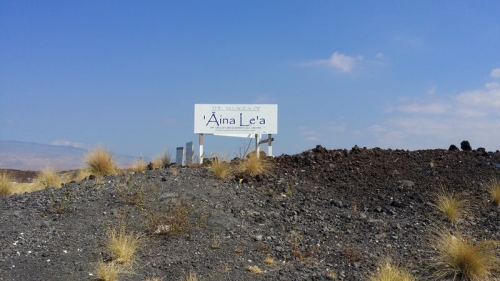
Here’s the latest in a case we’ve been following that has resulted in what we’re counting as no less that three lawsuits in state court (all removed to federal court by the State of Hawaii, as far as we are aware), which have gone back-and-forth between the U.S. District Court, the Ninth Circuit, and the

In the usual circumstance, we wouldn’t be terribly interested in an unpublished — and therefore not precedental — opinion. But the U.S. Court of Appeals’ opinion in Kerns v. Chesapeake Exploration, LLC, No. 18-3636 (Feb. 4, 2019) caught our attention because it involves “forced pooling,” which this site describes this way:

At its most

0124190909_HDR

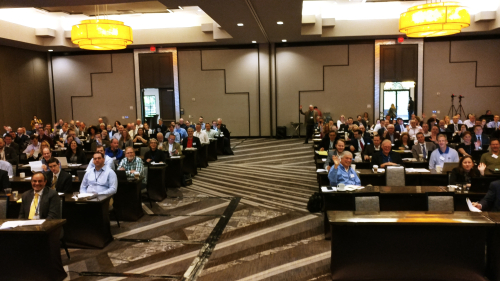
Here is our annual “proof of life” photo, taken from the dais during the opening session, to prove that all 250 of us were in the room for the ALI-CLE Eminent Domain Conference, and not out on a Palm Springs golf course (it is 72º and sunny, so a golf course would not be a

With the opinion in the Knick v. Township of Scott case to drop as soon as Tuesday (we’re guessing the opinion will be by Chief Justice Roberts, by the way), hold on. We’re about to get super nerdy here. Impossibly nerdy. Yes, we’re revisiting the Star Trek analogies. We’ve been down this road before

Psweather

If you didn’t register to attend the 36th Annual ALI-CLE Eminent Domain and Land Valuation Litigation Conference later this week in Palm Springs, California, well then, shame on you!

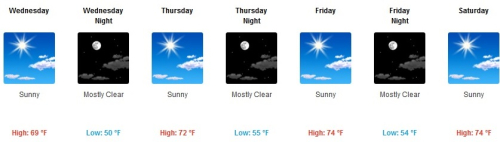
According to the National Weather Service, while you and the rest of the country is freezing, we’ll be enjoying the balmy desert climes, and discussing

Pay special attention to Justice Breyer’s questioning of Ms. Knick’s counsel, Dave Breemer. Yes, oral argument is the Court’s time to do with as it wishes, but was Justice Breyer actually trying to get at anything, or just running out the clock with a questions that didn’t seem to have any point. Does he really

There’s been a lot written after the Supreme Court heard (re)arguments earlier this week in Knick v. Township of Scott, No. 17-647, most of it helpful in understanding what issues the Justices are considering, and how each of them might break on the ultimate question: should Williamson County be overruled, and should property owners

CERTDENIED

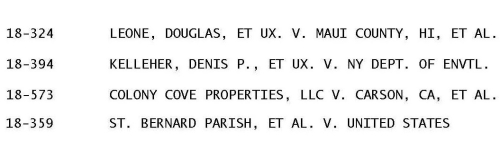
In case you have been following along, you can take these four cases off your watch list:

  • Leone: Hawaii Supreme Court concluded that holding property that has no present use in the hope that someday in the future the government might rescind the use-restrictive regulation, is “investment use,” and therefore no taking. 
  • Kelleher: