Inverse condemnation

There’s nothing new in the California Court of Appeal’s opinion in Rancho de Calistoga v. City of Calistoga, No. A138301 (July 7, 2015), which is probably why the court didn’t designate it for publication. 

But read it anyway, since there’s some interesting bits. Nothing in the details, mind you, but in the overall vibe of
There’s apparently a huge backlog in California of liens which workers’ comp medical providers file to seek payment for services they’ve provided to injured workers.

These are liens possessed by service providers for workers whose employers declined to provide treatment on the ground it is not work related. In those cases, the worker may seek

Remember the Roca Solida case? That’s the follow up to the Supreme Court’s recent decision in United States v. Tohono O’odham Nation, 131 S. Ct. 1723 (2011), highlighting the jurisdictional problem in takings cases which that case left open. We labeled it a “jurisdictional ambush” that awaits any property owner who has a takings

LUI header

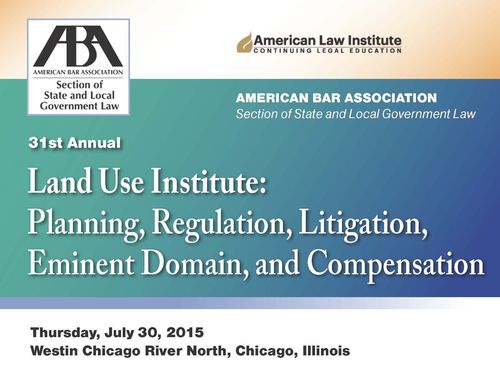
The Land Use Institute, a program that for many years has been planned by co-chairs Frank Schnidman and Gideon Kanner, has found a new home with the American Bar Association’s Section of State and Local Government Law as the main sponsor. It also has a new Planning co-chair, Dean Patty Salkin of Touro Law

2012-02-06_11-19-51_574

Here’s a case in which the court ruled there wasn’t a taking, but it could be argued that the property owners won. How so? Because this case pitted the property rights of railroads against the property rights of the owners over whose land the rail lines run.

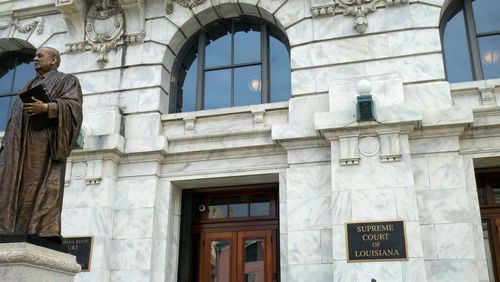
The U.S. Court of Appeals asked the Louisiana Supreme

Everyone is distracted today by the too-big-to-fail “Obamacare” ruling by the 6-3 Supreme Court (or, as Justice Scalia called it “SCOTUScare“), in which the Court concluded that the vibe of a statute matters more than its actual language, and the Court’s ruling in the “disparate impact” fair housing case (speaking of which

Apa_2015_planning_law_review

On Wednesday, July 1, 2015, the American Planning Association is putting on the 2015 Planning Law Review, a program highlighting the most important and topical cases decided by the courts recently. Here’s the program description:

Planning feels the impact of decisions from the U.S. Supreme Court, federal district courts, and state courts. How will