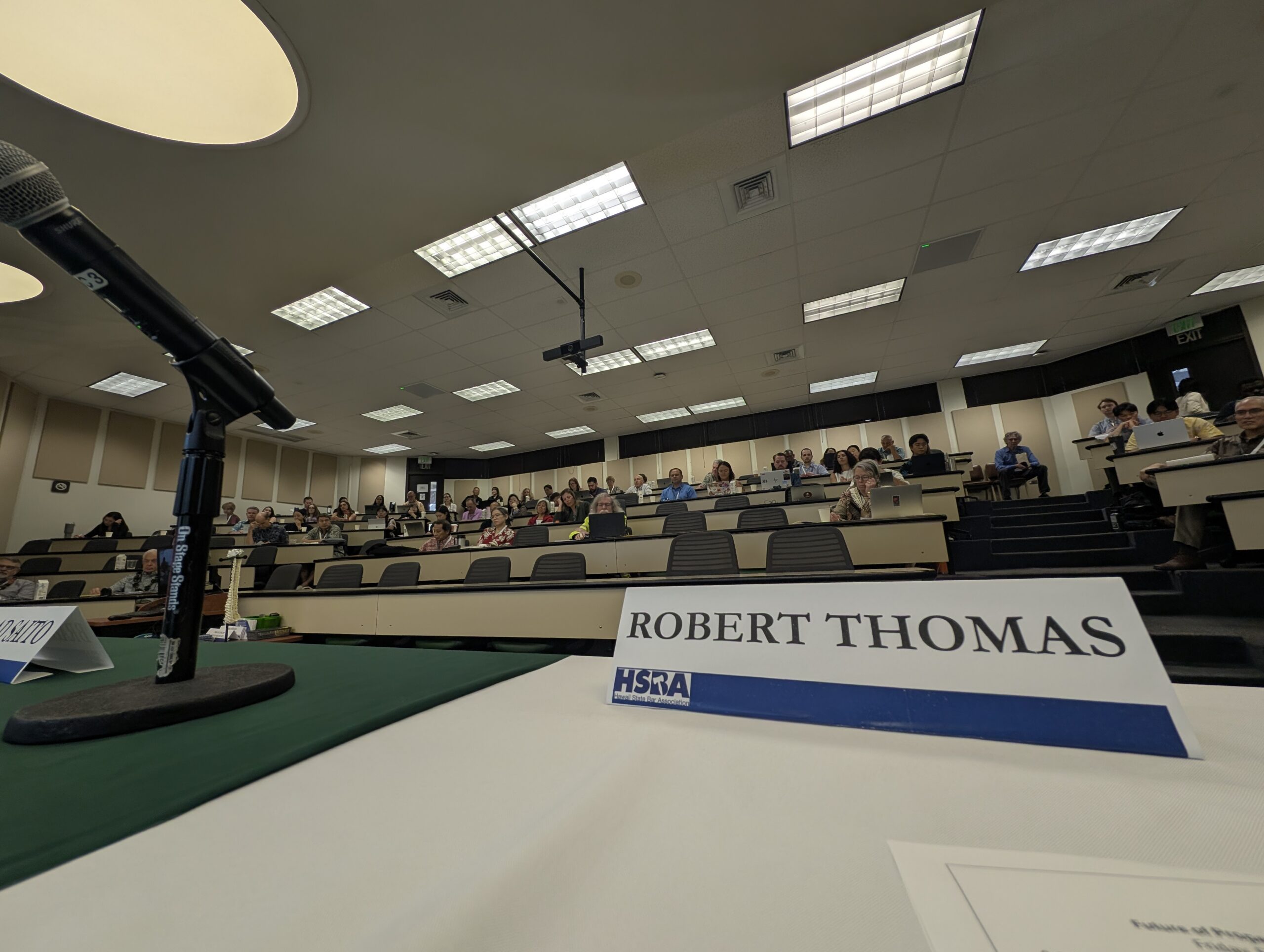
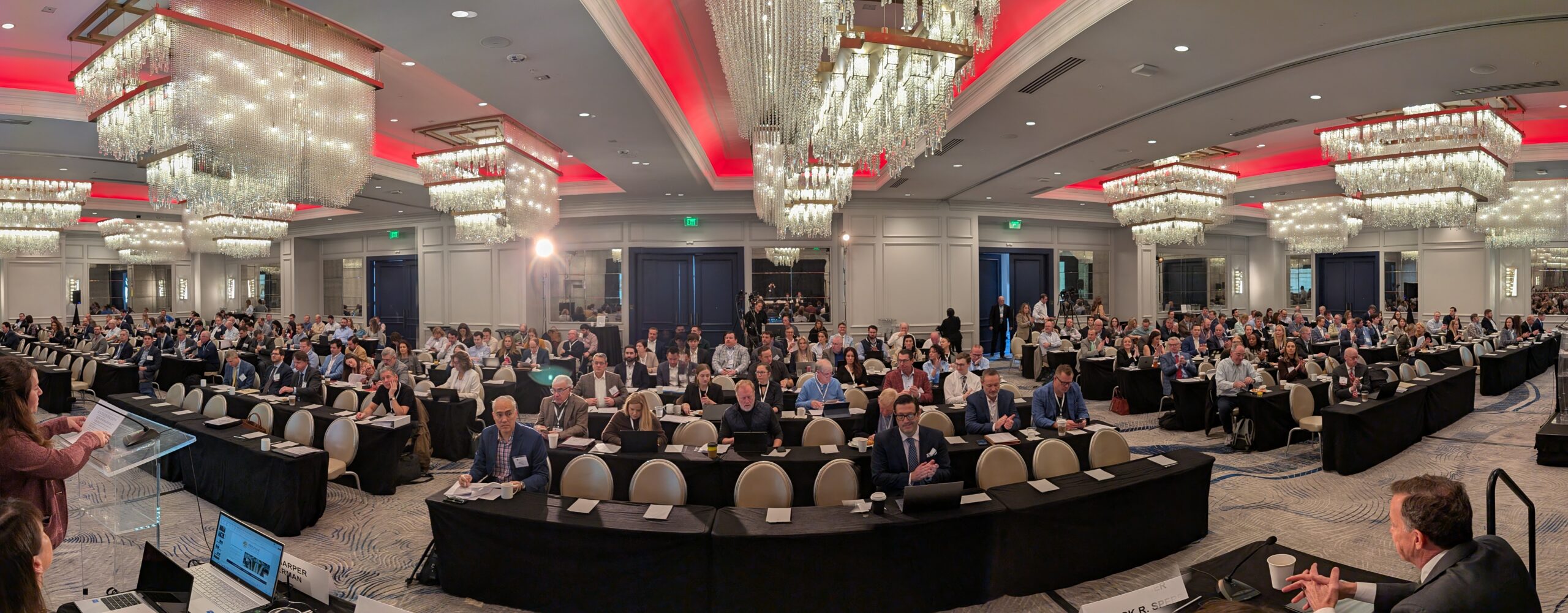
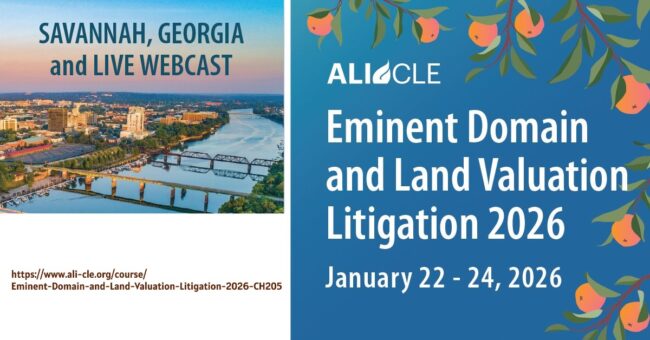
This past week we were busy with the 22d Brigham-Kanner Property Rights Conference at the William and Mary Law School.

Here’s the text of the remarks which I prepared for the session on “Public Safety, Private Property, and Just Compensation.” Note: because of time, I truncated what I planned on saying and kept it shorter.

* * * *

Public Safety, Private Property, and Just Compensation

Before I begin, a prelude. As you learned earlier, yesterday the student Real Estate Law Society produced a reargument of Kelo.

Ms. Kelo won this time. Six-to-zero, adopting the rationale of Justice Thomas’s dissent in the original case, with one concurring opinion. (More about this event in a separate post.)

And for those of you in the audience who didn’t know, Ms. Kelo’s famous little pink house was saved, even though her property was not. The house was taken apart board-by-board

Continue Reading Salus Populi Est Suprema Lex: 2025 Brigham-Kanner Property Rights Conference Report

As part of the Brigham-Kanner Property Rights Conference being held next week at the William and Mary Law School, the student-run Real Estate Law Society is producing a very interesting program that offers a look back on Kelo v. City of New London, in this that case’s twentieth year.

We’re going to be rearguing the case in a Supreme Court moot, which will feature the lawyers for Susette Kelo — the Institute for Justice — rearguing her case to see if two decades of experience produces different arguments, or even a different outcome. Any guess who will be arguing the cause for the City of New London? That’s right, none other than Yours Truly (we promise not to “take a dive” and confess error on the City’s part — this is a moot court, after all!).

Serving as Moot Justices are academics, practitioners, and law students, including

Continue Reading Kelo Reargued: Has 20 Years of Controversy Changed the Eminent Domain Debate?

We have no idea what these cases might be about, or whether there is any substance behind the property owners’ objections, but these are headlines no condemnor could possibly like:

  • Bedford County Widow Sued (via wjactv.com) – “A Bedford County widow is being sued for trying to keep Columbia Gas Transmission off her property. The Texas-based company is using eminent domain to gain access to 67-year-old Mary Ellen McConnell’s 125-acre farm.”
  • Granny Vows To Fight For House (via wyff4.com) – “On the other side of Stenhouse Rd, 85-year-old Juanita Sullivan worries about eminent domain.”

Might as well say they’re trying to take property from cute, fluffy kittens.


Continue Reading Headlines No Condemnor Likes To See

Check out this AP photo and the accompanying story “China’s ‘stubborn nail’ stands firm” —

Reminds me of the Warner Bros. classic “Homeless Hare,” where Bugs Bunny objects to a developer’s efforts to evict him from his hole: “Hey ya big gorilla, didn’t you ever hear about the sanctity of the American home?”

Wu Ping owns a home in Chongqing and apparently doesn’t want to get out of the way for redevelopment:

A legal battle has raged since she rejected the compensation offer as she has maintained that she cannot be forced to move out.

A local court ordered her to allow the structure to be torn down by Thursday, although she continued to refuse and it was not immediately clear what steps authorities would take next.

Property disputes are rife in China, often involving illegal land grabs by developers in collusion the government.

The national parliament

Continue Reading ▪ The Eminent Domain “Holdout,” Graphically Illustrated

Steven Greenhut’s opinion piece at the Orange County Register, “The powerless have always been targets of eminent domain,” makes some good points about eminent domain abuse, and the recently-argued Wilkie case (regarding the right to be free from government retailition for defending a Fifth Amendment right), and is worth reading:

“Cities use code words,” explained Supervisor Chris Norby, a longtime foe of eminent domain abuse. “In the 1950s and 1960s, governments used the term ‘urban renewal,’ but critics knew that it was widely called ‘Negro removal.’ These days, we’re looking at forced gentrification,” as cities try to redevelop poorer areas into wealthy areas.

. . . .

Today’s code words and attitudes may be different than they were in the 1920s, but by giving government so much power to drive people off their land, we all are subject to the whims and rationales of officials. In the 1920s

Continue Reading ▪ Eminent Domain Abuse and Retaliation