A recent report in Honolulu Civil Beat asks the question: “Why Isn’t Honolulu Helping Businesses Hurt By Rail Construction?” (The Civil Beat editorial board asks the same question.)

According to the report:

Two years ago, the Honolulu City Council created a fund to help businesses hurt by construction of the 20-mile long
Here’s the amici brief filed earlier this week in Sammons v. United States, No. 17-795, a case we’ve been following. Here’s the cert petition

The issue in this case is the same as in two cases already pending in the Supreme Court, the first a patent case argued in December, and the

One word is conspicuously absent from the Federal Circuit’s opinion in Alpine PCS, Inc. v. United States, No. 17-1029 (Jan. 2, 2017): “exhaustion.”

We all know that exhaustion of administrative remedies isn’t usually required before bringing a constitutional takings claim, but make no mistake — despite the absence of the word in the opinion

20170814_152652_Richtone(HDR)

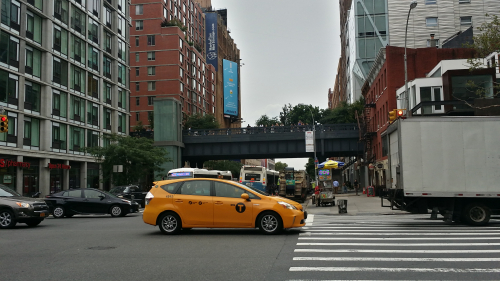
At first, you might not pay much attention to it. After all, it doesn’t really stick out — elevated rail lines aren’t that unusual in a big city. Street-level trains and pedestrians don’t mix well, and in the early 20th Century, New York State adopted a law which moved some of the lines above

Keepout

What better way to bid farewell to 2017 than with a whopper case from the Hawaii Supreme Court? And we’re not exaggerating — this one is really big.  

Now you might think that given the amount of time this blog devotes to property interests and property rights, we’d be downright tickled when our home court

Back in October, the William and Mary Law School awarded U. Hawaii lawprof David Callies the Brigham-Kanner Prize at a two-day conference in Williamsburg. Our summary of the conference is posted here.

We spoke at the conference, at the first panel entitled “The Future of Land Regulation and a Tribute to David Callies,”

In Cappel v. Nebraska Dep’t of Natural Resources, No. S-16-1037 (Dec. 22, 2017), the Nebraska Supreme Court concluded the Department’s notices to Cappel pursuant to an interstate water compact which closed off his land’s ability to draw surface water from the Republican River for irrigating his crops was neither a physical nor regulatory taking. 

The facts in Bellwether Properties, LLC v. Duke Energy Indiana, Inc., No. 53S04-1703-CT-121 (Dec. 20, 2017), are not all that complex and the result is pretty straightforward: the complaint did not show on its face when the plaintiff had knowledge that new rules caused an existing utility easement to expand in size, and