Regulatory takings

Congratulations – if you understood this post’s headline, you are officially a rails-to-trails nerd. A super-nerd.

But even if not, you shouldn’t need a rails-to-trails nerd’s level of knowledge to understand and appreciate the Federal Circuit’s ruling in Caquelin v. United States, No. 19-1385 (May 29, 2020). It’s a case worth reading

Here’s the latest complaint that alleges a taking arising out of the coronavirus situation. It joins a long list of similar lawsuits (See here, here, here, here, here, here, here, here, here, here and here, for example.

This one challenges the State of New

Here’s the latest in a case we’ve been following (briefs here, and oral argument recording here).

Any eminent domain lawyer will tell you that loss of access cases can be difficult. In some jurisdictions, you have to lose all access before the court will consider you harmed. Or the courts see a

Screenshot_2020-05-23 CT CMECF NextGen

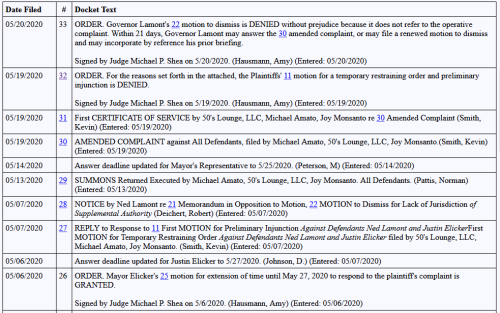
Things moving quickly: remember way back when — in April, was it? — when a Connecticut lounge owner sued a mayor and the governor, asserting that a shut-down order was a taking

Well, the court recently denied the plaintiffs’ request for a temporary restraining order.

There’s nothing in the Ruling about the takings

Another complaint asserting that a business that had to shut down is entitled to compensation for a taking (among other claims). The business in this case is a law firm, and the complaint is a class action. This joins a long (and growing) list of similar complaints. See here, here, here,

Programming note: On the weekend we’ve set aside to remember our nation’s war dead, we thought we’d repost this one, about how Arlington National Cemetery came to be, and how yes, there’s a takings story there.

———————————————————

LastbattlebookYou know how we’re always saying that the provisions in the Takings Clause are “self-executing,” that even in

Our shut-in time has got us to thinking.

We’re all environmentalists now. This is the precautionary principle writ large. In a way, this is only part of a greater problem.

Welcome to the Twitterverse. We now have access to a vast amount of data — very often on a granular level — and this moves