
Property rights

The Colorado Supreme Court issued an opinion in a case we’ve been following on public use in eminent domain. in which it reframed the Questions Presented.

In Carousel Farms v. Woodcrest Homes, No. 2018SC30 (June 10, 2019), the court reversed the court of appeals’ conclusion that a taking lacked a public purpose because
The details are yet to be posted on the web, but mark your calendars now for an upcoming (two weeks from today, on Friday, June 21, 2019) Federalist Society teleforum, produced by the Environmental and Property Rights Practice Group, about an issue that we’ve been following that is the subject of at least three

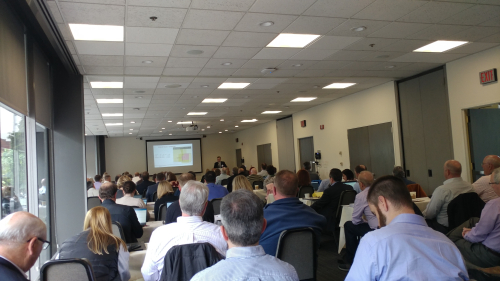
0606191053_HDR

Here are the links to the cases which were not in your materials. Theme of the day: amateurs! 

Our thanks to colleagues Jill Gelineau and Paul Sundermier for asking us to present. It was good to see our Oregon friends again. 

Here’s one we’ve been waiting to drop for a while, on an issue we wrote about earlier this week.

In Puntenney v. Iowa Utilities Board, No. 17-0423 (May 31, 2019), the Iowa Supreme Court — taking a different view than Kentucky — held that a pipeline which runs through Iowa, but which

An issue we’ve been tracking for a while — are takings for pipelines for the public’s benefit? — raises another question: how is “the public” defined?

Some courts, like Kentucky’s, define the public as the public which the jurisdiction serves. In the Bluegrass Pipeline case, for

This morning, the Supreme Court declined to review a case we’ve been following, Like v. Transcontiental Gas Pipe Line Co., No. 18-1206. 

This is the one in which landowners are challenging the district court’s issuance of an injunction in a Natural Gas Act taking which allow a private condemnor to obtain immediate possession of

With the opinion in the Knick v. Township of Scott case to drop as soon as Tuesday (we’re guessing the opinion will be by Chief Justice Roberts, by the way), hold on: we’re about to get super nerdy here. Impossibly nerdy. Yes, we’re revisiting the Star Trek analogies. We’ve been down this road before

Chicago wants to know where the food trucks it licenses to operate on city streets are. So it conditions the approval of a license on the operator installing a GPS device on the vehicle. 

In LMP Services, Inc. v. City of Chicago, No. 123123 (May 23, 2019), a case decided by the Illinois Supreme

Short answer: no.

But the longer answer which lawprof Ilya Somin discusses in this short podcast is worth listening to. Check it out. 

Here’s the summary:

Over the last few years, taxi companies in several cities have brought lawsuits claiming that legalizing ride-share services such as Uber and Lyft violates the Takings Clause of the