Property rights

Here’s the latest lawsuit challenging a government’s response to the coronavirus pandemic. This one challenges the California Judicial Council’s Emergency Rule 1, which indefinitely closed the courthouse doors to eviction proceedings (what California calls “unlawful detainer”).

This one does not employ a takings rationale, but takes a separation-of-powers approach. It’s concisely drafted, so we

MVIMG_20191108_125325

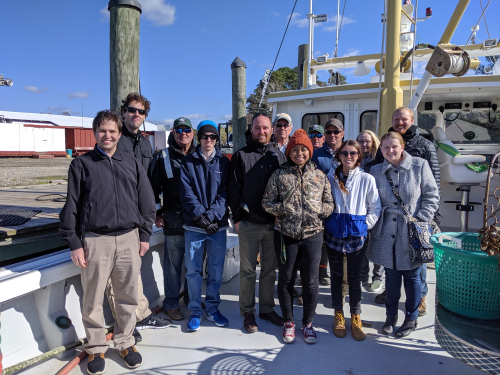
Here’s the latest in a case we’ve been following (we visited the site last November with our William and Mary class), the property owners’ Opening Brief in  a case being considered by the Virginia Supreme Court.

This is a case at the intersection of property and takings law, and environmental protection. Several Nansemond River oystermen

0fcc0c09-ff44-4f8c-bb01-c2455719ae6d

Next Wednesday, June 17, 2020, at 5:30pm Hawaii Time, we’ll be speaking for the King Kamehameha V Judiciary History Center about “Constitutional Law and States of Emergency: Lessons from the COVID-19 Pandemic.”

This is a one-hour program, open to the public, where we will take a dive into Hawaii’s emergency preparedness and

Here’s the latest court order telling business and property owners that they have little chance of success on the claims asserted in various mostly-constitutional challenges to shut-down orders.

This time the businesses are in North Carolina, and appear to be — ahem — so-called “gentlemen’s clubs” (and by that, we’re not referencing those in St.

On one hand, the Colorado Supreme Court’s opinion in Forest View Co. v. Town of Monument, No.18SC793 (June 8, 2020), concluding that a restrictive covenant is not a property interest that the government needs to pay for conflicts with the decisions on similar facts from other jurisdictions (Kansas, for example). On the

Short answer: yes, with a caveat. For why there’s an asterisk on this one, take a look at the Supreme Court’s electronic docket for PennEast Pipeline Co., LLC v. New Jersey, No. 19-1039 (cert. petition Feb. 20, 2020) (a case we’ve been following), and tell me whether you think there’s anything unusual about

Did you know that the North Carolina Constitution does not formally contain a “takings” or “just compensation” clause? Instead of an outright prohibition on uncompensated takings for public use, the N.C. Constitution has a “law of the land” clause:

Sec. 19.  Law of the land; equal protection of the laws.

No person shall be

Here’s the latest complaint that alleges a taking arising out of the coronavirus situation. It joins a long list of similar lawsuits (See here, here, here, here, here, here, here, here, here, here and here, for example.

This one challenges the State of New