Inverse condemnation

Screenshot_2020-05-23 CT CMECF NextGen

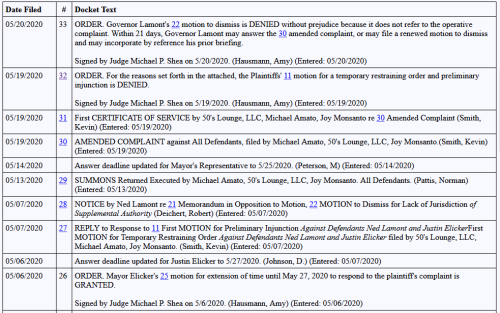
Things moving quickly: remember way back when — in April, was it? — when a Connecticut lounge owner sued a mayor and the governor, asserting that a shut-down order was a taking

Well, the court recently denied the plaintiffs’ request for a temporary restraining order.

There’s nothing in the Ruling about the takings
Another complaint asserting that a business that had to shut down is entitled to compensation for a taking (among other claims). The business in this case is a law firm, and the complaint is a class action. This joins a long (and growing) list of similar complaints. See here, here, here,

Our shut-in time has got us to thinking.

We’re all environmentalists now. This is the precautionary principle writ large. In a way, this is only part of a greater problem.

Welcome to the Twitterverse. We now have access to a vast amount of data — very often on a granular level — and this moves

The hits keep on coming. Here’s the latest complaint alleging that a coronavirus-related shut-down order is a taking (among other things).

This joins a long list (see here, here, here, here, here, here, here, here and here, for example) of complaints alleging takings. We’re guessing there’s

A development in the “oyster takings” case that we’ve been following as it has worked its way up to the Virginia Supreme court: that court today issued this Order, in which it awarded an appeal by Nansemond River oystermen (and the City of Suffolk’s cross-appeal) who claim that their property was taken when the

Even as some jurisdictions are easing the restrictions, here is the latest coronavirus-related complaint asserting a taking. This one was filed in an Illinois federal court, and joins an ever-growing list of similar claims (see here, here, here, here, here, here, here and here).

The complaint is

Here’s another coronavirus-related complaint asserting a taking.

But unlike other, recently-filed complaints (see here, here, here, here, here, here and here), this one doesn’t object to shut down orders. Instead, it challenges two measures undertaken by local authorities related to the owner/tenant relationship.

To deal with the pandemic, Union