
Eminent Domain | Condemnation

DRCKziGVoAAr-Em

Here’s a story on which we’ve been waiting a while. ProPublica, which holds itself out as “an independent, nonprofit newsroom that produces investigative journalism with moral force,” has published a series of stories on eminent domain, focused on the border wall. As the above blurb notes, we served as one of the story’s sources.
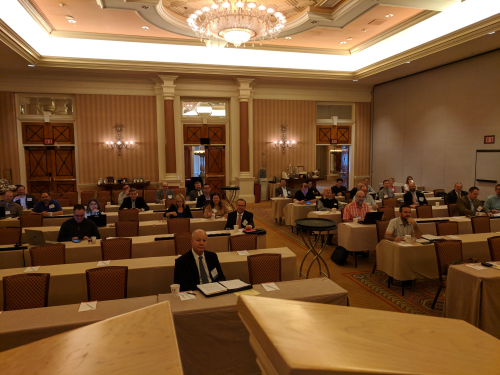
IMG_20171211_090714This photo of the view from the lectern at the start of the day
proves we really
were in the room and not distracted by all the distractions
possible in Las Vegas

Here are the materials and cases which I spoke about earlier today at the CLE International Eminent Domain Conference in Las Vegas. I

A very interesting public use opinion from the Colorado Court of Appeals. In Carousel Farms Metropolitan District v. Woodcrest Homes, Inc., No. 2017COA149 (Nov. 30, 2017), the court invalidated an attempted taking of Woodcrest’s property, concluding that the condemnation was neither for a public purpose, nor necessary for that purpose.

The facts of

HNLrail

The work on what turned out to be the first phase on Honolulu’s billions-of-dollars rail project from Kapolei to the Ala Moana Shopping Center isn’t even close to being done yet, but the Honolulu Authority for Rapid Transportation looks like it is thinking ahead to Phase 2, and extending the line from the shopping center

The latest in the “Map Act” inverse cases out of North Carolina. This is a longer post, but you really will want to read the summary, or just pick up the opinion and read it.

These are the cases in which the N.C. Department of Transportation, under the power of the state’s Map Act, for

16CA1198-PD

Under Colorado law, a property owner has an inverse condemnation claim when “a governmental or public entity with the power of eminent domain takes action that ‘substantially depriv[es] the property owner of the use and enjoyment of the property, but the [entity] has not formally brought condemnation proceedings.'” Kobobel v. Colo. Dep’t of Nat. Res.

You should be following along with Clint Schumacher’s Eminent Domain Podcast on your own, but in case you missed this one in your feed, be sure to check out the latest episode, which features U. Virginia Law School prof Molly Brady talking about “damage clauses” in state constitutions.

The podcast and links to

The title of West Virginia Lottery v. A-1 Amusement, Inc., No. 16-1047 (Nov. 13, 2017) alone may not give you an indication that this is a takings case, but yes, it’s a takings case. 

As the title might indicate, it’s a case involving the state-run lottery and video lottery machines. If we’re reading

The Georgia Supreme Court’s analysis in Diversified Holdings, LLP v. City of Suwanee, No. S17A1140 (Nov. 2, 2017) reminded us of that old trope from logic, “no true Scotsman.” 

According to a completely reliable source (Wikipedia):

No true Scotsman is a kind of informal fallacy in which one attempts to protect a

Border walls, pipelines, and state takings law. All topics we dig. So for today’s reading, we recommend “When the Government Grabs — the Border Wall, Pipelines and New Challenges to Eminent Domain,” an interview with U. Va. lawprof Molly Brady on these topics. Check it out. 

PS – Professor Brady will be speaking on another