Photo of Robert H. Thomas

Robert H. Thomas

Check this out: a significant and important decision from the U.S. Court of Appeals for the Eleventh Circuit in an issue we’ve been following.

In Alford v. Walton County, No. 2021-13999 (Nov. 17, 2025), the unanimous panel concluded that the county’s Co-19 restrictions, which closed all beaches (public and private) in the county

In State ex rel. Boggs v. City of Cleveland, No. 2025-Ohio-5094 (Nov. 13, 2025), the Ohio Supreme Court held that the City of Cleveland could be liable for inversely condemning land, even though that land is not in the City of Cleveland.

The city claimed that in order to be liable for inverse condemnation

There’s not a lot of new territory forged in the U.S. Court of Appeals for the Ninth Circuit’s opinion in Pena v. City of Los Angeles, No. 24-2422 (Nov. 4, 2025), holding that the city could not be liable for a taking after SWAT officers severely damaged a home in the course of

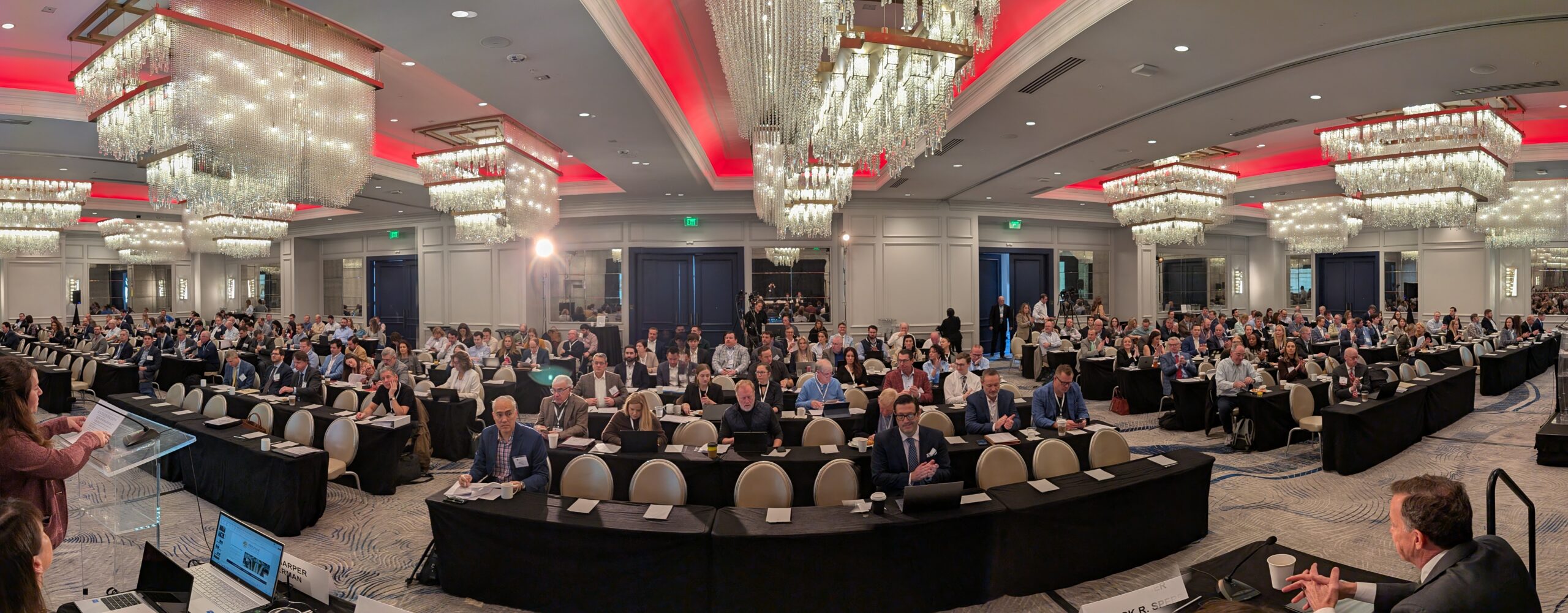
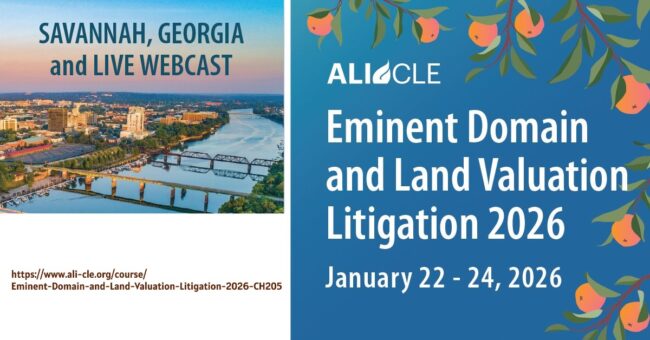
As we wrap up another year, it’s time to look ahead to the one event that always gets our eminent domain blood pumping: the annual ALI-CLE Eminent Domain and Land Valuation Litigation Conference. Details, including faculty list, a complete agenda, and registration information is posted here.

Now in its 43rd year, this flagship gathering

Check this out: a podcast from Free to Choose Media, entitled “Eminent Domain,” published a couple of months ago.

But the description reveals a time capsule:

Recorded in 2003, Dennis McCuistion, former Clinical Professor of Corporate Governance and Executive Director of the Institute for Excellence in Corporate Governance at the University of Texas

The caption of the U.S. Court of Appeals for the Tenth Circuit’s opinion in Purgatory Recreation I, LLC v. United States, No. 24-1241 (Oct. 21, 2025), and the fact that the plaintiff raised a takings claim, should give you some idea where this is heading.

After all, when the defendant in a takings claim

When an opinion starts off with “[t]his zoning/inverse condemnation case revolves around the availability of parking…” you kinda know, whatever the issues might be, that the court isn’t likely headed in a good direction for the claimant.

That’s exactly how the Supreme Court of South Carolina began The Gulfstream Cafe, Inc. v. Georgetown County

Is “personal” property (as contrasted with real estate), or property that is used in commercial dealings, not “private property” is protected from uncompensated takings by the Fifth Amendment?

That’s what the U.S. Court of Appeals for the Tenth Circuit appeared to conclude in Green Room LLC v. State of Wyoming, No. 24-853 (Oct. 27