April 2021

What’s up with that (sorta) snarky headline, you ask? After all, isn’t the PennEast v. New Jersey case, heard yesterday by the Supreme Court, a real honest-to-goodness eminent domain case about a pipeline?

Doesn’t the transcript show terms like “in rem,” “takings,” “eminent” and “eminent domain” were used a whole lot? Aren’t a lot of

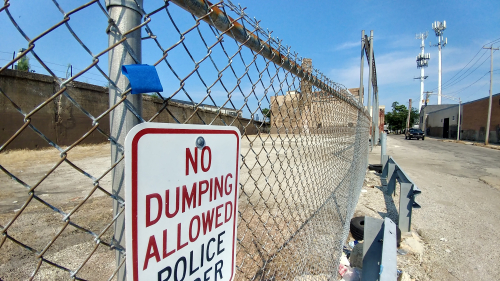
20180805_155746_HDRThat rail crossing in Chicago

We’ve noted before that gun cases have life of their own, often divorced from strict legal logic. Throw in takings, and you’ve got a recipe for a difficult challenge.

But add to the mix a Supreme Court überlawyer, and maybe your chances go up. Who knows for sure.

We post the D.C. Circuit’s opinion in Ivanenko v. Yanykovich, No. 20-7033 (Apr. 23, 2021) more for its interesting fact pattern than the holding (which doesn’t tell us a lot about “takings” since is this is a case under the Foreign Sovereign Immunities Act, but hey, it did ping our “eminent domain” radar).

Here’s the recently-filed cert petition in a case we’ve been following.

Rather than attempt to sum it up, we suggest you read the petition, especially the Questions Presented:

Montana Dakota Utility (hereinafter MDU), a private corporation, employed the power of eminent domain to procure an easement on Vern Behm’s farmland immediately along a pre-existing

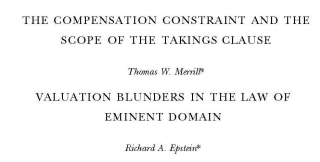
Titles

Two very interesting law review articles (essays) by well-known property experts are now available in the Notre Dame Law Review:

Order

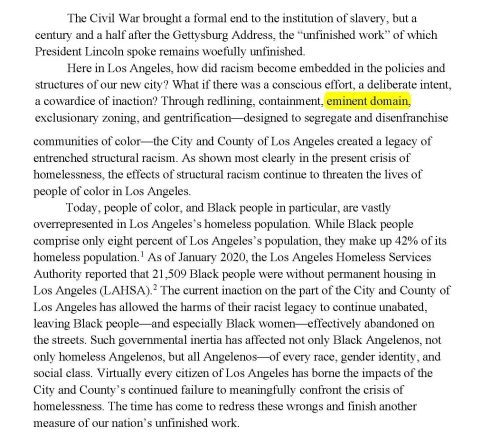
This In Chambers Order recently issued by a federal district judge may just be the most unusual, flat-out wild judicial opinion we have ever read.

Citing the Gettysburg Address, Brown v. Board of Education, systemic racism (including eminent domain) systemic sexism, and a slew of newspaper articles, the Central District of California (without even

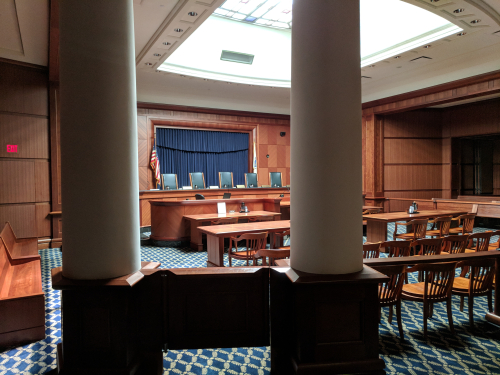
IMG_20180720_152126_1

Under a Massachusetts statute, local redevelopment agencies have the power to respond to “decadent, substandard, and blighted open areas” either by creating an urban renewal project (redeveloping an area pursuant to a “detailed” and “comprehensive” plan; the statute expressly includes the power of eminent domain for urban renewal projects), or by a “demonstration” development (a

Like a lot of jurisdictions, Kentucky allows (or requires upon demand) the jury to view property being taken by eminent domain. In Kentucky, it’s a matter of statute, which requires the court to allow a jury view upon the demand of any party, unless “unusual or extreme circumstances” are present.

In Comm’w of Kentucky v.

Here are the amici briefs supporting the property owner’s cert petition in a case we’ve been following for a long time, Eychaner v. City of Chicago, No. 20-1214.

This is the one in which the Illinois courts concluded that Chicago’s desire to prevent “future blight” is enough of a public use to support