
2010

In 1978, the people of Hawaii amended the state constitution to recognize “the right to a clean and healthful environment,” and expressly enabled lawsuits by private parties to enforce “laws relating to environmental quality” —

Each person has the right toa clean and healthful environment, as defined by laws relating to environmentalquality, including control of
More on the “judicial takings” case, Stop the Beach Renourishment, Inc. v. Florida Dep’t of Environmental Protection, No. 08-11 (June 17, 2010).

Remember that at the ABA Annual Meeting next month in San Francisco, the Section of State and Local Government Law is co-sponsoring a panel discussion of the case. I’ll be moderating, and

Here at inversecondemnation.com we also cover eminent domain, regulatory takings, land use, and environmental issues. We even cover election law when it strikes our fancy.

But here’s one that’s in our core competency: in Frick v. City of Salina, No. 101,355 (July 9, 2010) the Kansas Supreme Court held that property

If you can figure out the syntax of this post’s headline, you’ve just figured out the rationale of the Wisconsin Supreme Court in E-L Enterprises, Inc v. Milwaukee Metropolitan Sewerage District, No. 2008AP921 (July 2, 2010). In that case, the court held that the removal of groundwater was not a compensable taking because the

Heads up on a new article of interest to those of us who deal with exactions and Nollan/Dolan: Matthew Baker, Much Ado About Nollan/Dolan: The Comparative Nature of the Legislative Adjudication Distinctions in Exactions, 42 Urban Lawyer 171 (2010). Here’s a summary: 

Much has been made, by both commentators and

The Hawaii Supreme Court today by a 4-1 margin issued an opinion that has fundamentally rewritten Hawaii land use law. In County of Hawaii v. Ala Loop Homeowners, No. 27707 (cert. granted Sep. 2, 2009), the four-Justice majority in an 81-page opinion authored by Justice Recktenwald held “[w]e further conclude that article XI, section

A rule of law set out over 100 years ago and which remains (as we say) good law qualifies as “well-established” by any standard. Village of Norwood v. Baker, 172 U.S. 269 (1898) set forth the rule that a special assessment for municipal improvements is only constitutional if the improvements result in the property

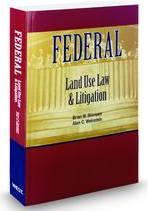
P13513986-160025L I’ve just received my copy of the 2010 revision of Federal Land Use Law & Litigation by Brian W. Blaesser and Alan C. Weinstein (West, $225).

Here’s the description of the book from West’s site:

Examines all federal, constitutional, and statutory limitations on local land use controls, discussing cases, regulations, liability, defense strategies, doctrines, and

The State of Hawaii has filed a brief responding to the amicus brief we filed in June in In re Trustees Under the Will of the Estate of James Campbell, No. 30006, an appeal now under review by the Hawaii Intermediate Court of Appeals. The issues in the case include the nature of “Torrens”