In Lifetime Communities, Ltd. v. City of Worthington, No. 25-3048 (Jan. 27, 2026), the U.S. Court of Appeals for the Sixth Circuit held that the city’s refusal to upzone a vacant parcel from “S-1” (which permits only parks, hospitals, churches, and other similar institutional uses) to a designation that would allow mixed-use development, was not a Penn Central taking.
Continue Reading CA6: Denial Of Rezoning Is Not A Penn Central Taking

Pictured: PLF’s Steve Davis, getting us started. We’re underway today with the academic symposium “Euclid Turns 100: Rethinking an Antiquated Case and Reimagining Euclidean Zoning for the Century Ahead” at the George Mason Law School. Cosponsored by the law school’s Journal of Law, Economics, and Policy, Mercatus Center, and our outfit Pacific Legal Foundation, the symposium is designed to focus the discussion of housing, zoning, and property rights (hot topics in the headlines), and ask the question: has Euclidean zoning outlived its usefulness? And if so, what, if anything, should replace it?
Continue Reading Symposium: “Euclid Turns 100: Rethinking an Antiquated Case and Reimagining Euclidean Zoning for the Century Ahead”

Check this out, a new complaint, filed this week in a federal court in California.

[We won’t be offering all that much comment on this because it is one of ours.]

This a takings challenge to a California statute which establishes a purported 3,200-foot safety zone around “sensitive receptors” that “prohibits the drilling of new oil and gas wells within 3,200 feet
of “sensitive receptors,” which includes most places where the public works, lives, and plays.” Complaint at 1.
Continue Reading There Will Be Takings: New Complaint Challenging California’s “Sensitive Receptor” Setback Statute

If you are still looking for a reason to head to the 808 next month, here it is. The 2026 Future of Property Law Conference, February 13, 2026 at the University of Hawaii School of Law.
Continue Reading 2026 Future of Property Law Conference, University of Hawaii Law School, Feb 13, 2026 (Live & Webcast)

The view from the podium

That’s right. More than 300 of the nation’s best eminent domain lawyers, judges, appraisers, right-of-way agents, scholars, and other industry professionals are in Savannah for the next two and a half days for what is now known as the American Law Institute (“ALI” alone, no longer with the “-CLE” addition)

We’re deep in the throes of winter, and spring training won’t start for another month, but for those of you who are fans of the National Pastime — particularly if you are like us and a child of 1970’s baseball — then be sure to check out the U.S. Court of Appeals for the First Circuit’s recent opinion in Clemente Properties, Inc. v. Pierluisi-Urrutia, No. 23-1922 (Jan. 16, 2026).
Continue Reading CA1: Government’s Use Of Roberto Clemente Trademark Isn’t A Categorical Physical Invasion Taking

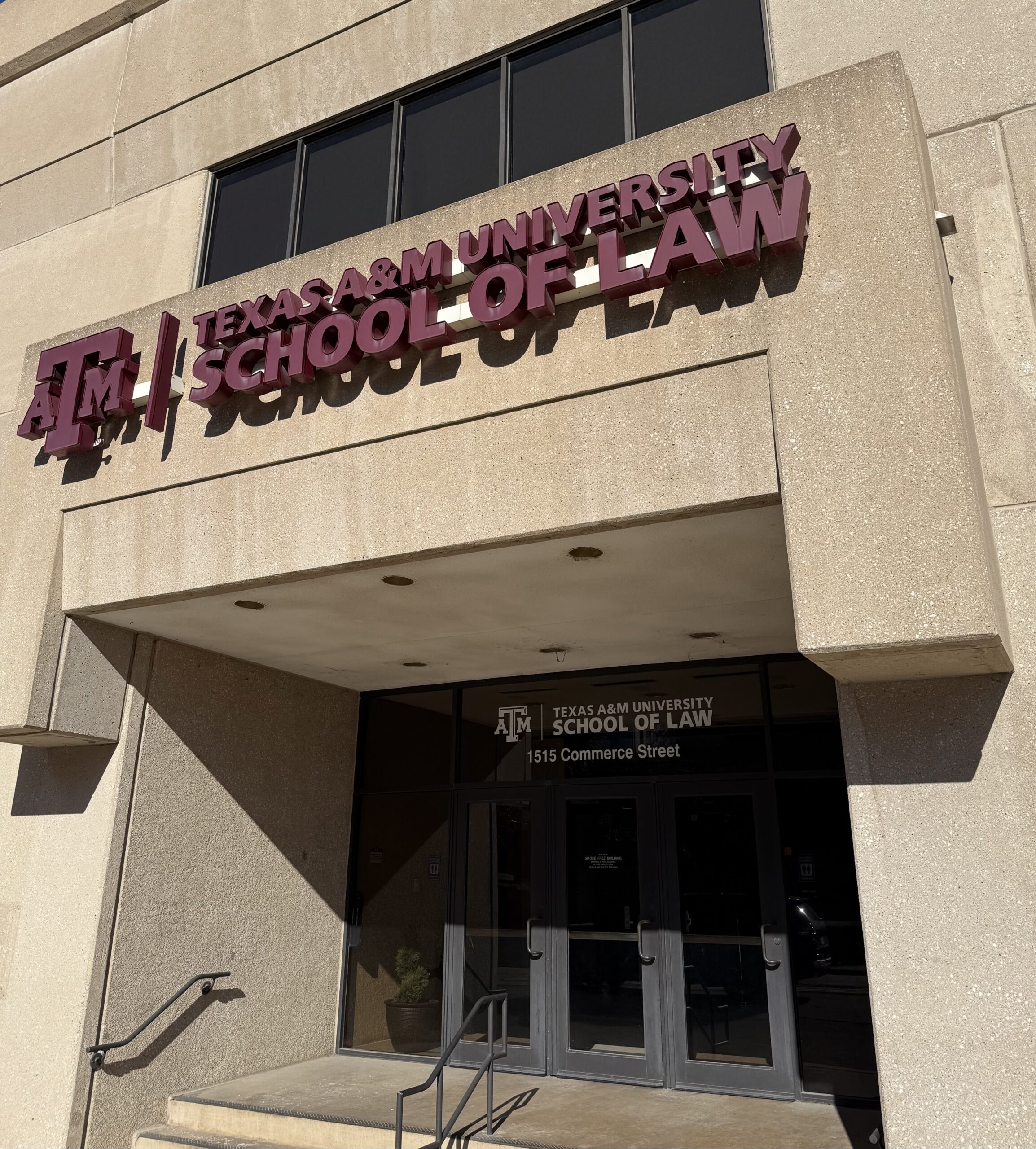
Each year, the Texas A & M Journal of Property Law publishes a symposium on some aspect of dirt law.

This year, the subject is “Day Zero: How Cities Run Out of Water.”

Here’s the program description:

This symposium is centered around Professor Rhett Larson’s (Arizona State University) forthcoming book, Day Zero:

We were all set to offer our deep thoughts about the recently-published opinion of the California Court of Appeal in Mendocino Railway v. Meyer, No. A168497 (Jam. 7, 2026), which held that the Skunk Train (a “train to nowhere” that carries tourists up in California’s redwood country) is a “common carrier” with the power