
Here’s the latest in a case we’ve been following (because it is one of ours). Our cert petition asks this Question Presented: “Does the protection the Takings Clause provides to land-use permit applicants encompass monetary demands beyond those imposed in lieu of a dedication of real property?” Five amici briefs have been filed, urging the Court to review the case.
Continue Reading Amici Briefs In Latest SCOTUS Exactions Petition: Nollan/Dolan Governs Exactions Of Money
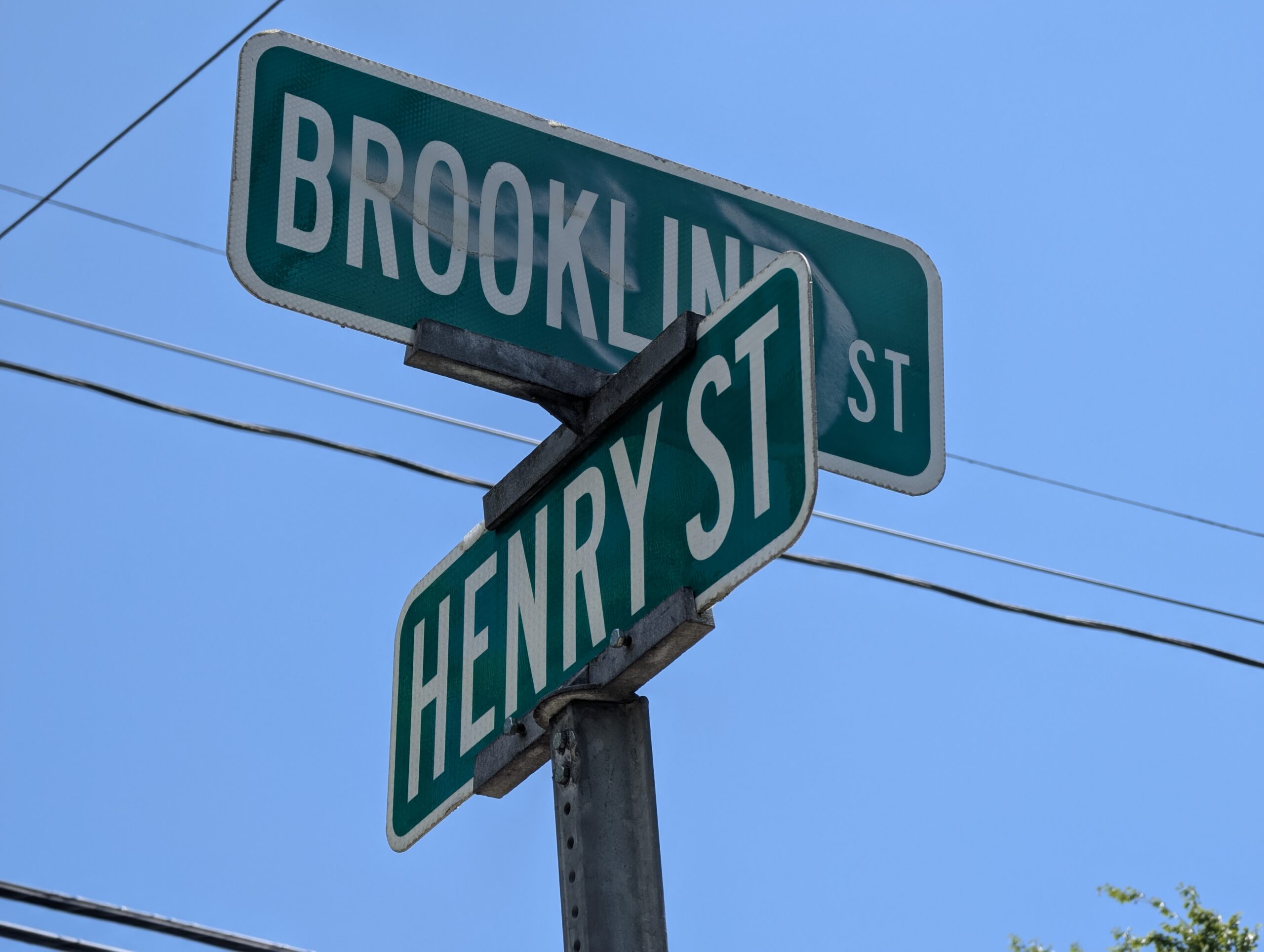
Property Pilgrimage: Nectow v. City of Cambridge (1928)
Here’s the latest in our continuing series of dirt law pilgrimages, where we visit the site of some of the more important cases in our favorite area of law. As every dirt lawyer knows, you can see photos, read descriptions, and study plat maps. But when it comes to understanding about the property at issue, nothing substitutes for getting your shoes in the dirt on-site, seeing the area for yourself, smelling the air. Walking the earth.
Continue Reading Property Pilgrimage: Nectow v. City of Cambridge (1928)

New Must-Read Article: Anna Fein, Pants on Fire: How the Brinkmann Majority Forgot About the Takings Clause in a Takings Clause Case, 99 S. Cal. L. Rev. 405 (2025)
Be sure to check out this student note which criticizes the Second Circuit’s approach to pretextual takings in Brinkmann v. Town of Southold, 96 F.4th 209 (2d Cir. 2024), and offers a different way to analyze cases in which the government’s stated public use doesn’t appear to be its actual use or purpose for exercising eminent domain.
Continue Reading New Must-Read Article: Anna Fein, Pants on Fire: How the Brinkmann Majority Forgot About the Takings Clause in a Takings Clause Case, 99 S. Cal. L. Rev. 405 (2025)
You Don’t Look A Day Over 98, Nectow v. City of Cambridge
It was on this day in 1928 when the U.S. Supreme Court issued its second most famous decision about zoning, Nectow v. City of Cambridge, 277 U.S. 183 (1928). We say “second” because everyone knows that the first is the Court’s decision issued just two years earlier which generally upheld comprehensive use, height, and density regulations as a valid exercise of the government’s police power to regulate property uses to further the public health, safety, welfare, or morals. See Village of Euclid v. Ambler Realty Co., 272 U S. 365 (1926).
Continue Reading You Don’t Look A Day Over 98, Nectow v. City of Cambridge
En Banc CA11 To Consider Self-Executing Just Compensation
Here’s the latest (a development we predicted) in a case we’ve been following. In this Order, the U.S. Court of Appeals for the Eleventh Circuit confirmed that it will be rehearing the Fulton case en banc. As you recall, last year a 2-1 panel of the court held that an owner whose property has been taken does not need Congress to have created a cause of action, and may directly sue for just compensation under the constitution. That’s right, the “self-executing just compensation” issue that the Supreme Court dodged in DeVillier.
Continue Reading En Banc CA11 To Consider Self-Executing Just Compensation
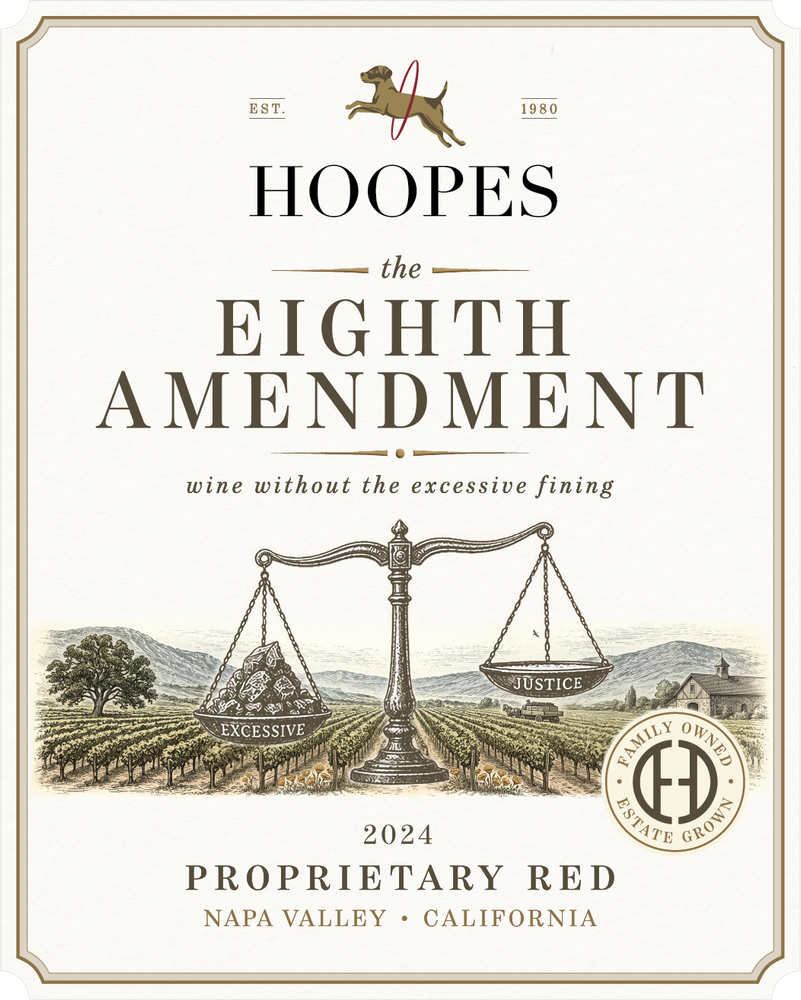
Eighth Amendment Proprietary: Wine Without the Excessive Fining
Worth checking out: in the vein of our old favorite Eminent Domaine, a Napa Valley winery is offering for preorder its “Eighth Amendment” wine.
What’s the deal with the name? We all know the U.S. Constitution’s Eighth Amendment, which prohibits the imposition of excessive fines.
Continue Reading Eighth Amendment Proprietary: Wine Without the Excessive Fining
New Cert Petition: Can You Be Forced To Be A Farmer Under The Police Power?
Here’s a cert petition that asks whether a local government (here, the granola-swanky Marin County, California) as a condition of approving a building permit may require a property owner to restrict uses of the land to commercial agriculture, and bind all future owners of the property as well. Because this is one of ours, we won’t be going into great detail but will instead leave it to you, starting with the Questions Presented.
Continue Reading New Cert Petition: Can You Be Forced To Be A Farmer Under The Police Power?
CA4: Neighbors Can’t Challenge Failed Redevelopment That Resulted Only in “Vacant And Neglected” Property Next Door
If you are a plaintiff, you may rightly predict that if an opinion begins with the words, “[r]oughly two decades ago…” there’s a good chance you aren’t going to like the outcome. Courts tend to not like cases that are based on facts that occured 20+ years ago, after all. But that’s how the U.S. Court of Appeal for the Fourth Circuit’s opinion in Poppleton Now Community Ass’n LLC v. La Cite Development, LLC, No. 25-1770 (May 4, 2026) begins. Yet perhaps surprisingly, the court’s ruling against the plaintiffs is not based on the statute of limitations or some other defense keyed to the passage of time. Or any other procedural defense. Indeed, the court reversed district court’s judgment which had dismissed the complaint because the plaintiffs lacked standing.
Continue Reading CA4: Neighbors Can’t Challenge Failed Redevelopment That Resulted Only in “Vacant And Neglected” Property Next Door
Supreme Court Records And Briefs Now Freely Available (Thank You William & Mary Law Library)
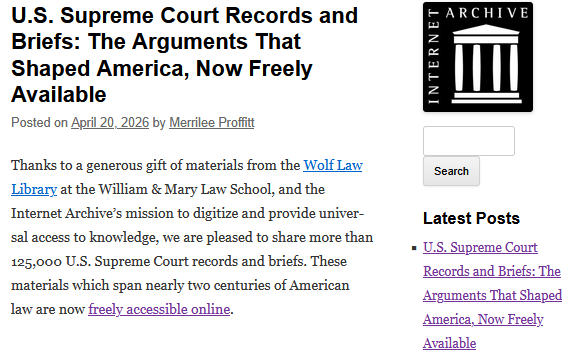
Worth checking out. Although academics (and, presumably, those who pay for the privilege) have been able to access a limited catalog of historic records and briefs from the U.S. Supreme Court, thanks to the Wolf Library at William & Mary Law School, those same records are now generally available, for free.

Ohio: Temporarily Shutting Down Injection Wells After Earthquakes Is Not A Penn Central Taking
Here’s the latest in a case we’ve been following for quite a while. In Ohio ex rel. AWMS Water Solutions, LLC v. Mertz, No. 2026-Ohio-1487 (Apr. 29, 2026), the Ohio Supreme Court held that the operator of injection wells lacked an investment-backed expectation to operate such wells because it did business in a highly-regulated environment, and it understood at the time it purchased the property the risk it would be further regulated. Slip op. at 17-18.
Continue Reading Ohio: Temporarily Shutting Down Injection Wells After Earthquakes Is Not A Penn Central Taking