Public Use | Kelo

Here’s what we’re reading this fine summer Monday:

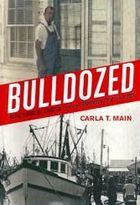
Bulldozed_home Note to appellate practitioners: it’s not a good sign when an opinion’s treatment of your arguments starts with the phrase “[t]o the extent we are able to discern the arguments, we address them below.”

As that statement telegraphed, it didn’t go very well for the appellee in Main v. Royall, No. 05-09-1503-CV (July 25

Goodtobeking As Mel Brooks once said, “It’s good to be the King.” That’s especially true in eminent domain law. Even when you’re not the King.

Exhibit A: the plaintiff in this federal condemnation action was a railroad, the Dakota, Minnesota & Eastern Railroad Corporation. It brought suit against 97.943 acres of land, more or

In some states, Hawaii included, the question of whether a taking is “for public use” is entitled to full resolution before addressing the question of just compensation. See, e.g., Haw. Rev. Stat. § 101-34 (public use challenges are entitled to immediate trial, and as-of-right interlocutory appeal). This makes sense since questions of value

Yesterday, the California Redevelopment Association, the League of California Cities and two Bay Area municipalities filed an original jurisdiction petition for writ of mandate in the California Supreme Court asserting that the California Legislature’s recent bills to eliminate redevelopment agencies, or allow them to continue to exist if they pay tribute to the state, violate

On July 14, 2011, we filed this cert petition (also posted below), which asks the U.S. Supreme Court to review the Hawaii Supreme Court’s decision in County of Hawaii v. C&J Coupe Family Ltd. P’ship, 242 P.3d 1136 (Haw. 2010). In that case, the Hawaii court upheld the taking of land on the Big

stlouis

Is this a “sign?” The city of St. Louis thought so. The city’s building inspection department issued a citation to the folks who commissioned the painting on a residential duplex, telling them they needed a permit. So they asked the city for one.

Denied. The zoning code does not allow for such signs. It’s too

upFrom Oregon Live comes the report that a Portland attorney who was fighting to keep his office building (a converted Victorian), from being taken, has prevailed.

After a years-long fight in which Randal Acker, a commercial litigation lawyer, vowed to “do eminent domain law for the next two years to save the house” if necessary

“Kelo, Parents and the Spatialization of Color (Blindness) in the BermanBrown Metropolitan Heterotopia” by Denver lawprof Tom Romero II.

This article utilizes interdisciplinary methodology and resources to describe the manner by which legally enforced color lines on a local scale became paradoxically proscribed, yet essential to what I call the multi-racial

My Pacific Legal Foundation colleague and eminent domain scholar Tim Sandefur has posted an analysis of the legislation proposed by California’s redevelopment agencies in reaction to Governor Brown’s call to eliminate them (“California Redevelopment Agencies fight to defend their turf“).

Sandefur deconstructs (or should we say “redevelops”) the agencies’ claim that the bill