
 Note to appellate practitioners: it’s not a good sign when an opinion’s treatment of your arguments starts with the phrase “[t]o the extent we are able to discern the arguments, we address them below.”
As that statement telegraphed, it didn’t go very well for the appellee in Main v. Royall, No. 05-09-1503-CV (July 25, 2011). In that case, the Texas Court of Appeals (Fifth District) held in a defamation suit that the author of a book about eminent domain is a member of the electronic or print media asserting a First Amendment claim, and was therefore entitled to appeal the interlocutory denial of a motion for summary judgment, and that the book for the most part was not defamatory as a matter of law.
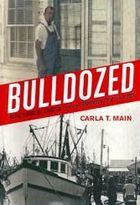
As we noted earlier here, here, and here, Carla Main, the author of Bulldozed: “Kelo,” Eminent Domain, and the American Lust for Land, ended up getting sued for defamation by one of the book’s subjects because “the gist of the book as a whole and the gist of individual portions of the book defamed him by implying that he formed a partnership” to develop a marina by condemning property in Freeport, Texas. Under Texas law, a “gist” claim is that while all of the facts in a publication may be correct, the overall context suggests a defamatory message. He also alleged that specific facts related in the book defamed him. Read our review of Bulldozed for our thoughts on the book.
Main asserted a First Amendment defense. After the trial court denied her “no-evidence” motion for summary judgment and a “traditional” motion for summary judgment (welcome to Texas civil practice, y’all), Main filed an interlocutory appeal. A Texas statute authorizes appeals from denials of motions for summary judgment when “a member of the electronic or print media, acting in that capacity” asserts a free speech or free press defense. See Tex. Civ. Prac. & Rem. Code § 51.014(a)(6) (2008).
Royall contested appellate jurisdiction, asserting that the author of a book is not a “member of the electronic or print media” covered by the statute. In a case of first impression, the court of appeals held that “the legislature intended section 54.013(a)(6) [sic] to include authors and publishers of traditional books as ‘member[s] of the electronic or print media’ and that Main [and her publisher]” qualify. Slip op. at 3-7.
On the merits, the court held that the “gist” claim failed. “[W]e … conclude that the gist of Bulldozed is not about [Royall].” Slip op. at 16. The court concluded that the book was more about the property owners’ fight against the City of Freeport, and about the history of eminent domain abuse nationwide:
Portions of the book are set in the City of Freeport, Texas and tell the story of the City’s plan to use eminent domain to condemn waterfront property along the Old Brazos River to build a private yacht marina. The story is told from the viewpoint of one of the property owners—Western Seafood Company, a shrimp processing business owned by Wright “Pappy” Gore, Sr. and his family. It chronicles the Gore family’s efforts over several years to prevent the City from condemning a 330-foot strip of property belonging to Western Seafood and used in their shrimp processing business. The Gores contended that this strip of property was crucial to the livelihood of Western Seafood. The book details the City’s efforts to reach an agreement with the Gores and to build the marina on land adjacent to Western Seafood that was owned by the Blaffer family; its agreement with Royall, a commercial real estate developer, to develop and operate the marina; and the many lawsuits filed over the project.
Slip op. at 2. Although portions of the book focused on Royall, “a person of ordinary intelligence would not read the entire book, or even the portions about the marina controversy, and conclude that the gist was that Royall” was in a partnership to take the property. Slip op. at 17.The court reversed the denial of summary judgment, and held that the “gist” of the book was not defamatory as a matter of law.
The court also held that most of Royall’s allegations that specific portions of the book defamed him were also groundless, and that the trial court should have granted Main’s motions for summary judgment on most of his claims. Read pages 18 through 26 for the court’s treatment of each of Royall’s allegations. The court remanded the case to the trial court for further proceedings (The court of appeals upheld the trial court’s denial of summary judgment on a few of Royall’s allegations, and Main did not challenge the trial court’s denial of summary judgment on other allegations.)
More on the case here from the Wisconsin Eminent Domain Law blog, here from the Institute for Justice (Main’s attorneys), and here from Alan Ackerman’s National Eminent Domain blog.
Main v. Royall, No. 05-09-1503-CV (July 25, 2011)