
Inverse condemnation

Header image LUI 2019

Come join us at the 33rd Annual Land Use Institute, in Baltimore, Maryland, April 11-12, 2019.

As the brochure notes:

This Annual Land Use Institute program is designed for attorneys, professional planners, and government officials involved in land use planning, zoning, permitting, property development, conservation and environmental protection, and related litigation. It not only
6a00d83451707369e201bb08b7aef7970d-800wi

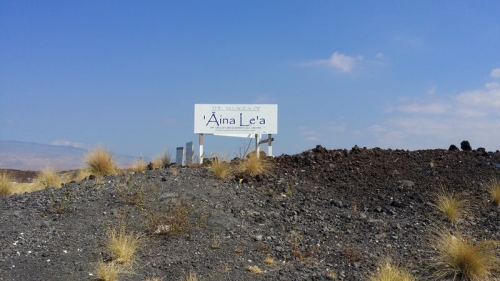
Here’s the latest in a case we’ve been following that has resulted in what we’re counting as no less that three lawsuits in state court (all removed to federal court by the State of Hawaii, as far as we are aware), which have gone back-and-forth between the U.S. District Court, the Ninth Circuit, and the

The bulk of the Indiana Court of Appeals’ opinion in Grdinich v. Plan Comm’n for the Town of Hebron, No. 18A-PL-1050 (Feb. 28, 2019) is devoted to details of land use law, specifically exhaustion of administrative remedies. If that floats your boat, we’ll let you read it. 

What caught our eye was at the

Thank you to our colleague, economist William Wade, for sending along this piece, reacting to a recent decision by the Massachusetts Appeals Court.

————————

Financial inconsistency bedevils takings decisions

by William W. Wade, Ph.D.

This blog recently reported on a Massachusetts Appellate Court takings case ruling (Smyth v. Conservation Comm’n of Falmouth, No.

Here’s the motion and proposed amicus brief we filed earlier this week, in a case we’ve been following about natural gas pipelines, eminent domain, and immediate possession.

As we noted here, a panel of the U.S. Court of Appeals for the Fourth Circuit recently concluded that a private condemnor under the Natural Gas Act

Later today (starting at 1pm ET), our colleague Edward Thomas is chairing an ABA-produced webinar on “Low Income Populations: Underrepresented Socially, Overrepresented as Victims of Natural Disasters: Using the Law to Solve a Serious Problem.”

As in other areas of life, when natural disasters strike, it is often the owners of modest means

IMG_20180720_151841

Rather than sum up the issue and the Massachusetts Appeals Court’s** conclusion in Smyth v. Conservation Comm’n of Falmouth, No. 17-P-1189 (Feb. 19, 2019), here’s the first part of the opinion:

GREEN, C.J. A land owner brought this action in the Superior Court, claiming that local land use regulation effected a taking of her

JD Morris has the story at the San Francisco Chronicle, “California’s strict wildfire liability rule hangs over bankrupt PG&E.”

The story is about inverse condemnation of course, and how California law applies that doctrine in cases involving what look like natural disasters, most notably the state’s recent experiences with major wildfires.

In the usual circumstance, we wouldn’t be terribly interested in an unpublished — and therefore not precedental — opinion. But the U.S. Court of Appeals’ opinion in Kerns v. Chesapeake Exploration, LLC, No. 18-3636 (Feb. 4, 2019) caught our attention because it involves “forced pooling,” which this site describes this way:

At its most

A short update from the west coast: the California Supreme Court late last week denied discretionary review in the case in which a California utility was arguing that it cannot be liable under that state’s version of inverse condemnation because the utility, unlike a governmental entity, cannot automatically spread the cost of any judgment to