
Eminent Domain | Condemnation

Photo

Here’s a big development in a case we’ve been following for a while (and in which we filed an amicus brief in support of the prevailing property owner).

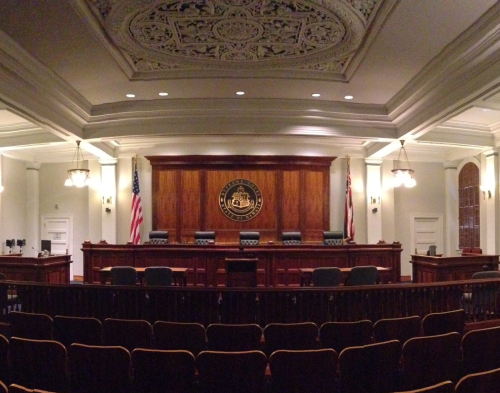
In DW Aina Lea Dev., LLC v. State of Hawaii Land Use Comm’n, No. SCCQ-19-156 (Dec. 17, 2020), the unanimous Hawaii Supreme Court held that the
Charlie Brown got a bag of rocks for Halloween.

But you aren’t so cruel, and want to give better gifts this holiday season to the dirt lawyer in your life, no? Here are our 2020 suggestions for stocking stuffers that will make property mavens celebrate the season. 

Start with this one, Professor Bart Wilson’s

Before it condemned a parcel of land in Bastrop County, the State of Texas made a bona fide offer to purchase to the owners of the fee as mandated by Texas law, which requires that a condemnor make an offer to the “property owner,” and provide a statement “to the landowner[.]”

But in In re

Often, the dispositive question in many takings cases tuns on whether the plaintiff owns “property,” and if so, what rights does that recognize. If you define the property in such a way that ipse dixit excludes the “stick” the owner claims was taken, then the answer is always going to be no property, no taking.

You know what SCOTUS nerds want for Christmas? These words, in a federal court of appeals opinion:

We are aware that our decision conflicts with the Ninth Circuit’s recent holding in Sierra Club v. Trump. That case involved a parallel challenge to the Government’s use of § 2808 funds to build the border wall.

Go on, read the facts in the California Court of Appeal’s (unpublished) opinion in San Joaquin Regional Transit District v. Superior Court, No. C084755 (Dec. 1, 2020). It’s worth your time, believe us.

After chasing from California a long-standing manufacturing and service business (to Illinois) by instituting condemnation proceedings on the property on which

PXL_20201118_163528916 (1)

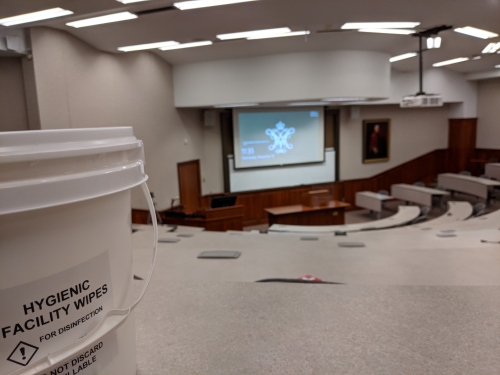
We have now wrapped up the coursework portion of the Fall semester at William and Mary Law School, so here’s an after-action report from the two full courses which I taught in a “hybrid” style (some students live, in the classroom; others attending via Zoom live; and still others with the option to attend

Check this out, the Complaint we filed a couple of weeks ago in the U.S. District Court for the Western District of Virginia, in Grano v. Rappahannock Elec. Coop., No. 3:20-cv-00065-NKM (W.D. Va. Oct. 28, 2020).

It’s not a true “takings” case because the claims for relief are limited to due process and Contract