Development agreements

The US Supreme Court today denied review to three cases we’ve been following:

  • Goldstein v. Pataki, No. 07-1247 (petition for cert. filed Mar. 31, 2008) (pleading pretext post-Kelo) – Justice Alito would have granted the petition.  Justice Alito had not been appointed to the Court at the time of Kelo, so

The Institute for Justice, the attorneys who represented Susette Kelo in Kelo v. City of New London, 545 U.S. 469 (2005), the decision in which the US Supreme Court held that economic development takings were not per se invalid, has filed a brief amicus curiae supporting the request for review in Goldstein v. Pataki

Today, we filed the Reply Brief for the property owner in County of Hawaii v. Richards,No. 28882, the consolidated appeal from two eminent domain lawsuitsfiled by the County in 2000 and 2005.  I won’t go into detail about the arguments and will let the brief speak for itself since I am part of thelegal

As noted in this post, the City and County of Honolulu has sought US Supreme Court review of Matsuda v. City and County of Honolulu, 512 F.3d 1148 (9th Cir. Jan 14, 2008).  I’ve finally obtained a copy of the petition, which is posted here (2mb pdf).  The Supreme Court docket report is here (No. 07-1305).

After detailing the background facts, the petition advances a single Question Presented:

Several lessees of a residential condominium apartment complex (“Lessees”) filed a lawsuit against the City and County of Honolulu (the “City”) challenging Ordinance 05-001 (2005).  Ordinance 05-001 repealed the City’s leasehold conversion ordinance, Chapter 38, Revised Ordinances of Honolulu (“ROH”), the statutory process by which leasehold condominium owners, including Lessees, could purchase the leased fee title to their units, through the use of the City’s power of eminent domain.  Pursuant to Chapter 38, the Lessees executed contracts with the City for the acquisition of the leased fee interests in their condominium units.  However, Lessees never received City Council approval prior to the repeal of Chapter 38, and therefore they were unable under Ordinance 05-001 to complete their leasehold conversion.

The Ninth Circuit Court of Appeals departed from the longstanding policy of judicial deference to local legislative determinations of public use in the exercise of the power of eminent domain and held that the City’s repeal of Chapter 38 may violate the Contracts Clause and/or the Due Process Clause of the Constitution of the United States.

Therefore, the question presented in this petition is as follows:

Whether the Ninth Circuit erred in concluding that the Honolulu City Council’s repeal of the leasehold conversion ordinance may violate the Contracts Clause and/or the Due Process Clause, and whether after the repeal, the City can still be contractually bound to exercise its power of eminent domain to acquire property for the leasehold conversion?

Petition at i-ii. 

Chapter 38 was Honolulu’s version of the Hawaii Land Reform Act at issue in Hawaii Housing Auth. v. Midkiff,467 U.S. 229 (1984), and permitted conversion of condominium interests to fee simple, via a condemnation process. In Matsuda, apartment owners applied to the city to”convert” (condemn) theirapartment leases, and entered into written contracts with the city, inwhich the apartment owners each agreed to pay the city $1,000, inreturn for whichthe city promised that after its acquisition of the lease, it wouldconvey it to the apartment owner.  The owners subsequently received thecity’s approvals, but final approval by the City Council was withheldbecause the council was already considering repealing chapter 38, whichit did in 2005. 

Theordinance repealing chapter 38 eventually contained a provisionallowing any conversion proceeding which has been approved by the CityCouncil to be completed, but because Matsuda’s had not received finalcouncilapproval, the taking was denied.  Matsuda and others filed suit againstthe city in federal court,alleging that the repeal of chapter 38 was a violation of the U.S.Constitution’s Contracts Clause.  The district court dismissed the case since in the court’s view, the plaintiffs had no legally enforceable contract with the City. 

The Ninth Circuit held that thedistrict court should have viewed the repeal of Chapter 38 with”heightened scrutiny” because therepeal of Chapter 38 was the city voiding its own contracts, and remanded the case for further proceedings. Acomplete summary of the Ninth Circuit’s opinion is posted here.

Download the complete Petition for Writ of Certiorari.  The Brief in Opposition is posted here.
Continue Reading PING: use of ultrasonographyURL: http://www.kiwibox.com/ultrasoundtech/portrait/IP: 64.191.76.118BLOG NAME: use of ultrasonographyDATE: 02/04/2013 10:46:06 AMinversecondemnation.com: Can a City Bind Itself to Exercise Eminent Domain? Cert Petition in Ninth Circuit Case on Reserved Powers, Public Use, and Contracts Clause (Matsuda)

The County of Hawaii filed its Answering Brief (2.5mb pdf) in County of Hawaii v. Richards, No. 28882, the consolidatedappeal from two eminent domain lawsuits filed by the County in 2000 and2005.   

The issues in the case include:

The City and County of Honolulu has filed a petition for writ of certiorari in Matsuda v. City and County of Honolulu, No. 06-15337 (9th Cir. Jan. 14, 2008), asking the U.S. Supreme Court to review the case.  We don’t have a copy of the cert petition yet, but when we do, we’ll post

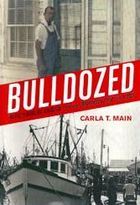
Bulldozed_homeIf you can fight blight, why not create beauty?  If not beauty, why not bounty?

With that phrase, author Carla T. Main, in Bulldozed: “Kelo,” Eminent Domain, and the American Lust for Land,accurately and succinctly sums up the devolution of the Supreme Court’sview of the role of judicial review in eminent

Today, we filed the Opening Brief in County of Hawaii v. Richards, No. 28882, the consolidated appeal from two eminent domain lawsuits filed by the County in 2000 and 2005.  I won’t go into detail about the case and will let the brief speak for itself since I am part of the legal team

To all those who attended today’s seminar, thank you.  Here are the links to the cases I mentioned.  From the morning session on Case Law Update: