
 “If you can fight blight, why not create beauty? If not beauty, why not bounty?“
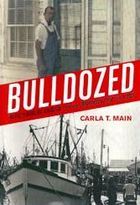
With that phrase, author Carla T. Main, in Bulldozed: “Kelo,” Eminent Domain, and the American Lust for Land,accurately and succinctly sums up the devolution of the Supreme Court’sview of the role of judicial review in eminent domain from Berman, to Midkiff, to Kelo.
Bulldozed is accessible to both lawyers and non-lawyers, andis no dull scholarly summation of the current state of Public UseClause law. Rather, it places the issues in an understandable contextby framing the legal details with the story of the Gore family ofFreeport, Texas, and their straight-out-of-Forrest Gump shrimpprocessing business. The taking of the Gore’s property and businessfor Freeport’s “economic development” resulted in the case Western Seafood Co. v. United States, No. 04-41196 (5th Cir. Oct. 11, 2006) (a case I blogged about here). Main provides more details and background than the court’s dryrecitation of the facts ever could, and in between recounting the Gorefamily’s story, provides the reader with an understanding of how weended up with a case like Kelo, a decision that seemed to baffle a majority of the public.
Main begins at the birth of the Fifth Amendment and James Madison’sconcern that private property rights would not be respected by thenewly formed United States, and tells the stories behind many of theseminal cases on eminent domain:
- West River Bridge Co. v. Dix,47 U.S. 507 (1848), Daniel Webster’s case in which the Court held thatthe Contracts Clause was no impediment to a state condemning anexclusive bridge franchise.
- Berman v. Parker,348 U.S. 26 (1954), the case in which the U.S. Supreme Court firstequated the condemnation power with the police power, and held, insweeping language by Justice Douglas, that “public use” under the FifthAmendment includes takings for
- Poletown Neighborhood Council v. City of Detroit, 304 N.W.2d 455 (Mich. 1981), overruled, County of Wayne v. Hathcock,684 N.W.2d 765 (Mich. 2004), the case which opened the door to economicdevelopment takings, where an entire neighborhood was cleared to makeway for a General Motors plant, based only on Detroit’s hope that whatwas good for GM was good for Detroit.
The only case really missing from the lineup is Hawaii Housing Auth. v. Midkiff,467 U.S. 229 (1984), the opinion authored by Justice O’Connor that setup her dramatic turnabout in her dissenting opinion in Kelo. Midkiff is a fascinating story and could be the subject of another book, so on the whole, it’s a minor omission from Bulldozed.
Main also details how beginning in 2001, the courts began to takepublic use objections seriously, especially in the context of economicdevelopment takings, where one person’s private property is transferredto another because the new owner promises to make more intense use ofit. This awakening by the courts culminates in the Supreme Court litigation in Kelo v. City of New London, 545 U.S. 469 (2005).
Of course, given the title of the book, an entire chapter is devoted to the arguments in Kelo, the case which brought eminent domain squarely to the American public’s consciousness. The Kelobacklash is the subject of another entire chapter. These sections areamong the more enjoyable and accessible in the book. They detail thehigh drama of legal cases that make their way to the Supreme Court, andhighlight the depth of emotion and passion aroused when people’s homes,businesses, and neighborhoods are threatened.
Anyone who may wonder whyproperty owners fight the taking of their property and businesses,despite the often overwhelming array of government power leveled atthem need to read Bulldozed. Bulldozed is available from Amazon.