
It’s Friday (and Valentine’s Day), so we’ll make this quick, even thought this is one of those cases with a fact pattern that you just can’t digest quickly: In Day v. Idaho DOT, No. 45552 (Feb. 14, 2020), the Supreme Court of Idaho held that only the property owners at the time of the
Thank You To All Who Joined Us In Nashville For The 37th Annual ALI-CLE Eminent Domain Conference!
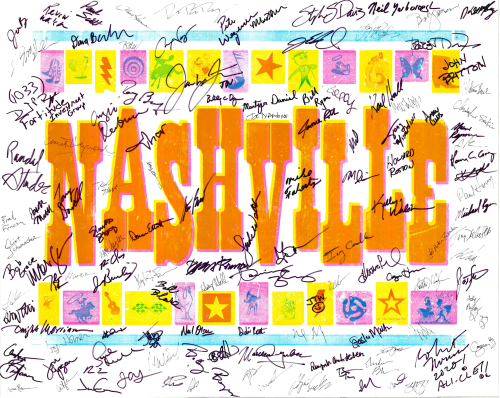
Each of the three big presentation rooms was full at our recent ALI-CLE Eminent Domain & Land Valuation Litigation Conference in Nashville. Nearly 300 lawyers, judges, appraisers, professors, students, relocation experts, and others eminent domain professionals coming together for 3 days of programming and fellowship. I have uploaded all of the photos that I took
Highest And Best Use And The Project Rule, Canadian Style
A group of property owners acquired several parcels in the Windsor, Ontario (Canada) area over the years, “with the aim of developing the lots for residential purposes.”
The city had other ideas: it wanted the area for a “natural heritage area known as the Spring Garden Complex.” The property owners believed they were entitled
Amici Briefs: What Do You Do With A Recalcitrant Condemnor Who Won’t Pay The Judgment? Magna Carta ‘Em!

Check out these two amici briefs, just filed in a case we’ve been following, about what a property owner who is awarded just compensation in a state court eminent domain lawsuit is supposed to do if the local government that is ordered to pay the just compensation judgment … doesn’t.
The property owner sued
New Must-Read Article: “What is Just Compensation?” (Wanling Su, Virginia L. Rev.)
Be sure to download and read this article, recently published in the Virginia Law Review by legal scholar Wanling Su with the deceptively simple title, “What is Just Compensation?“
The article delves into the history of ad quod damnum and concludes that “just” compensation means a jury must determine compensation. That’s an
Cool Courts Don’t Look At Explosions: Third Circuit Rejects Stigma Damage Theory For Adjacent Gas Pipelines
You all know the movie trope of the good guy setting off an explosion and then coolly turning and (in slow-motion) walking away framed by the blast (so cleverly parodied above)? Well, here’s the judicial equivalent.
In UGI Sunbury LLC v. 1.75 Acres, No. 18-3126 (Feb. 11, 2020), the U.S. Court of Appeals concluded that
Eminent Domain Podcast Interviews William & Mary Law Students

L to R: Benming Zhang, Andrew Parslow, Kelsey Abell,
Kacie Couch, Clint Schumacher
At the recent ALI-CLE Eminent Domain and Land Valuation Litigation Conference in Nashville, our colleague Clint Schumacher set up his portable studio and recorded future episodes of his Eminent Domain Podcast. (Barista’s note: Clint was also one of the
Less Meaningful Than The Iowa Caucuses: FERC Invokes Chevron Deference, Rules That Under NGA, Private Condemnors May Take State-Owned Land
Recall that recent Third Circuit decision which held that a private condemnor exercising federal eminent domain authority pursuant to the Natural Gas Act could not sue the State of New Jersey in federal court to take the state’s property for a pipeline? The court based its conclusion on the Eleventh Amendment immunity states enjoy.
That
Williamson County, In Pictures
As we briefly noted in this post, before we departed the ALI-CLE Eminent Domain and Land Valuation Litigation Conference in Nashville, we just had to stop by the subdivision that was at issue in the Williamson County litigation.
Frankly, there’s nothing especially special or noteworthy about this place, and only takings nerds will truly
Does A Property Owner Have A § 1983 Claim If A Condemnor Doesn’t Pay A Just Comp Judgment In A Reasonable Time?
You know how the process is supposed to work. A condemnor exercises its eminent domain power and files a lawsuit to take property for public use. If the owner believes the condemnor’s price is too low, the court adjudicates the just compensation that must be paid. As we know, the point of that lawsuit is