
Under Missouri law, the owner of land must have owned it at the time of the taking in order to have standing to bring an inverse condemnation claim. In Hull v. Pleasant Valley School District, No. WD79302 (June 6, 2017), the Missouri Court of Appeals (Western District), a case involving inverse condemnation liability for
Oregon App: Physical Inverse Condemnation Claim Is Ripe From The Moment Of Occupation
A quick one from the Oregon Court of Appeals. In Courter v. City of Portland, No. A158840 (June 7, 2017), the court concluded that the property owners’ inverse condemnation claim — which alleged that the City had not buried its pipes deep enough — was ripe for judicial review.
The case started after the
Upcoming Free Takings Talk (Friday, June 16, 2017). But There’s A Catch…

Mark your calendars for this Friday, June 16, 2017, at 2:00 p.m. Eastern Time for a free talk we’ll be giving, “Regulatory Takings: Emerging Issues.”
Yes, it’s free, but there’s a catch: this talk is sponsored by the ABA Section of State and Local Government Law’s Land Use Committee, and you have to
Bay Point Properties v. Mississippi Transportation Comm’n, No. 16-1077
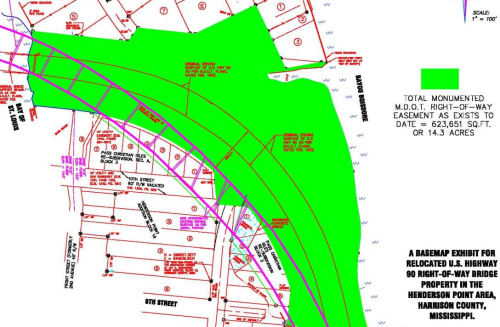
Here are the Questions Presented in Bay Point Properties, Inc. v. Mississippi Transportation Commission, No. 16-1077 (cert. petition filed Mar. 3, 2017), a case which seeks Supreme Court review of a decision by the Mississippi Supreme Court. We represent the Petitioner.
The full set of party and amici briefs are posted below.
An
Michiganders: Go Ahead, File Your Federal Regulatory Taking And Inverse Condemnation Claims In Federal Court
You heard that right. After the Michigan Court of Appeals’ recent ruling in Lanzi v. Township of St. Clair, No. 329795 (May 23, 2017), you should consider skipping the usual Williamson County step of filing your federal takings claims in state court.
In that case, property owners sued the township after the township’s sewage
Florida’s “Full Compensation” Rule (Attorneys’ Fees!) Governs In Federal Natural Gas Act Taking By Private Pipeline
As we noted recently, we don’t usually post trial court decisions. But there are exceptions. The Northern District of Florida’s recent order in Sabal Trail Transmission, LLC v. Real Estate, No. 16-cv-00063-MW-GRJ (June 5, 2017), is one of those exceptions.
First of all, our New York City colleague Michael Rikon beat us to
6th Cir: Takings Clause Isn’t Really Self-Executing, So Federal Takings Plaintiffs Must Go To The CFC; And No, They Don’t Get A Jury Either
Here’s one we’ve been waiting for (we filed a brief in support of the property owner), one in which we were hoping (although not expecting) a more favorable result.
In Brott v. United States, No. 16-1466 (May 31, 2017), the Sixth Circuit held that federal inverse condemnation plaintiffs who sue for more than
SCOTUS: To Intervene As A Plaintiff (In A Takings Case), You Need Article III Standing (Duh)
Here’s the unanimous Supreme Court opinion, issued this morning in a case we’ve been following, Town of Chester v. Laroe Estates, No. 16-605 (June 5, 2017), a takings case, although the issue resolved by the Court is one of civil procedure.
The Court’s holding is remarkably unremarkable: a plaintiff — including a plaintiff
10th Circuit Not Bothered By Holdouts: No Condemnation Of Tribal Land, Even If Formerly Allotted To Individuals
A fascinating case from the U.S. Court of Appeals for the Tenth Circuit involving an attempt by a private utility company to take property which is now tribal land.
In Public Service Co. of New Mexico v. Barboan, No. 16-2050 (May 26, 2017), there wasn’t a question that a federal statute prohibited a utility
Upcoming Lecture: LA Eminent Domain Showdown – To Condemn A Mockingbird
Update 6/6/2017: LA denizen Professor Gideon Kanner wrote about this case a couple of years ago on his blog.
* * * *
For those of you in the Los Angeles area, you may want to check out an upcoming lecture at the Central Library.
On Thursday, June 8, 2017 at the Mark