2009

In Building Industry Ass’n of Central California v. City of Patterson, No. F054785 (Cal. Ct. App. Mar. 2, 2009), the California District Court of Appeal held that the city could not increase an in-lieu affordable housing exaction from $734 to $21,000 per house, because it failed to show the increase was attributable to the

The Cato Institute has filed an amicus brief supporting the petitioner in Empress Casino Joliet Corp. v. Giannoulias, No. 08-945 (cert. petition filed Jan. 21, 2009). In that case, the Illinois Supreme Court held (896N.E.2d 277 (Ill. 2008) that a regulation which imposes a 3%”surcharge” on Illinois casinos with gross receipts over $200

In Lichoulas v. City of Lowell, No. 08-1485, 08-2023 (1st Cir., Jan. 30, 2009), the U.S. Court of Appeals declined to rule on a property owner’s objection to a taking for redevelopment, holding that public use challenges belong in state court. Interestingly, the court cited Williamson County Regional Planning Comm’n v. Hamilton Bank of

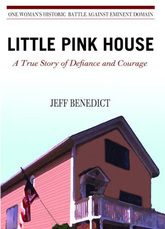
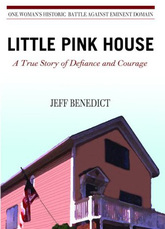
Lph Certain addresses — real and fictitious — are instantly recognizable: 1600 Pennsylvania Avenue NW, Washington, DC and 221B Baker Street, London for example.

8 East Street, New London, Connecticut, however, isn’t an address that most people recognize. 

is the former address of the “little pink house” which is the subject of Jeff Benedict’s Little

Some interesting items have crossed my desk on Friday and Saturday:

  • From the Grand Theft: Property blog, Jim Mattson posts his thoughts about Monks v. City of Rancho Palos Verdes, 67 Cal. App. 4th 263 (Cal. Ct. App. 2008), the case in which a California Court of Appeals held that a municipality’s development moratorium

Your first reaction to this post’s title may be “well, duh!”

But wait, there’s more.

In Empress Casino Joliet Corp. v. Giannoulias, 896 N.E.2d 277 (Ill., June 5, 2008),the Illinois Supreme Court held that a regulation that imposes a 3%”surcharge” on Illinois casinos with gross receipts over $200 million per year, and then gives

At first, it was a bit odd to see Washington, D.C. attorney Kannon Shanmugam, counsel for the Office of Hawaiian Affairs in the “ceded lands” case immediately concede in oral argument that the U.S. Supreme Court should rule against OHA — and hold the Apology Resolution was simply a symbolic statement of regret —