Municipal & Local Govt law

2010-03-24 15.24.40
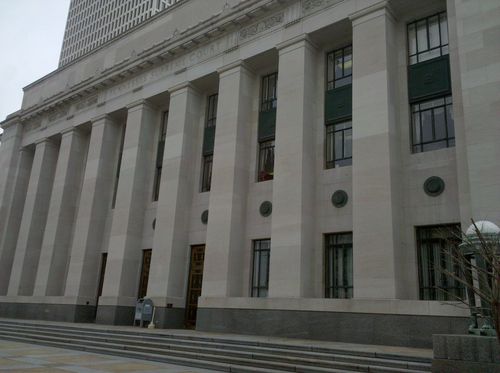
Tennessee Supreme Court, Nashville

In Phillips v. Montgomery County, No. M2012-00737-SC-R11-CV (Aug. 18, 2014), the Tennessee Supreme Court held that a property owner could recover under the state’s inverse condemnation statute, Tenn. Code Ann. § 29-16-123, for a regulatory taking:

We hold that, like the Takings Clause of the United States Constitution, article I
Pasadena, California, in addition to loving roses, apparently loves trees.

The city owns 60,000 street trees, and as the City Arborist testified in City of Pasadena v. Superior Court, No. B255800 (Aug. 14, 2014), “the City catalogued these trees in a database, that he ‘headed an urban tree maintenance program,’ and that

9780199322541_450After a couple of days detouring to election law, today we’re back to our usual programming.

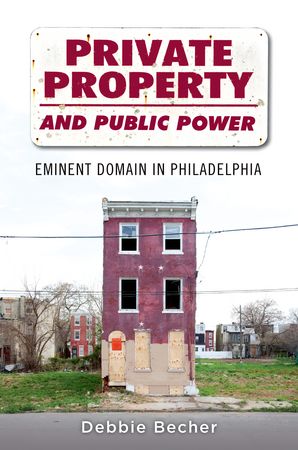
We caught wind of an upcoming book (September 2014), “Private Property and Public Power: Eminent Domain in Philadelphia,” by Barnard College Professor Deborah Becher. “Her book—the first comprehensive study of a city’s eminent domain acquisitions—explores how

Ducks

Here’s what we’re reading on this blustery Friday:

The Texas Supreme Court has agreed to review Texas v. Clear Channel Outdoor, Inc., a decision in which the Court of Appeals held that the owner of billboards was entitled to compensation when the land on which the billboards were located was condemned.  

Texas needed to widen the freeway, and condemned the land

Here’s a new cert petition, filed yesterday, that poses two interesting issues, the first of federalism, the other of exactions.

This is a rails-to-trails case in which the federal government asserts that the easements imposed on private property for a public park in New York City after the railway was abandoned did not result

A couple of years ago, we posted the complaint (actually, a petition for mandate) alleging a big regulatory takings claim against the County of San Luis Obispo based on the County’s denial of a permit to drill for oil. A very big claim. $6.24 billion big. SeeWow, That’s A Lot of Just Compensation

We usually don’t pay a whole lot of attention to unpublished opinions. Not that they are not interesting mind you, but if the court itself, for whatever reason doesn’t believe the case is worthy of publication, then who are we to say otherwise? But occasionally, we read one that has something worth sharing. Like this

When the one side or the other in the public debate complains about “judicial activism,” they’re usually talking about judges legislating from the bench — finding new rights, reading words into statutes that aren’t there, and the like. But that species of judicial activism doesn’t bother us all that much since we rarely see it